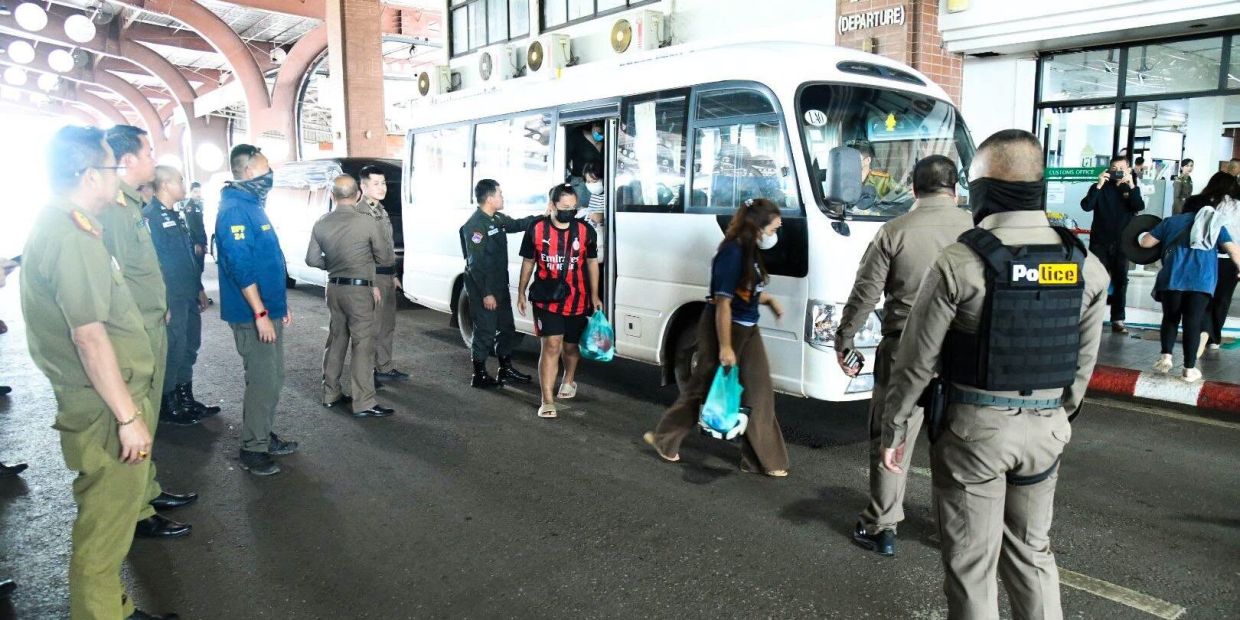
Laos has begun deporting Thai nationals implicated in a sprawling investigation into organised cyber-fraud and illegal gambling operations centred on the ST Vegas complex in Vientiane. The Lao government transferred 32 Thai citizens to Thai authorities on 6 August at the First Lao-Thai Friendship Bridge linking Vientiane Capital with Thailand's Nong Khai province, according to statements from the Public Security media office. The handover represents the first tangible consequence of a high-profile police operation that caught the regional spotlight and underscored the scale of transnational criminal networks operating across mainland Southeast Asia.
The ST Vegas complex itself became the focal point of a major enforcement action on 18 July when Lao police raided the facility located in Dongphosy village within Hatxayfong district. The operation proved exceptionally large in scope, with authorities detaining a total of 589 individuals spanning four nationalities. Thai nationals comprised the largest contingent at 373 people, while Lao citizens made up 199 of those detained. Vietnamese and Cambodian nationals rounded out the total at 15 and two individuals respectively. These figures illustrate how Vientiane and its surroundings have become a convergence point for transnational criminal activity, attracting operatives and victims across the region.
The ST Vegas raid represents merely one component of a broader enforcement push that Lao authorities have intensified throughout 2026. Over the preceding weeks, police have conducted a series of coordinated operations targeting suspected scam centres, online gambling infrastructure, and telecommunications fraud networks. On 1 August alone, authorities executed raids simultaneously in Sikhottabong and Hadxayfong districts that resulted in 63 arrests. That operation ensnared individuals from Chinese, Lao, Cambodian and Thai backgrounds, with investigators indicating the detained persons allegedly operated as part of international call-centre fraud networks that specifically targeted victims in China. The breadth of these sweeps demonstrates that Vientiane has become home to sophisticated, multi-national criminal enterprises engaged in coordinated fraud schemes.
The scope of cyber-crime affecting Laos has prompted alarm among senior government figures. During a July session of the National Assembly, Prime Minister Sonexay Siphandone disclosed that authorities had apprehended more than 4,400 individuals during the first half of 2026 in cases connected to cybercrime, online fraud and illegal gambling. These figures encompass the entirety of Laos rather than merely Vientiane Capital, yet the concentration of enforcement activity in and around the capital suggests that a disproportionate share of the criminal infrastructure operates there. The staggering number demonstrates how deeply organised cyber-fraud has penetrated the country, involving thousands of individuals either as perpetrators or as victims drawn into these schemes.
The crackdown has accelerated markedly since mid-year. Following the July arrests outlined by Prime Minister Siphandone, authorities have reported substantially higher detention figures. More than 1,000 individuals fell into police custody during July alone, a rate that far exceeds prior enforcement patterns. However, independent verification of these latest arrest figures remains unavailable, leaving open questions about methodology, scope and the precise nature of charges against detainees. Nonetheless, the trajectory clearly indicates an escalating commitment to dismantling these networks.
For Malaysia and other Southeast Asian nations, the Laos situation carries significant implications. The presence of such extensive fraud infrastructure in a neighbouring country means that regional residents face heightened exposure to scams originating from Vientiane-based call centres and online platforms. Malaysian citizens have increasingly reported becoming targets of transnational fraud schemes, with money trails often leading through Laotian intermediaries. The deportations and enforcement actions by Laos represent a positive development for regional security, though experts question whether these measures address the underlying vulnerabilities that allow such networks to flourish.
The international nature of these operations complicates enforcement. The ST Vegas raid's capture of Thai, Vietnamese and Cambodian nationals alongside local Lao personnel reveals how these criminal enterprises operate as transnational entities. Perpetrators move fluidly across borders, establishing operations in jurisdictions perceived as offering lenient enforcement environments. Laos, despite its geographic position and economic ties throughout Southeast Asia, has struggled historically to maintain law enforcement capacity commensurate with emerging cyber-crime threats. The current crackdown suggests a recalibration of priorities, yet sustained commitment will prove essential.
The targeting of China-focused fraud rings within Laos reflects broader regional crime patterns. Chinese citizens and Chinese-language speakers have become disproportionate victims of organised fraud schemes, prompting coordinated responses from Beijing and Southeast Asian partners. The call-centre model exposed in the Hadxayfong raids represents a particular concern—these operations employ linguistic and cultural knowledge to manipulate victims with greater efficacy than generic spam campaigns. Dismantling such infrastructure requires substantial coordination between national authorities and intelligence sharing across borders.
Laos faces mounting external pressure to address these criminal networks. China, a major investor and partner, has particular interest in protecting its citizens from fraud emanating from Lao territory. Thailand, which shares extensive border connections and population ties with Laos, similarly demands effective enforcement against networks that prey on Thai nationals and use Thai territory as transit points. The August deportations signal responsiveness to these concerns, yet observers note that meaningful progress requires systemic improvements in Lao law enforcement capacity, judicial processes and cross-border cooperation mechanisms that remain underdeveloped.
The deportations also raise questions about the treatment and legal status of arrested individuals. Laos operates under a legal framework that international human rights observers have frequently criticised for opaque procedures and limited due process protections. The rapid deportation of Thai nationals without detailed public disclosure of charges or evidence suggests expedited processing that may not reflect international standards for fair treatment. For regional governments and civil society organisations monitoring these developments, transparency in prosecutorial decisions remains an outstanding concern.

