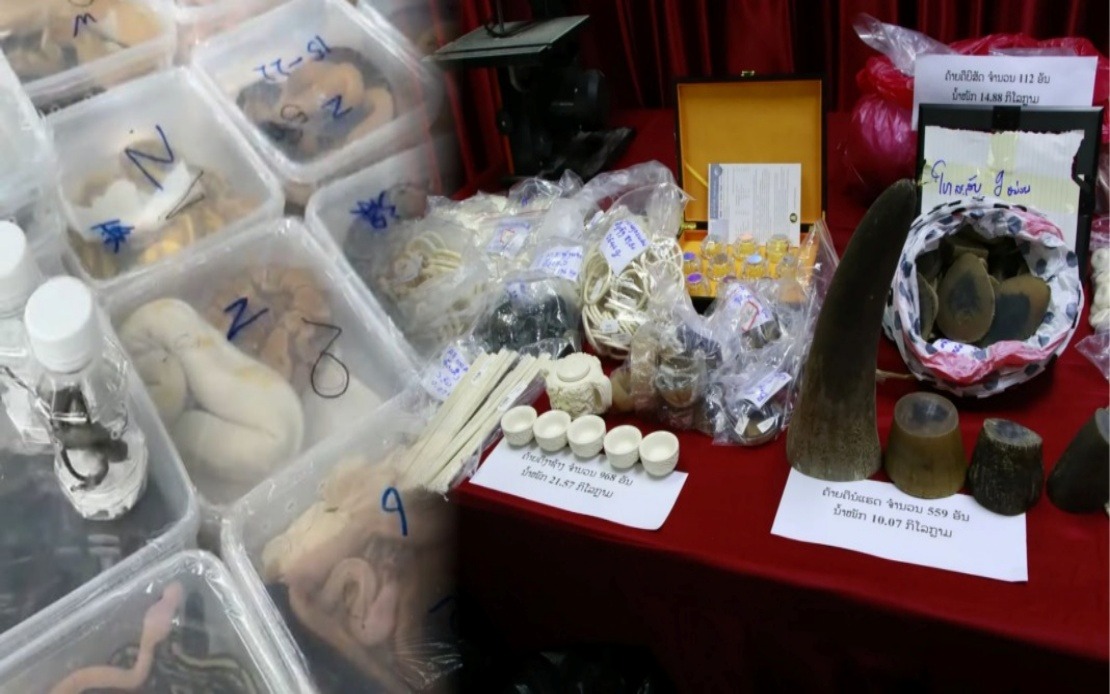
Laotian authorities have exposed a sophisticated wildlife trafficking network operating across Southeast Asia's most strategically vulnerable border region, rescuing nearly 300 live animals and seizing tonnes of contraband wildlife products in coordinated operations last week. The enforcement actions represent a rare glimpse into the scale and sophistication of an illegal trade that has become one of the world's most profitable criminal enterprises, rivalling human trafficking and arms smuggling in financial terms.
The Lao Wildlife Enforcement Network's operations in Luang Prabang and Champasak provinces have unveiled the complex logistical chains through which endangered species transit across the Mekong region. In Luang Prabang, a destination known for tourism and cultural heritage, authorities discovered 60 kilogrammes of contraband wildlife materials including ivory-like objects, animal gallbladders, pangolin scales, and rhinoceros horn fragments. The confiscations extended to processed animal products such as elephant skin powder, bear gallbladder, and hornbill remains, alongside herbal medicine preparations suspected of containing wildlife ingredients. This diverse haul suggests multiple trafficking routes and customer bases, from traditional medicine practitioners to international collectors willing to pay premium prices for rare and protected specimens.
The discovery that traffickers are utilising international passenger buses as transport vessels highlights how criminal networks embed their operations within legitimate commercial infrastructure. The animals seized from a bus travelling between Pakse and Bangkok were species not naturally occurring in Laos, indicating they had been sourced from other nations and were en route to Thai markets or beyond. This modus operandi allows smugglers to exploit the high volume of cross-border passenger traffic while reducing detection risks compared to dedicated cargo shipments. The approach reflects an evolution in trafficking tactics that makes border enforcement increasingly challenging for under-resourced agencies.
Four days after the Luang Prabang seizure, wildlife rangers achieved an even larger recovery at the Vang Tao International Checkpoint in Champasak Province, capturing 294 live wild animals destined for Thailand's Ubon Ratchathani Province. The confiscated creatures—comprising turtles, pythons, green snakes, gold-ringed cat snakes, and various lizard species—represent biodiversity that would have likely perished in transit or faced inhumane conditions in captivity. The recovery of live animals, as opposed to processed products, suggests these specimens were destined for the exotic pet trade, which has emerged as a significant driver of wildlife trafficking demand in Southeast Asia alongside traditional medicine markets.
These operations form part of a broader pattern of enforcement activity that demonstrates both the persistence of trafficking networks and growing institutional capacity to intercept shipments. In late May, Thai authorities arrested a woman operating a traditional medicine and souvenirs shop in Nakhon Phanom province, confiscating more than 100 protected wildlife remains apparently smuggled from Laos. Earlier that same month, regional authorities disrupted another trafficking gang attempting to move 130 kilogrammes of processed elephant ivory and animal carcasses across the Thai-Laotian border. The frequency and scale of these seizures underscore that what authorities are intercepting likely represents only a fraction of the overall trafficking volume, with law enforcement agencies catching perhaps five to ten percent of shipments attempting to cross borders.
Laos's geographical position has transformed it into a critical transit hub for wildlife trafficking across the broader region. Sharing borders with Cambodia, China, Myanmar, Thailand, and Vietnam, the nation occupies a unique position in transnational smuggling networks. Traffickers exploit Laos's position to consolidate shipments from multiple source countries before forwarding them to destination markets, particularly in Thailand, Vietnam, and China. The country's relatively limited enforcement resources, compared to wealthier neighbours, make it an attractive corridor for criminal syndicates operating with sophisticated international logistics capabilities. The Mekong region's porous borders, while facilitating legitimate commerce and cultural exchange, have similarly created conditions where organised trafficking networks can operate with relative impunity.
The United Nations Office on Drugs and Crime's World Wildlife Crime Report 2024 provides sobering context for the scale of what these Laotian operations represent. The global illegal wildlife trade generates approximately USD 10 billion annually—equivalent to RM41 billion—placing it firmly alongside human trafficking, narcotics smuggling, and arms trading as one of the world's most lucrative criminal enterprises. Thousands of species globally face trafficking pressure, from iconic megafauna such as elephants and rhinoceroses to lesser-known reptiles, birds, and plants that sustain vital ecosystem functions. The report identifies corruption as a critical enabler, suggesting that without addressing institutional vulnerabilities and official complicity, seizures alone cannot substantially reduce trafficking volumes.
The implications for Southeast Asian conservation are profound and multifaceted. The region harbours some of the world's most biodiverse ecosystems, yet many endemic species face extinction driven partly by unsustainable trafficking. The loss of wildlife removes apex predators and seed dispersers essential to forest regeneration, destabilising entire ecological networks. Communities dependent on ecosystem services—clean water, pollination, pest control—experience tangible economic consequences from wildlife depletion. For Malaysia specifically, these trafficking networks pose direct threats to the nation's own endangered species, as smugglers operating across Southeast Asian borders have little regard for national boundaries when pursuing profitable targets.
The operations also highlight the transnational nature of wildlife crime enforcement, requiring coordination across multiple jurisdictions with varying capabilities and political priorities. The seizure at Vang Tao Checkpoint involved cooperation between Laotian and Thai authorities, while the Nakhon Phanom arrest involved Thai investigators receiving intelligence about smuggling sources in Laos. Such cross-border collaboration remains sporadic and faces obstacles including language barriers, differing legal frameworks, and insufficient resources for joint operations. Strengthening regional cooperation mechanisms, sharing intelligence, and harmonising penalties for trafficking represent critical gaps in the current enforcement architecture.
The challenge facing Laotian authorities and their regional partners extends beyond interdiction. Demand reduction in destination markets—particularly among traditional medicine consumers in China and Vietnam—remains essential to disrupting trafficking at the economic root. Consumer awareness campaigns, regulation of wildlife ingredient substitution in herbal medicine, and enforcement against retail establishments knowingly trafficking in protected products offer complementary strategies to border enforcement. However, these initiatives require sustained political will and investment that many Southeast Asian governments struggle to maintain amid competing priorities.
Looking forward, the Laotian enforcement successes suggest that enhanced capacity building and operational resources can yield significant results. The 294 live animals rescued represent individuals spared from suffering and populations slightly replenished if rehabilitation and reintroduction prove feasible. Yet the broader trafficking architecture—involving regional syndicates, international demand, and systemic corruption—remains largely intact. Sustained pressure on trafficking networks requires not merely increased seizures but fundamental transformation of the economic and institutional conditions that make wildlife crime profitable and low-risk across Southeast Asia.
%22%2F%3E%3C%2Fpattern%3E%3C%2Fdefs%3E%3Crect%20width%3D%22100%25%22%20height%3D%22100%25%22%20fill%3D%22url(%23ph3rq02g)%22%2F%3E%3Crect%20width%3D%22100%25%22%20height%3D%22100%25%22%20fill%3D%22url(%23ph3rq02p)%22%2F%3E%3Ctext%20x%3D%2250%25%22%20y%3D%2250%25%22%20text-anchor%3D%22middle%22%20dominant-baseline%3D%22central%22%20fill%3D%22rgba(255%2C255%2C255%2C0.95)%22%20font-family%3D%22Georgia%2C%20'Times%20New%20Roman'%2C%20serif%22%20font-weight%3D%22700%22%20font-size%3D%22170%22%20letter-spacing%3D%22-0.02em%22%3EBrothers%3C%2Ftext%3E%3C%2Fsvg%3E)