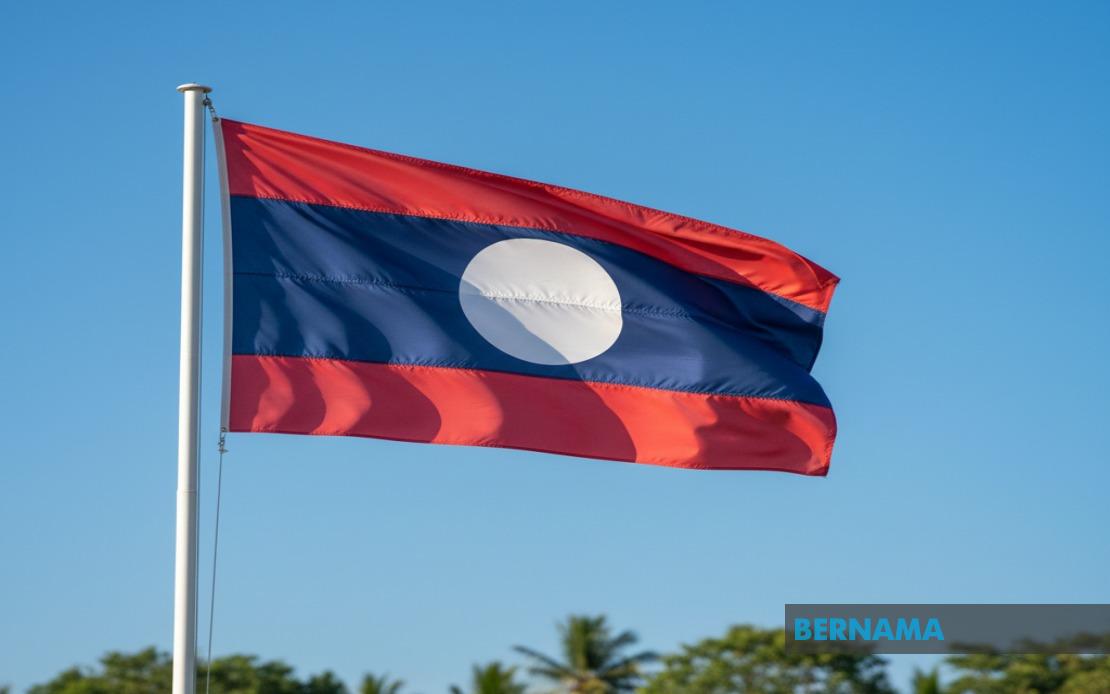
Laos has taken a significant step toward modernising its media landscape by convening its first National Media Congress in the capital Vientiane, where senior government officials, media executives, and journalism professionals gathered to chart the sector's future direction. The three-day congress, held from Monday through Wednesday last week, resulted in the adoption of a comprehensive roadmap designed to elevate the quality and impact of the country's media operations across traditional and emerging platforms.
The gathering brought together an unusually broad cross-section of stakeholders tasked with reimagining how Laos approaches journalism and public communication in an era of rapid technological and informational change. By assembling editors, reporters, communication specialists, and party leaders under one roof, organisers attempted to forge consensus around shared challenges and opportunities facing the Southeast Asian nation's media institutions. The congress's overarching theme—"Strengthening Party Leadership and Developing the Media Toward a New Level of Quality"—underscored the government's determination to position media development as integral to national progress.
Khamphan Pheuyavong, who heads the Commission for Information and Education, delivered the closing session's summary report, characterising the congress as a success in achieving its core objectives. His assessment highlighted the three pillars of the gathering's work: reviewing what the sector has accomplished to date, honestly diagnosing current obstacles impeding further advancement, and establishing concrete directions and mechanisms to strengthen media output and credibility. This structured approach suggests planners sought to balance celebration of past achievements with pragmatic acknowledgment of deficiencies requiring urgent attention.
Laos's president, Thongloun Sisoulith, delivered remarks at the closing ceremony that outlined his administration's strategic vision for media development over the coming years. His comments reflected broader concerns across Southeast Asia about media quality, the rise of misinformation, and the role professional journalism plays in maintaining social cohesion. The president's emphasis on having confidence in the nation's media professionals appeared designed to boost morale within an industry that often operates under significant constraints in authoritarian or semi-authoritarian contexts.
The five priorities articulated by President Sisoulith represent a comprehensive agenda touching on structural, ethical, and professional dimensions of media work. His first call—for greater unity and collaboration among different media organisations—addresses fragmentation that often characterises developing media systems. By encouraging mutual learning and deeper understanding of how information environments function, the president signalled that competition and cooperation need not be mutually exclusive, potentially offering smaller outlets pathways to strengthen their capabilities through partnership with larger, better-resourced counterparts.
Preserving cultural values emerged as the president's second priority, a theme resonating throughout Southeast Asia as societies grapple with globalisation and cultural change. His specific invocation of humility, generosity, and respect as journalistic virtues, coupled with rejection of vulgarity and dishonesty, reflects traditional Lao cultural frameworks while establishing ethical standards for contemporary media practice. This emphasis suggests government concern that modernisation should not come at the expense of locally rooted values and social norms.
The third priority—defending truth and justice through rigorous, responsible reporting—speaks to fundamental professional journalism standards that transcend any particular system. The president's explicit call for media professionals to resist misinformation while maintaining public trust acknowledges the growing challenge of false information in the digital age. For Malaysia and the broader region, Laos's emphasis on responsible truth-telling offers a useful counterweight to sensationalism and polarising coverage that has sometimes dominated Southeast Asian media landscapes.
The fourth priority directed at party and state agencies represents an implicit acknowledgment that media development cannot succeed without institutional support and non-interference. By calling on government bodies to provide "stronger guidance, support, and constructive assistance" rather than heavy-handed control, the president appeared to be signalling a shift toward more collaborative governance of the media sector. This framing is particularly significant in a one-party state context, where the distinction between guidance and censorship often blurs.
The president's final priority emphasised continuous professional development as essential to media excellence. His call for journalists and media professionals to upgrade their skills, embrace innovation, and remain adaptable to changing circumstances reflects the practical reality that Southeast Asian media professionals increasingly compete in digital environments requiring different competencies than traditional broadcasting or print journalism. Investment in training and professional development has emerged as a priority across the region, with recognition that quality journalism depends fundamentally on skilled practitioners.
For Malaysia and other Southeast Asian nations, Laos's inaugural National Media Congress and subsequent modernisation roadmap offer both lessons and comparisons. As a smaller neighbour undergoing deliberate media sector reform, Laos's experience provides insights into how governments can attempt to balance modernisation ambitions with political control. The emphasis on cooperation among media organisations, professional standards, and ethical conduct reflects global best practices while remaining adapted to local political contexts.
The congress also highlights the growing regional conversation about media's role in development and social stability. With disinformation and polarisation affecting democracies and authoritarian systems alike, Laos's decision to convene such a gathering—and its focus on quality, responsibility, and public trust—suggests recognition that functional media systems benefit societies across the political spectrum. Malaysian media professionals and policymakers can draw useful insights from observing how different systems approach these universal challenges.
Implementation of the roadmap will prove decisive in determining whether Laos's ambitious rhetoric translates into tangible improvements in media quality and professionalism. Success will require sustained commitment from both government agencies and media organisations themselves, along with willingness to adapt strategies as circumstances evolve. The coming years will reveal whether this inaugural congress marks a genuine turning point in how Laos supports and regulates its media sector, or remains primarily a symbolic gesture.

