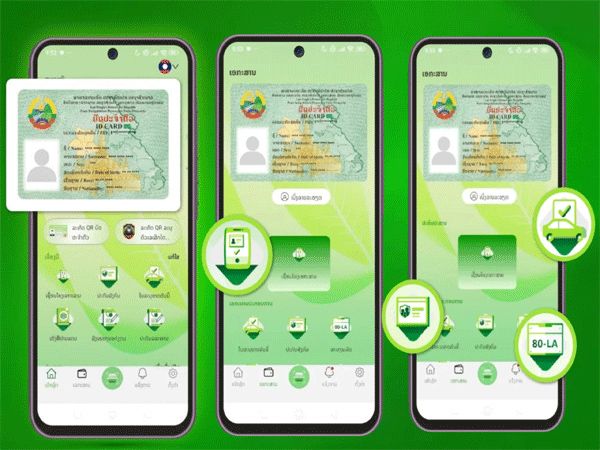
Laos is taking a significant leap toward digital governance by formally discontinuing its longstanding paper-based identity verification system in favour of a unified mobile platform. The Ministry of Public Security has introduced the LAeID application, which signals the end of the white and green identity cards and paper household registration books that have served as the primary form of citizen identification for decades. This transition, effective from July 18, represents an ambitious attempt to modernise public administration across the Southeast Asian nation and aligns with broader regional trends toward e-government services seen in countries like Singapore and Estonia.
The phaseout of physical documents marks a watershed moment for administrative procedures in Laos. Citizens are now obligated to register for digital identity cards and establish electronic identification accounts through the LAeID application to conduct official transactions. The Ministry of Public Security has issued directives ensuring that all government ministries, agencies, organisations and the general public are informed of this nationwide rollout. This sweeping change requires coordinated implementation across the country's administrative apparatus, from district-level public security offices to provincial headquarters where citizens must initially register.
For ordinary Laotians, the practical implications are substantial. Rather than juggling multiple paper documents across different government offices—a process that historically consumed considerable time and effort—citizens will eventually verify their identity through a single smartphone application. The streamlining of documentation reduces the physical burden on citizens while theoretically accelerating administrative processes. This convenience factor is particularly significant for rural populations and those in remote areas, where travel to government offices can be time-consuming and costly.
The LAeID system functions as a digital wallet designed to eventually consolidate an extensive array of official records. While the initial rollout focuses on the digital identity card function, the long-term vision encompasses integration of birth certificates, marriage certificates, health insurance cards, social security information, vehicle registration documents, driving licenses and passports. This phased approach acknowledges the technical complexities of connecting disparate government databases while demonstrating commitment to comprehensive digital integration. The gradual addition of services allows the system to mature and identify technical issues before expanding functionality.
From an administrative efficiency standpoint, the benefits extend beyond citizen convenience. Both public agencies and individual citizens stand to realise cost savings through reduced paperwork, printing expenses and physical document storage requirements. Data management systems become more robust and standardised when information flows through a centralised digital platform rather than scattered across paper records in various offices. This consolidation potentially improves data accuracy and reduces duplicative record-keeping that characterises traditional bureaucratic systems. The Ministry of Public Security retains overall management of the system, maintaining centralised control over one of the nation's most sensitive databases.
The registration process itself is relatively straightforward, though it does require initial effort from citizens. Individuals must visit district or provincial public security offices nationwide to register for their digital identity card before they can activate an electronic identification account. Once registered, each account uses the citizen's identity number as the username, with passwords distributed via SMS following account approval or created during the registration process itself. This multi-factor authentication approach, while basic by international standards, represents an improvement over paper documents that can be easily forged or lost.
Laos' digital identity initiative exists within a broader Southeast Asian context of technological advancement and evolving expectations around government service delivery. Neighbouring countries have pursued similar modernisation paths, and regional development organisations have encouraged member states to adopt digital governance frameworks. For Laos, which has historically lagged in digital infrastructure compared to wealthier regional peers, this transition signals commitment to closing technological gaps and providing citizen services competitive with more developed economies. The move also positions Laos favourably for attracting digital commerce and fintech investment.
However, the success of this transformation depends on several factors beyond the technical architecture. Digital literacy remains a challenge in Laos, particularly among older populations and rural communities with limited smartphone access or internet connectivity. The government will need to implement comprehensive education programmes and maintain parallel systems for those unable to adapt to mobile-based identification. Additionally, cybersecurity and data privacy protections must be robust, as centralising citizen information creates concentrated targets for potential breaches or misuse. Public trust in the system hinges on transparent governance and demonstrated commitment to protecting sensitive personal data.
The LAeID rollout represents a calculated trade-off between immediate inconvenience and long-term systemic benefits. Citizens accustomed to paper-based processes must embrace new digital workflows, while government agencies require staff retraining and infrastructure updates. The transition period will inevitably generate friction as the old and new systems coexist briefly. Yet the potential efficiency gains and improved public service accessibility justify these temporary disruptions. As the system matures and additional databases integrate, Laotians should experience dramatically simplified interactions with government institutions.
For regional observers, Laos' digital identity initiative offers lessons about technology adoption in developing economies. The phased implementation approach, starting with core identity verification before expanding to ancillary services, demonstrates realistic planning that acknowledges infrastructure limitations. The integration of health insurance, social security and vehicle registration data within a single platform could eventually enable more sophisticated public policy implementation, such as targeted welfare distribution or vehicle safety compliance monitoring. The success or failure of LAeID will likely influence digital governance ambitions across Southeast Asia.
Looking forward, the true measure of this initiative's success will emerge over coming years as integration progresses and citizen adoption rates increase. Government agencies must simultaneously maintain operational continuity while transitioning to digital-first workflows. International partnerships with technology providers will likely become necessary as the system scales. For Malaysia and other regional nations observing Laos' experience, the rollout provides valuable data about implementation challenges, citizen resistance patterns and technical obstacles that accompany major administrative digitalisation efforts. The LAeID system exemplifies how even resource-constrained nations can pursue ambitious modernisation goals when political will and technical expertise align.

