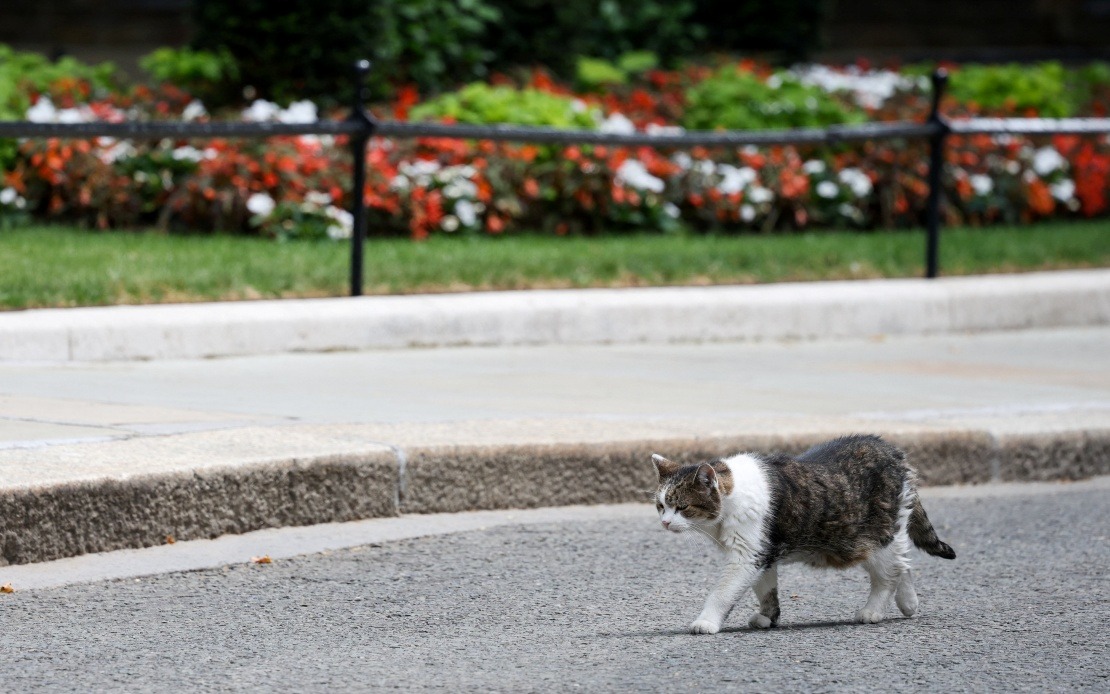
Britain's most famous feline resident continues his reign at 10 Downing Street, having now witnessed the tenure of six consecutive prime ministers. As Andy Burnham convened his first Cabinet meeting following his appointment, Larry—the official residence's long-serving cat—was spotted outside the building on Tuesday, July 21, pursuing his typical daily routine with the indifference that has become his hallmark throughout shifting political landscapes.
The residence at 10 Downing Street has long been home to official cats, a tradition dating back centuries within British government circles. However, Larry has become perhaps the most celebrated and recognisable of these feline inhabitants, achieving a level of public prominence that rivals many politicians themselves. His presence has transcended mere mascot status to become a symbol of institutional continuity within the frequently turbulent world of Westminster politics.
What makes Larry's longevity particularly striking is the context in which it occurs. The past several years have witnessed unprecedented instability within British political leadership, with prime ministers serving increasingly brief tenures. During the same period that Larry has remained a steady fixture at the official residence, the United Kingdom has cycled through multiple governments, each bringing different policies, personnel, and priorities. Yet the tabby has adjusted seamlessly to each transition, his lifestyle unaffected by the constitutional upheavals occurring within the walls around him.
The symbolism of Larry's durability has not been lost on British observers and commentators. In an era when political figures come and go with startling frequency, the permanence of a cat who has observed six different administrations from the same vantage point speaks to something deeper about institutional resilience and the notion of continuity amid chaos. His presence during Cabinet meetings, state visits, and high-level diplomatic gatherings has provided an element of constancy that transcends party politics.
For international observers, particularly those from Commonwealth nations like Malaysia, Larry's story offers an interesting lens through which to view the stability and perpetuation of established institutions. While political leadership changes regularly and sometimes dramatically, the institutions themselves—and their symbolic representations—endure. The presence of a cat at the highest levels of government, treated with almost ceremonial respect, reflects the traditions and continuities that characterise Westminster democracy.
Larry's lifestyle within Downing Street has been well-documented throughout his tenure. He maintains the independence characteristic of cats, often appearing and disappearing according to his own schedule rather than any official programme. His encounters with various prime ministers have become part of political folklore, with some leaders reported to have formed closer bonds with the cat than with certain colleagues. These informal moments, captured in photographs and reported by media outlets, have humanised the offices of state in ways that formal proceedings cannot.
The appointment of a new prime minister typically involves hundreds of personnel changes, shifts in political direction, and a complete reconfiguration of the government's priorities and approach. Yet such transitions appear to concern Larry not in the slightest. He continues his perambulations through the corridors of power, indifferent to the identities of those making decisions in the offices around him. This serene detachment has endeared him to the public, who view him as above the partisan divisions that characterise political life.
The tradition of cats at 10 Downing Street reflects broader British attitudes toward animals and their role in public institutions. Unlike many other government buildings worldwide, which maintain security protocols that would exclude animals from official premises, the British government has consistently welcomed its feline residents. This reflects a cultural perspective that values tradition and continuity, even when they involve unusual institutional practices.
For those monitoring British political developments from the region, Larry's continued presence serves as a useful reminder of the underlying continuities that persist beneath surface-level political turbulence. While governments change and policies shift dramatically, certain institutions and traditions maintain their character. The sight of the cat roaming the grounds as yet another new prime minister assumes office captures something essential about how established democracies balance change with continuity.
As Andy Burnham settles into his new role, Larry remains unimpressed and unbothered, having already adjusted to and outlasted numerous predecessors. The cat's apparent indifference to political upheaval provides an amusing counterpoint to the gravity with which politicians regard their own transitions of power. In this sense, Larry embodies a lesson about perspective and the relative insignificance of individual political careers within the longer arc of institutional history.

