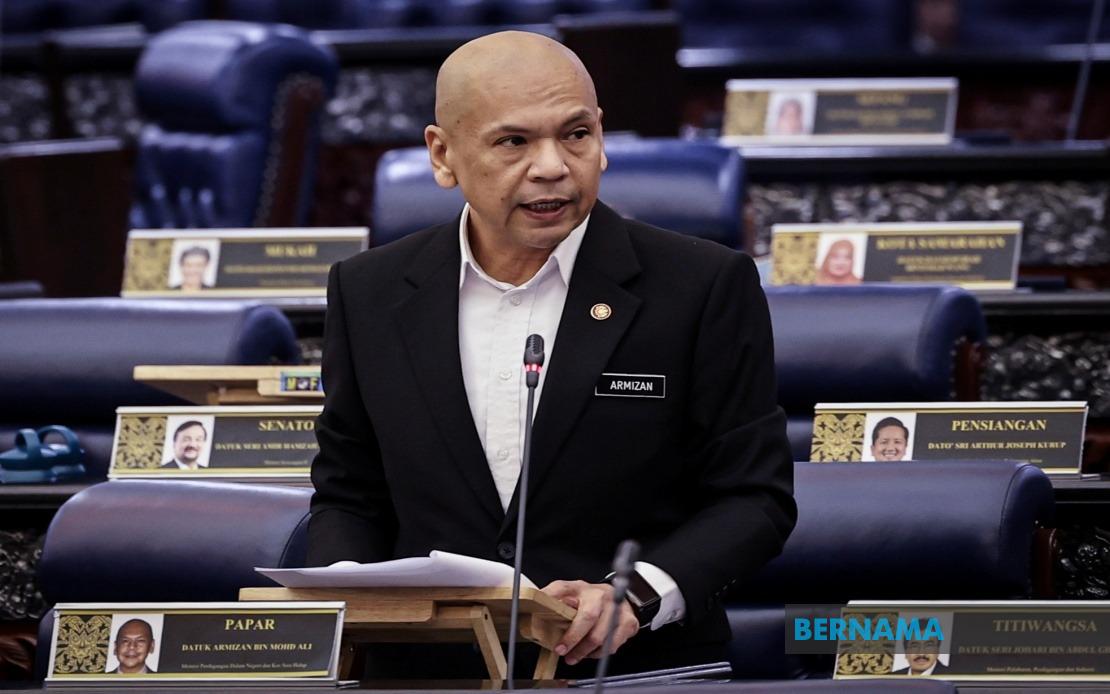
The Parliamentary debate on the Lembaga Tabung Haji (TH) Royal Commission of Inquiry report has intensified calls for a rigorous and impartial investigation into the institution's management failures, with lawmakers stressing that any enforcement action must prioritise the interests of depositors and the broader Malaysian public. The call reflects growing concern that without a systematic, transparent approach to examining the RCI's findings, public confidence in the hajj pilgrimage fund—which manages the savings of millions of Malaysian Muslims—risks remaining eroded.
Datak Armizan Mohd Ali, Minister of Domestic Trade and Cost of Living and Papar MP, articulated a fundamental challenge facing the investigation process: the intense public and political polarisation surrounding the scandal has obscured clarity on culpability. He noted that competing narratives of slander and defamation allegations have created confusion, with various parties making contradictory claims about who bears responsibility for TH's financial difficulties. This fractured discourse, he argued, necessitates intervention from enforcement agencies operating with clear standards of evidence and legal procedure, divorced from the political recriminations dominating public discussion.
Armizan underscored that investigations must be carried out with professional rigour, ensuring that any conclusions rest upon factual assessment and proper legal analysis rather than political convenience or media speculation. This emphasis on procedural integrity is particularly significant in Malaysia's context, where public institutions have faced recurring scrutiny over governance and corruption. The minister indicated that simultaneous examination of the RCI's 25 reform recommendations would be equally crucial to completing TH's rehabilitation, suggesting that structural remediation must accompany accountability measures to prevent similar failures.
The RCI report, released publicly on July 29 following government approval, documented significant governance weaknesses spanning 2014 to 2020—a period encompassing multiple administrations. As of late July, TH had already implemented roughly 75 per cent of the commission's recommendations, indicating some institutional responsiveness. However, the scale of the original failures—which depleted depositor funds and generated substantial losses—demands scrutiny extending beyond administrative reform to potential criminal or civil liability, depending on the facts uncovered.
Women, Family and Community Development Minister Datuk Seri Nancy Shukri introduced a complementary dimension to the debate by addressing structural governance questions. She reaffirmed the existing arrangement whereby religious affairs remain under the Prime Minister's Department whilst financial and investment matters fall to the Finance Ministry, characterising this division as rational specialisation rather than fragmentation. This institutional arrangement reflects Malaysia's constitutional allocation of religious authority to the Prime Minister's portfolio, a practice that has generated debate over whether concentrated responsibility for both religious and financial aspects of hajj administration creates dangerous overlaps.
Nancy's remarks on board appointments struck at a recurring tension in Malaysian corporate governance: the distinction between political patronage and merit-based selection. She argued that the critical question is not whether appointees possess political backgrounds, but whether they demonstrate requisite integrity, qualifications, relevant experience, and genuine capacity to execute their mandates. This formulation implicitly acknowledges that Malaysian institutions frequently appoint political loyalists to boards—a practice that becomes problematic only when such appointees lack substantive credentials or commitment to fiduciary duty.
The minister proposed establishing explicit criteria for board member selection, transparent appointment methodologies, and clearly defined areas of required expertise. Such formalisation would shift emphasis from personal connections to documented suitability, potentially constraining the discretionary appointment power that has enabled politically-motivated board composition in the past. For TH specifically, this approach would require identifying the precise competencies necessary for overseeing a massive faith-based investment vehicle managing billions in depositor funds—a question that should prioritise financial acumen, risk management experience, and Islamic finance expertise over partisan credentials.
The special Dewan Rakyat sitting represents Parliament's attempt to exercise meaningful oversight of executive and institutional performance. TH's significance extends beyond its immediate depositors; the institution represents a crucial financial mechanism within Malaysia's Islamic economy and carries symbolic weight as a government-managed pillar of religious observance. Any investigation must therefore balance accountability for past misconduct with restoration of institutional credibility, a challenge requiring sustained political will and professional independence from enforcement agencies.
For Malaysian depositors, many of whom are elderly retirees or whose hajj savings represent years of accumulated contributions, the investigation carries profound personal consequences. The governance failures exposed by the RCI translated into tangible losses affecting thousands of families. A transparent, professionally-executed investigation can help determine whether losses resulted from honest mistakes, negligent oversight, or deliberate misconduct—distinctions that carry implications for potential compensation, criminal prosecution, or institutional reform priorities.
The regional context further underscores the investigation's importance. Southeast Asian nations increasingly scrutinise how Muslim-majority countries manage religious financial institutions, viewing governance quality as indicative of broader institutional maturity. Malaysia's handling of the TH scandal will influence investor and depositor confidence across Islamic finance mechanisms throughout the region. A transparent investigation demonstrating institutional accountability and reform capability would strengthen confidence; conversely, perception of political protection for culpable officials could damage Malaysia's reputation in global Islamic finance markets.
Parliamentary pressure for investigative rigour reflects recognition that administrative reform alone cannot satisfy public demands for justice and accountability. The RCI's identification of weaknesses now requires enforcement agencies to examine whether specific individuals or entities engaged in actionable wrongdoing. This prosecutorial phase demands independence from political interference, clear evidentiary standards, and commitment to pursuing culpability regardless of political affiliation—a challenging proposition in any system where ruling parties exercise prosecutorial discretion.
Moving forward, Malaysia's response to the TH scandal will serve as a test case for whether the nation can manage high-profile institutional failures through transparent investigation and credible accountability. Success would require consistent messaging from political leadership that institutional integrity supersedes partisan protection, adequate resourcing for enforcement investigations, and demonstrated willingness to prosecute credible cases regardless of political sensitivities. The challenges are substantial, but so too are the stakes for depositors and for public confidence in Malaysian institutional governance.

