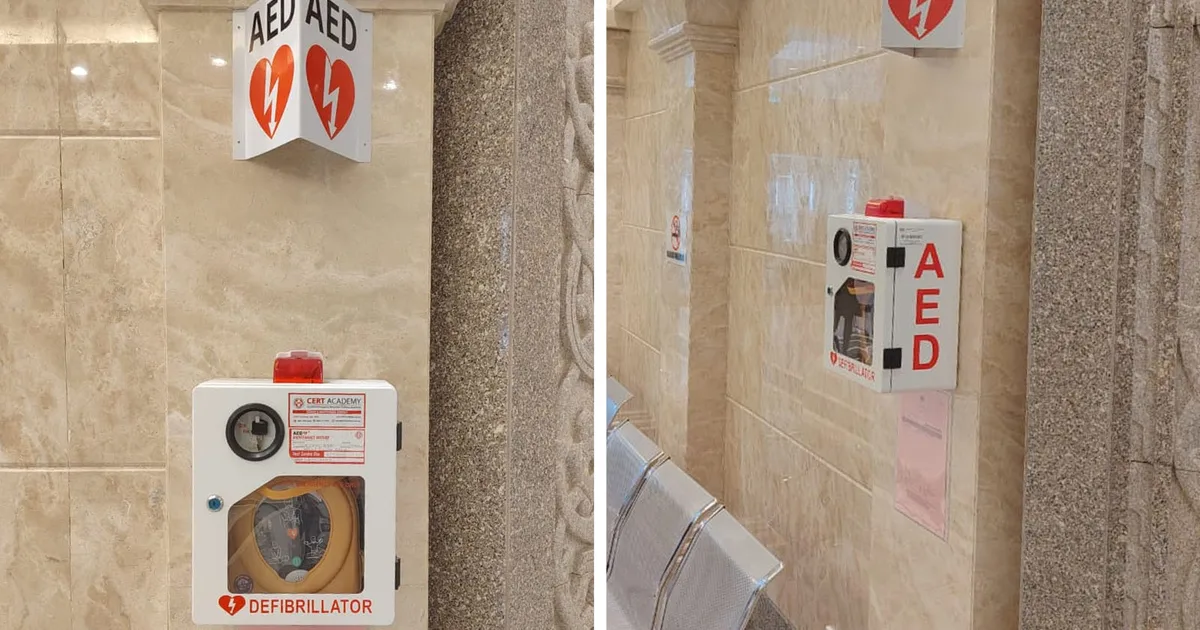
Members of Malaysia's legal profession are making an urgent appeal for automated external defibrillators to be placed throughout major court complexes nationwide, following a tragic incident in which a litigant collapsed and died from cardiac arrest within a Kuala Lumpur High Court courtroom. The incident has reignited discussions about emergency preparedness and public safety in spaces where proceedings can be emotionally and physically taxing for all involved.
The death of the litigant underscores a vulnerability that legal professionals say has long gone unaddressed in the nation's judicial infrastructure. Courts are busy environments where individuals may be facing proceedings of profound consequence to their lives and livelihoods, circumstances that can place considerable psychological and physical strain on participants. When a medical emergency occurs, the minutes between collapse and professional intervention often determine outcomes. Without immediate access to life-saving equipment, even healthy individuals experiencing sudden cardiac events face drastically reduced survival prospects.
Automated external defibrillators, commonly abbreviated as AEDs, are portable electronic devices designed to analyse the heart rhythm and deliver therapeutic shocks when necessary to restore normal cardiac function. Modern AEDs are straightforward enough for untrained bystanders to operate, with voice-guided instructions and intuitive controls. Their presence in public spaces has been associated with significantly improved survival rates in multiple jurisdictions globally. Singapore and other developed Asian economies have implemented comprehensive AED placement programmes in government buildings and public spaces, viewing them as essential infrastructure rather than optional amenities.
Court complexes present a particularly compelling case for AED installation from a public health perspective. These facilities host not only legal professionals but also litigants, witnesses, court staff, and members of the public attending proceedings. The population passing through court buildings daily is diverse in age and health status, and the stressful nature of legal proceedings means that individuals already experiencing cardiac risk factors are operating under heightened physiological strain. Unlike hospitals or clinics, courts are not designed or staffed with emergency medical personnel, creating a gap in immediate response capability during crises.
The lawyers' advocacy reflects broader international best practice standards. Many Commonwealth jurisdictions, including Australia and New Zealand, have mandated AED availability in all government buildings serving the public. In Canada, requirements for public access defibrillation programmes have expanded substantially over the past two decades, with recognition that survival chances from cardiac arrest plummet by approximately 10 per cent with each minute of delay in defibrillation. Malaysia's court system, serving millions of citizens annually, currently lacks comparable systematic coverage.
Implementing defibrillators across the court estate would require coordination between multiple stakeholders, including the judiciary, court administration, building management services, and potentially the Ministry of Health. Initial capital investment would be moderate compared to the budgetary scale of court operations, though ongoing requirements for device maintenance, battery replacement, and staff familiarisation would constitute recurring expenses. Training programmes could be integrated with existing court security and administrative staff protocols, ensuring that personnel are prepared to respond effectively if defibrillators are ever required.
The proposal also touches on broader questions about emergency preparedness within Malaysia's public institutional infrastructure. Government buildings, from immigration offices to land registries, currently operate without mandatory defibrillator requirements in most cases. The tragic incident at the High Court may catalyse wider review of emergency medical equipment standards across multiple agencies. Other court systems in Southeast Asia, particularly those in rapid-growth urban areas experiencing high stress-related health issues, might similarly benefit from examining their readiness for medical emergencies within judicial spaces.
From a liability and governance perspective, the absence of readily available life-saving equipment in public buildings where people regularly gather poses institutional risk. Should another cardiac emergency occur at a court complex, questions would inevitably be raised about whether available equipment could have altered the outcome. Proactive installation of defibrillators demonstrates institutional commitment to visitor and staff safety, reducing potential exposure to legal and reputational consequences.
The lawyers' call has found support among medical professionals and public health advocates who view AED accessibility as a straightforward intervention with proven efficacy. Unlike many health interventions requiring sustained lifestyle changes or complex protocols, defibrillator installation is a one-time capital expenditure that requires minimal ongoing management. The devices occupy minimal physical space and can be strategically positioned near courtrooms, chambers, and common areas where medical emergencies are most likely to occur.
Movement on this proposal would represent practical application of the judicial system's responsibility toward those who appear before it. Litigants already face substantial burdens—financial, emotional, and temporal—when engaging with courts. Ensuring that basic emergency medical equipment is available should be considered a fundamental aspect of institutional duty of care. The incident that prompted this call serves as a sobering reminder that medical emergencies do not discriminate based on location, and institutional settings serving large populations should be equipped accordingly.
Going forward, the legal profession's advocacy may prompt administrative and policy discussions within the courts' governing bodies. Implementation timelines, prioritisation of court complexes, and funding mechanisms would need clarification. However, the underlying principle appears sound: a system genuinely committed to the welfare of those who engage with it should ensure access to basic life-saving technologies. For Malaysia's courts, that principle remains currently unfulfilled.

