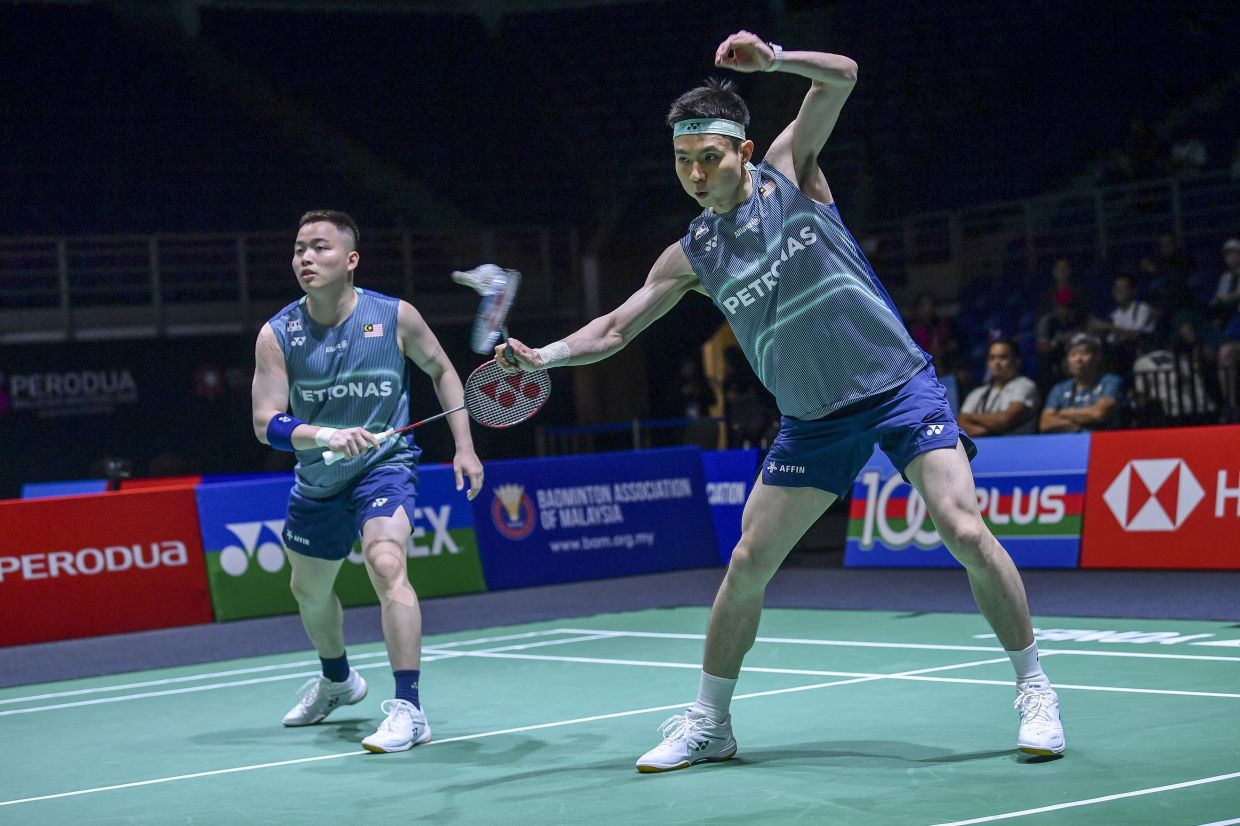
Datuk Seri Lee Chong Wei, the Badminton Association of Malaysia's performance committee chairman, has delivered a stern message to national team players: no individual athlete should attempt to leverage departure threats as a bargaining tool with the federation. The warning came in response to comments from men's doubles player Soh Wooi Yik, who recently indicated he and partner Aaron Chia might explore alternative arrangements if their preferences regarding staying together as a pairing were not accommodated through the 2028 Los Angeles Olympics.
Lee's intervention signals a notable shift in how BAM's current leadership intends to manage player relations and strategic decision-making. Rather than capitulating to pressure tactics rooted in an athlete's market value or recent tournament success, the federation is adopting a firmer negotiating stance. Lee emphasised that while BAM remains willing to engage in constructive dialogue with its contracted players, such conversations must occur within a framework of mutual respect and genuine discussion rather than ultimatums or threats of withdrawal.
The underlying tension reflects a broader challenge facing national sporting bodies across Southeast Asia: balancing the autonomy and ambitions of elite athletes against the institutional interests and long-term planning requirements of the federation. In Malaysia's case, the badminton programme remains globally competitive, and individual stars possess considerable leverage in international markets. Yet Lee's comments suggest BAM intends to reassert its authority over player career trajectories and team composition decisions, even when those choices frustrate individual athletes.
Central to the current dispute is the pairing of Aaron Chia and Soh Wooi Yik, who captured the silver medal at the World Championships in New Delhi the previous week. The pair has publicly expressed a preference to remain together through the Los Angeles Olympic cycle, viewing their partnership as matured and effective. However, BAM's coaching apparatus has been systematically experimenting with alternative combinations, reflecting the federation's conviction that exploring multiple pairings serves the national programme's long-term competitive interests.
Over the preceding two months, the federation's experimental approach saw Aaron Chia partnered with Aaron Tai, with that combination finishing as runners-up at the Taiwan Open. Meanwhile, Soh Wooi Yik initially struggled alongside Man Wei Chong before reaching the final of the Korean Masters with a different partner. These rotations represent a deliberate strategy to evaluate depth across the men's doubles ranks rather than cementing any single partnership prematurely. The China Masters tournament, scheduled to commence on September 1st, would see further reshuffling, with Aaron Chia set to pair with Wei Chong while Soh Wooi Yik teams with Aaron Tai.
Lee's remarks underscored the foundational principle that players owe their development and current status to BAM's infrastructure, coaching systems, and institutional investment. By this logic, contracted athletes cannot simply disregard federation decisions when those decisions conflict with personal preferences. The performance committee chairman pointedly noted that the current management is neither intimidated by departure threats nor inclined toward the accommodative approach apparently characterised previous administrations. This represents a philosophical recalibration within BAM's leadership regarding player discipline and institutional authority.
The stakes for any player who might pursue independent status or formal departure from the national programme are substantial and multifaceted. Aaron Chia and Soh Wooi Yik, like other contracted athletes, are bound to BAM through 2028 via formal agreements. Should they attempt to exit the national set-up, they would potentially face significant financial penalties and compensation obligations to the federation. Beyond monetary considerations, independence would carry competitive consequences: athletes operating outside BAM's sanctioned framework could encounter barriers to international tournament participation, a restriction that would severely compromise their ability to accumulate the ranking points necessary for Olympic qualification.
This contractual and regulatory architecture effectively limits the practical options available to dissatisfied players, creating a structural asymmetry that favours the federation's institutional interests. For Aaron and Wooi Yik, the mathematics are clear: genuine competitive viability for 2028 Los Angeles requires remaining within BAM's ecosystem, regardless of personal frustrations regarding pairing decisions or coaching strategies. The federation's leverage derives not primarily from persuasive argument but from the player's fundamental dependence on the national system for international opportunity.
Lee's warning also reflects broader tensions within Malaysia's badminton programme regarding coaching philosophy and player management. The emphasis on testing multiple combinations, while potentially sensible from a strategic development perspective, creates uncertainty and instability for athletes accustomed to stable partnerships. That uncertainty, combined with federation insistence on experimental rotations, generates the frustration that occasionally erupts into public statements about exploring external options. By publicly stating BAM's refusal to be pressured, Lee was simultaneously signalling to the broader player cohort that such public posturing would prove ineffective.
The broader context includes Malaysia's continued reliance on badminton excellence as a source of national sporting pride and international standing. A competitive men's doubles programme remains central to that narrative. The federation's willingness to experiment with partnerships, despite player preferences, reflects conviction that such dynamism serves long-term competitive objectives. However, the approach carries reputational risks if perceived as dismissive of athlete welfare or arbitrary in application.
For Malaysian badminton followers, the unfolding situation illuminates how national sporting organisations increasingly assert institutional prerogatives over individual athlete preferences. The days when star players could unilaterally dictate terms have, according to Lee's positioning, conclusively ended under BAM's current regime. Whether this firmer approach ultimately strengthens or destabilises the national programme remains contingent on whether experimental partnerships yield competitive improvements justifying the disruption they create.
Moving forward, the dynamic between BAM's leadership and contracted athletes will likely remain tense. The federation has made clear it will not be coerced by departure threats, contractual arrangements protect BAM's interests, and international participation depends on federation sanction. Within those constraints, Aaron Chia and Soh Wooi Yik, along with other elite players, must navigate career objectives through negotiation and accommodation rather than ultimatums. The performance committee chairman's warning establishes those terms unmistakably.

