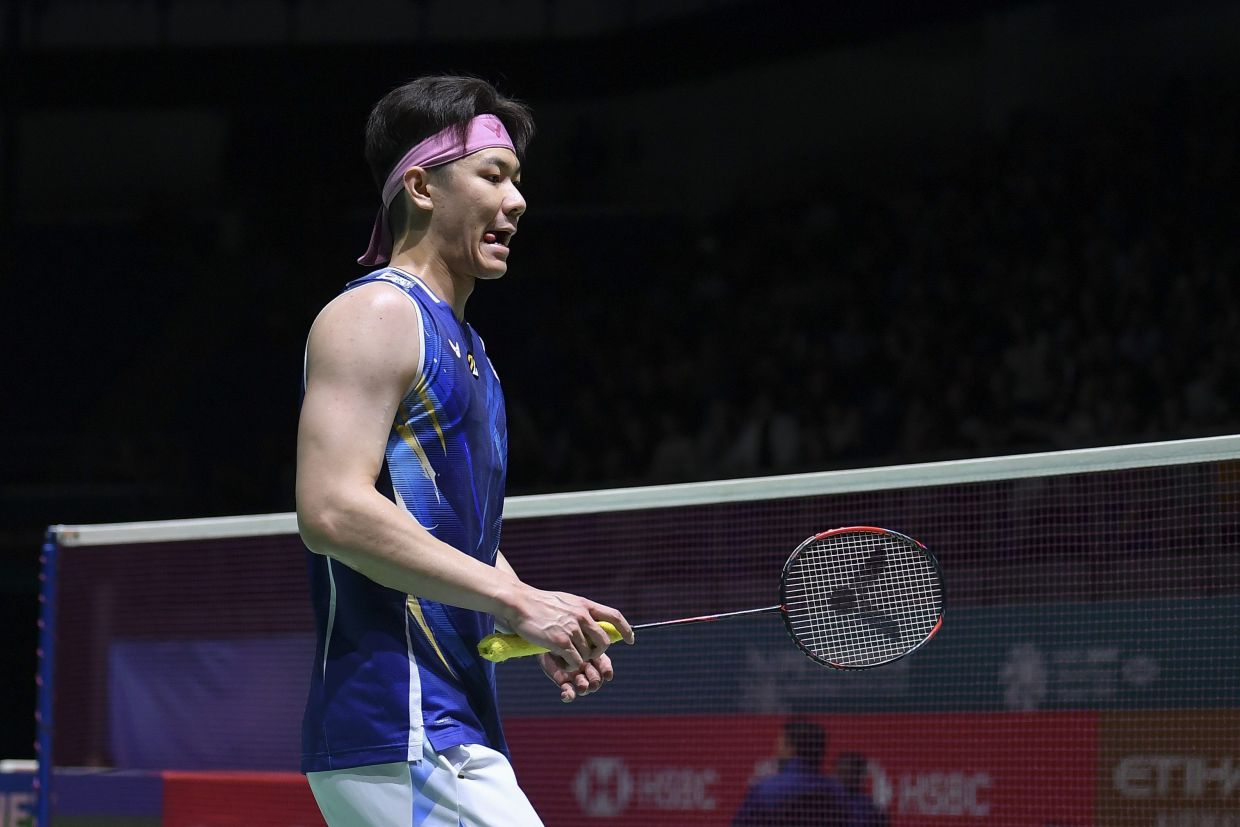
Lee Zii Jia has made an emphatic declaration that he will not abandon his badminton career despite confronting one of the most demanding stretches of his professional life over the past twelve months. The 28-year-old Malaysian men's singles shuttler took to social media on Sunday to confirm his determination to persist with the sport, signalling that stepping away remains entirely off the table regardless of the mounting pressures he has faced.
The Kedah-born athlete has spent recent months wrestling with a combination of setbacks—persistent injuries, inconsistent results on court, and the psychological toll of self-doubt—yet he refuses to surrender to these challenges. Zii Jia's message was fundamentally one of gratitude, acknowledging the crucial role that supporters have played in sustaining his resolve during periods when his own confidence wavered considerably. He expressed particular appreciation for friends and fans who chose to encourage him repeatedly even when circumstances appeared darkest.
In his candid social media statement, Zii Jia reflected on the emotional toll of his recent struggles, admitting there were stretches when he felt disconnected from his own identity and questioned why his supporters maintained faith in him despite his diminished performances. His response to this introspection proved transformative: he came to understand that the value of an athlete transcends winning alone, and that genuine support extends to those genuinely endeavouring to improve regardless of immediate results. This philosophical shift appears to have reinforced his psychological foundation as he contemplates the path forward.
The Olympic bronze medallist has been transparent about the difficulties arising since his departure from Malaysia's national badminton programme in 2022. That transition marked a significant turning point in his career trajectory, and the subsequent period has tested his resilience in unforeseen ways. Beyond the physical challenges of managing injuries, Zii Jia struggled with the emotional weight of poor form and the frustration of watching his rankings decline against previously established benchmarks.
Central to Zii Jia's struggles was his inability to articulate his concerns to those immediately surrounding him, a silence that compounded his difficulties and contributed to feelings of isolation. However, he eventually found the courage to break that silence, recognising that taking agency over his own circumstances was essential to his recovery. This shift from passive acceptance to active decision-making has become the cornerstone of his renewed approach to both career and personal development.
Zii Jia's current strategy prioritises autonomy and self-determination, moving away from external pressures that he felt constrained his ability to operate effectively. His insistence on fighting for personal freedom, decision-making authority, and a more supportive environment reflects a maturation in his understanding of what conditions he requires to perform optimally. He acknowledged that even failure, when resulting from his own choices, becomes more tolerable and manageable than success achieved under restrictive circumstances.
Looking toward the immediate future, Zii Jia emphasises that his foremost objective is recalibrating his focus to court performance and systematically reconstructing both his life and sense of self. This incremental approach, rather than chasing immediate tournament victories, suggests a recognition that sustainable recovery requires patience and consistent effort across multiple dimensions of his existence. The structured nature of this plan contrasts sharply with the reactive posture he occupied during his most difficult period.
Recent results have provided modest encouragement. Zii Jia's performance at the Canadian Open represented his strongest showing in 2024, culminating in a semi-final appearance before he succumbed to Japan's Koki Watanabe. While not a championship triumph, this result demonstrated that his competitive capabilities remain intact and that incremental progress is achievable despite the formidable obstacles confronting him.
His near-term schedule includes tournaments at the Taiwan Open, scheduled from July 28 through August 2, followed by the Korean Masters taking place from August 4 to 9. These competitions will provide early indicators of whether his renewed mental framework and refocused approach are yielding tangible improvements. For Malaysian badminton enthusiasts, Zii Jia's journey carries significance beyond individual achievement—it reflects broader themes of resilience, mental health awareness, and the importance of supportive environments in elite sport.
The shuttler's situation also resonates within the Malaysian sports landscape, where questions about athlete welfare, autonomy, and the structures surrounding competitive development remain ongoing conversations. Zii Jia's experience illustrates how systemic factors can influence individual performance and underscores the necessity for badminton governance to consider not merely technical training but the psychological and personal wellbeing of its competitors. His determination to forge a sustainable career path independent of previous constraints offers a model of agency worth observing.
As Zii Jia embarks on this comeback phase, his message to supporters carries additional weight—it is not merely about tournament results but about demonstrating that individuals can reclaim control over their circumstances and rebuild following periods of profound difficulty. This narrative extends beyond badminton into the broader Malaysian consciousness, where discussions of mental health, professional autonomy, and the courage required to redefine one's trajectory remain increasingly relevant to audiences across diverse fields.

