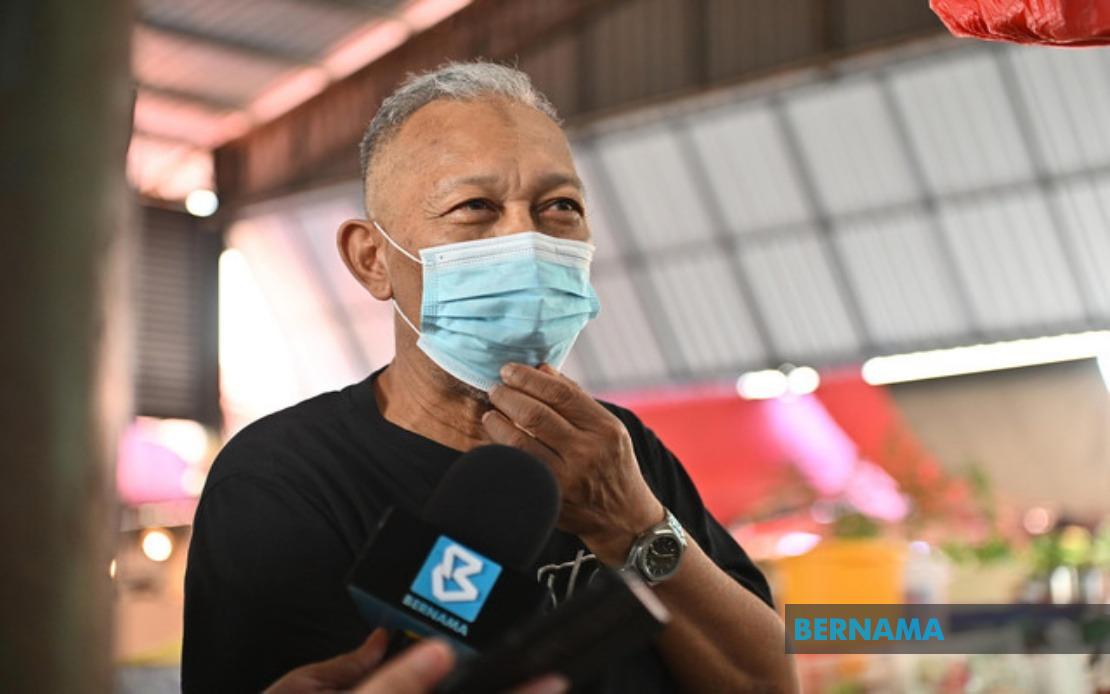
Residents of Serian are persisting with their essential routines despite air quality conditions that have crossed into the unhealthy range, reflecting the difficult balance between economic necessity and public health concerns that many communities in Malaysia and the broader region must navigate during haze episodes. The Air Pollutant Index in Serian reached 178 as of 4 pm on August 13, a level that triggers health advisories and recommendations for vulnerable populations to remain indoors, yet the economic realities facing ordinary Malaysians often leave little room for such precautions.
The situation on the ground at Serian Tamu Market reveals the complex human dimension of air quality crises that raw data alone cannot capture. While some traders have adopted protective measures including face masks, the marketplace continues to function as a vital economic and social hub, albeit with noticeably reduced vitality. This pattern of reluctant continuation despite adverse conditions speaks to the resilience of communities but also underscores a troubling reality: that ordinary citizens often bear the burden of environmental degradation because the economic cost of shutdown is simply too great for those operating on thin margins.
Asmail Kipli, a 62-year-old vegetable seller from Gedong, exemplifies the difficult position facing many small traders throughout Malaysia's towns and rural areas. Despite witnessing a steep 30 percent decline in both customer foot traffic and his income over several days, he maintains his stall because the fixed costs of his livelihood remain unforgiving. The mathematics are brutally simple: closing his stall would mean unpaid rent with no compensating income, a situation that many of Malaysia's self-employed and informal sector workers face during extended haze episodes. His assessment that the current haze level is manageable for conducting business reflects not optimism but rather resignation to circumstances beyond his control.
Fruit merchant Marina Latong faces a more precarious situation, having already implemented a drastic reduction in her operating schedule by cutting her working day short at 3 pm instead of the presumably longer hours she normally maintains. Her position illustrates the trajectory many traders follow as environmental conditions deteriorate: initial adaptations give way to more severe restrictions, with temporary closures emerging as an increasingly likely outcome should the haze persist. Her willingness to consider temporary closure represents a threshold beyond which economic activity becomes genuinely untenable, though the financial consequences of such decisions weigh heavily on vendors dependent on daily earnings to meet household expenses.
The broader community response demonstrates a measured adaptation to degraded air quality conditions. Residents throughout Serian's villages continue conducting necessary errands such as grocery shopping and procurement of essential goods, though the pattern suggests increased caution and deliberation about venturing outdoors. This behavioural shift reflects both health awareness and the practical reality that certain activities simply cannot be postponed indefinitely, regardless of air quality. Many families must still purchase food, medicines, and supplies even when doing so requires exposure to unhealthy air.
The temporary closure of 107 schools across Serian from August 13 through Friday represents a more decisive intervention, prioritising the health of younger populations who face elevated vulnerability to air pollution. This decision acknowledges that educational activities, unlike market trading or grocery shopping, can be rescheduled or conducted through alternative means. The closure reflects official recognition that the API level of 178 constitutes genuine public health risk, a threshold at which authorities deem in-person school attendance inappropriate. The announcement typically triggers cascading consequences for working parents who must arrange childcare, for students who miss instructional time, and for school meal programmes that support economically disadvantaged families.
Serian's experience mirrors patterns observed across Malaysia and Southeast Asia during haze episodes, where environmental crises create complex social and economic ripple effects extending far beyond air quality measurements. The region's periodic battles with transboundary haze have long highlighted the tension between immediate economic pressures on individuals and families, and broader public health imperatives. Small-scale traders cannot simply cease operations because aggregate API data suggests unhealthy conditions; their households depend on daily income in ways that wealthier segments of society, with savings and alternative income sources, do not.
The situation also underscores Malaysia's reliance on informal sector workers and small traders who form the backbone of local economies but often lack the institutional protections that formal sector employees enjoy. During environmental crises, these workers absorb losses in income and face health risks without compensation or workplace protections, as their economic survival permits no pause for environmental degradation. The contrast between school closures—a clear, enforceable public health measure—and the continued operation of markets reflects the limited tools available to authorities when intervening in informal economic activity.
Looking forward, episodes like this in Serian prompt important questions about how Malaysia and its Southeast Asian neighbours can better protect both environmental and economic interests during transboundary haze events. While short-term adaptations by individual traders and families demonstrate human resilience, they should not substitute for more systematic approaches to supporting livelihoods during environmental crises. Temporary income support programmes, subsidised healthcare access, and coordinated regional efforts to address root causes of haze pollution represent longer-term policy responses that could ease the burden currently borne by ordinary Malaysians navigating the difficult intersection of health and economic necessity.

