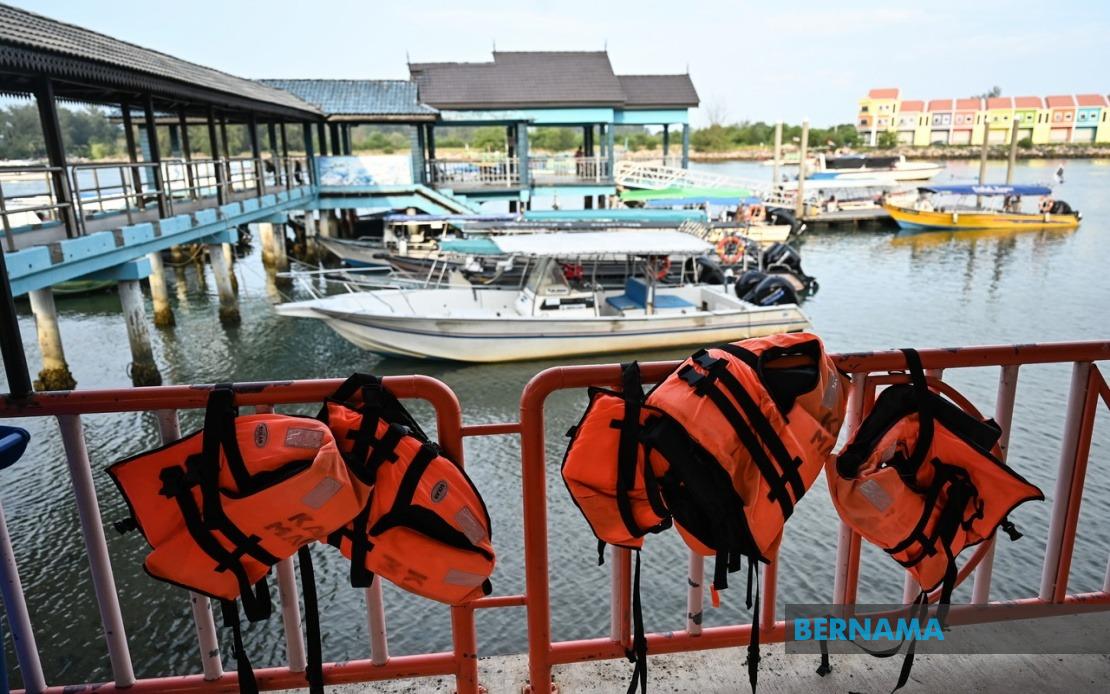
State authorities in Terengganu have intensified safety messaging following a tragic incident in which a squid jigging vessel capsized approximately nine nautical miles off Dataran Kuala Nerus, resulting in one fatality and three injuries. Datuk Razali Idris, the state's Tourism, Culture, Environment and Climate Change Committee chairman, has issued an emphatic call for all water-based activity participants to maintain continuous life jacket usage throughout their time aboard vessels, including during rest periods or sleep.
The capsize occurred at approximately 9 pm, claiming the life of Ahmad Nasaruddin Mohmad Jalil, 37, a crew member. Three squid jigging participants—Faris Ibrahim, 33, Ahmad Danial Iman, 24, and Fatin Fariesya Rohaizan, 26—sustained injuries, whilst eight individuals were rescued. Two of the injured received outpatient treatment at Hospital Sultanah Nur Zahirah in Kuala Terengganu, with the third continuing to receive follow-up medical care. Kuala Terengganu police chief ACP Azli Mohd Noor confirmed these details.
Razali's remarks underscore a critical gap in maritime safety compliance that extends well beyond squid jigging activities. He emphasised that vessels carrying any category of participant—whether crew members, leisure passengers, or commercial activity participants—must maintain comprehensive safety equipment including life jackets, fire extinguishers, and other essential apparatus. The fundamental principle he articulated is that human safety cannot be compromised regardless of circumstances, including moments of inactivity aboard vessels.
A particularly significant aspect of Razali's guidance concerns the pervasive tendency of both operators and participants to regard life jackets as unnecessary during non-active phases of maritime excursions. This misconception has contributed to preventable deaths across regional waters. By drawing explicit attention to the requirement that life jackets remain fastened even during sleeping or resting periods, officials are attempting to reshape cultural attitudes toward personal protective equipment at sea—an effort that demands sustained reinforcement given decades of established but problematic practice.
Beyond individual protective measures, Razali advocated for mandatory pre-departure safety briefings to become standard practice across all commercial maritime operations. These briefings should address specific elements including prevailing weather and sea conditions, anticipated trip duration, and proper life jacket fitting techniques. He drew a parallel to established protocols used by island-bound tourist ferry operators, suggesting that the maritime industry already possesses operational frameworks suitable for broader implementation. This standardisation would capitalise on existing successful models whilst creating regulatory consistency.
The responsibility for determining voyage safety ultimately rests with experienced boat skippers who possess genuine knowledge of contemporary sea conditions and operational capabilities. Razali highlighted that participants must refrain from pressuring skippers to proceed when maritime conditions exceed safe operating parameters. He noted that most Terengganu operators demonstrate professional responsibility, readily offering refunds rather than risking passenger safety when conditions deteriorate. This observation suggests that cultural factors rather than economic disincentives may sometimes drive unsafe decision-making.
Regarding the specific incident, preliminary understanding suggests the vessel was properly maintained and operated by an experienced skipper, though formal investigation into underlying causation remains ongoing. Whilst sea conditions were rough at the time, the situation did not constitute a formal storm warning. Investigation indicates that seawater infiltrated the engine compartment, ultimately leading to vessel sinking. Critically, all passengers aboard had been wearing life jackets at the moment of incident—a circumstance that directly contributed to their survival and underscores the absolute necessity of continuous usage.
Terengganu authorities determined that existing standard operating procedures for squid jigging activities remain adequate, with no plans for comprehensive regulatory revision. Instead, Razali emphasised that enforcement of established safety protocols and genuine compliance with existing guidelines constitute the primary path forward. This position reflects recognition that regulatory insufficiency does not explain the current situation; rather, implementation gaps and participant non-compliance represent the core challenges.
Crucially, the state government's capacity to mandate maritime safety remains circumscribed by jurisdictional limitations. The Malaysia Marine Department retains authority over vessel licensing and operational approval, meaning state authorities can issue recommendations but cannot unilaterally enforce certain compliance measures. Terengganu officials therefore stressed the imperative for squid jigging operators to comply strictly with any warnings or restrictions issued by the Malaysia Marine Department, particularly prohibitions against maritime operations during periods of adverse weather conditions.
For Malaysian maritime workers and recreational participants, this incident crystallises the tension between established risk tolerance and evidence-based safety requirements. The squid jigging sector has operated for generations with gradually evolved, relatively informal safety practices. However, the transition from unregulated artisanal activity to semi-commercialised tourism-adjacent operations has not been accompanied by proportionate safety infrastructure upgrades. This regulatory lag creates vulnerability, particularly when participants from urban backgrounds unfamiliar with maritime risks encounter professional operators whose safety cultures were developed during less litigious, less regulated historical periods.
The broader Southeast Asian context amplifies these concerns. Coastal communities across the region rely extensively on maritime activities for economic sustainability, yet maritime safety investments remain disproportionately modest relative to other infrastructure priorities. Malaysian authorities' relatively transparent approach to incident investigation and willingness to publicly emphasise safety reinforcement—even whilst acknowledging jurisdictional constraints—provides a regional template, though implementation consistency remains inconsistent across states and sectors.

