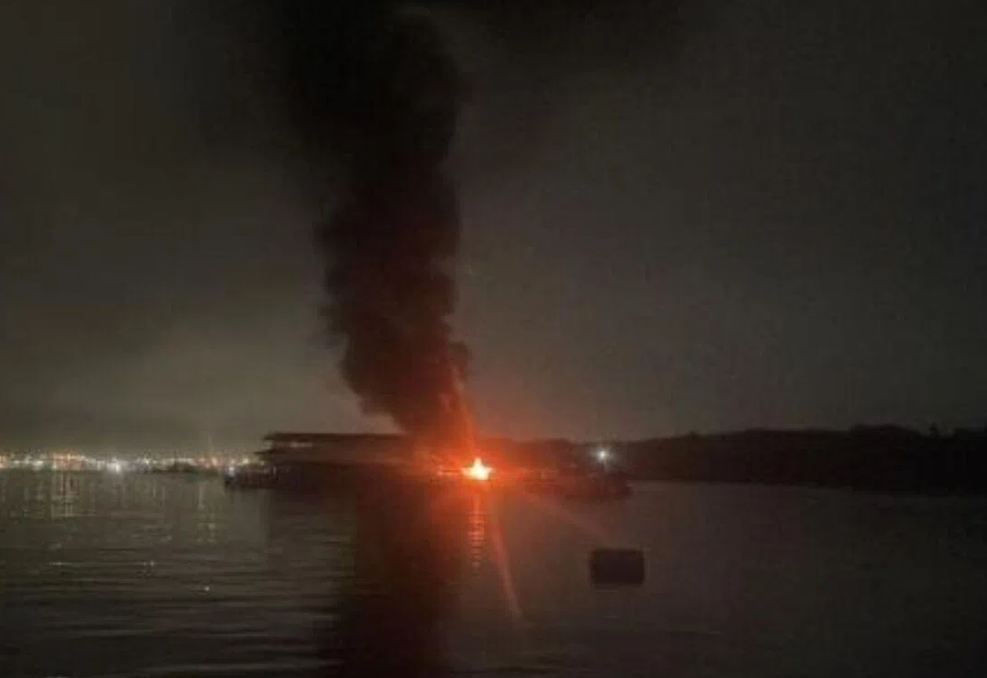
A fire that swept through at least two floating fish farms positioned off the Lorong Halus jetty near Pasir Ris tested Singapore's emergency response capabilities on the evening of June 24, when the Civil Defence Force was called to extinguish flames believed to have originated from a lightning strike. The blaze began at one facility and subsequently spread to at least two adjacent farms before firefighting crews managed to bring it under control after several hours of intensive effort. The incident underscores the vulnerability of aquaculture operations in the region to sudden weather phenomena, particularly during monsoon seasons when electrical storms are frequent across Southeast Asian waters.
According to accounts provided by one affected farm owner, the fire originated when lightning struck the solar panel installation at one of the farms. Solar panels have become increasingly common at floating fish farms throughout Singapore and the wider region as operators seek to reduce operational costs and environmental footprint. However, the incident highlights an unintended consequence: the electrical conductivity of these systems may actually increase vulnerability during severe weather events. The farm owner noted that this was not an isolated occurrence, having experienced previous lightning damage to solar panels, but earlier incidents had been contained because workers were present to respond immediately.
The Singapore Civil Defence Force received the emergency call at approximately 8.10 pm and dispatched marine vessels from the Maritime and Port Authority of Singapore, along with Airport Emergency Service personnel. Local workers from neighbouring fish farms played a crucial supporting role in helping to control the spread of flames across the water, demonstrating the collaborative spirit that characterises Singapore's tight-knit aquaculture community. The absence of recorded injuries represents a fortunate outcome given the industrial nature of floating farm operations and the fire's intensity.
The timing of the incident proved consequential for one farmer's ability to contain losses. The owner explained that his facility was unattended when the lightning strike occurred, a circumstance that permitted the fire to develop and spread unchecked to neighbouring operations. Had workers been stationed at the farm, as was the case during previous lightning incidents, the fire might have been extinguished in its initial stages before threatening adjacent facilities. This distinction highlights the operational challenges facing smaller aquaculture enterprises that cannot always maintain round-the-clock on-site presence.
The financial toll extracted by the fire proved substantial. One farm owner calculated his losses at approximately S$120,000, encompassing destruction of critical infrastructure and assets. The damaged inventory included fish feed stocks, electrical generators, solar panel systems, a fishing vessel, and multiple fish traps essential to daily operations. Beyond the immediate destruction, fishing nets suffered considerable damage during firefighting efforts, and the owner estimated that at least half of the farm's fish inventory escaped during the chaos, representing both lost revenue and potential ecological implications for surrounding waters.
A particularly troubling dimension of the incident emerged when the affected farmer revealed his inability to claim insurance coverage for the fire damage. This disclosure raises significant questions about insurance products available to floating fish farm operators in Singapore and whether current policies adequately address weather-related disasters. For small and medium-sized aquaculture businesses operating on tight margins, the absence of insurance protection transforms a serious operational setback into a potentially devastating financial crisis that may threaten business viability.
The geographical setting of the incident warrants consideration. The farms operate near Pulau Ubin and Pulau Ketam, two small islands that form part of Singapore's distinctive island ecosystem. Pulau Ubin in particular has gained prominence in recent years as both an ecological refuge and recreational destination, making it an area of environmental sensitivity. The fire and its aftermath, including the escape of farmed fish into surrounding waters, carries environmental implications that extend beyond the immediate economic losses to individual operators.
Singapore's aquaculture sector occupies a specialised niche within the nation's food production system. Floating fish farms represent an innovative response to land scarcity, allowing local production of protein in a densely populated city-state with limited terrestrial agriculture. The sector contributes to food security objectives while providing employment for fishing communities with deep historical roots in areas like Pasir Ris. Incidents such as this fire therefore carry implications beyond individual farm economics, potentially affecting the sector's viability and future investment decisions.
The incident also carries implications for neighbouring Malaysia and the broader Southeast Asian region. The Pasir Ris-Pulau Ubin area lies close to Malaysian waters, and aquaculture operations in the Straits of Johor operate under similar environmental and weather conditions. The vulnerability of floating farms to lightning strikes during monsoon periods is not unique to Singapore; similar risks confront Malaysian fish farmers in Johor and other coastal states. The operational lessons and insurance challenges highlighted by this incident may resonate throughout the region's aquaculture community.
Investigations into the fire remain ongoing, with authorities examining the sequence of events and contributing factors. Beyond determining the precise cause, investigators will likely examine whether existing safety protocols for floating fish farms adequately address lightning strike hazards, and whether farm operators have access to appropriate risk management and insurance instruments. The findings may inform future regulatory guidance for aquaculture operations across Singapore and potentially influence practices throughout Southeast Asia.
The incident serves as a sobering reminder of the environmental forces that can disrupt food production systems, particularly those employing innovative technologies like solar panels that carry their own specific vulnerabilities. As climate patterns shift and extreme weather events potentially increase in frequency and intensity, the aquaculture sector will need to reassess and strengthen resilience measures. For Malaysian observers particularly, the Singapore experience underscores the importance of robust insurance frameworks, emergency response coordination, and technological safeguards that can protect increasingly valuable floating farm infrastructure from sudden environmental threats.

