Thailand's Lisa Manobal, the Bangkok-born member of global phenomenon BLACKPINK, is launching her new single "SaWaDiKa" with a bold visual strategy that transforms everyday Thai symbols into high-fashion statements. The campaign marks a deliberate assertion of national identity at the centre of a pop music release aimed at worldwide audiences, signalling how contemporary Asian artists are repositioning their cultural roots as sources of creative power rather than exotic flourishes.
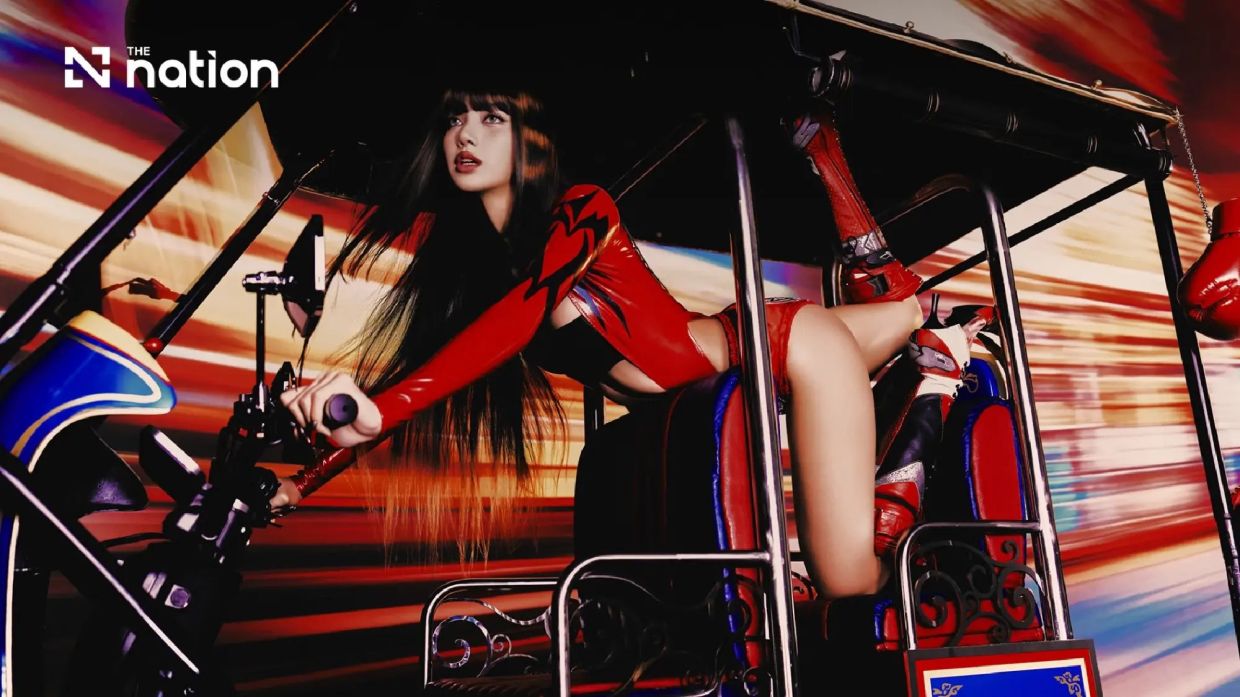
The promotional imagery reveals Lisa in a contemporary reinterpretation of Muay Thai combat wear, complete with boxing shorts bearing her name in prominent embroidery, paired with futuristic styling elements that distance the concept from mere historical reproduction. In a second set of images, she poses on a distinctive blue-and-red tuk-tuk—the three-wheeled vehicle that has become synonymous with Thai urban transport—wearing a sleek leather bodysuit and lace-up boots inspired by boxing footwear. The visual treatment employs streaked lighting and motion effects around the vehicle to convey velocity and contemporary energy, melding tradition with cutting-edge aesthetic presentation.
The single's title itself carries significant cultural weight. "SaWaDiKa" stylises "sawasdee ka," the respectful Thai greeting that permeates daily social interaction across the kingdom. By elevating this vernacular phrase to the status of a global music release title, Lisa's campaign places the Thai language itself as a core element of her international brand identity. This represents a departure from the historical pattern where artists from non-English-speaking countries have often anglicised their work for global consumption. Instead, Lisa is asserting that Thai linguistic and cultural markers possess sufficient commercial and artistic value to anchor a worldwide pop release.
The release strategy underscores this commitment to Thai prominence. "SaWaDiKa" drops at 5pm Pacific Time and 8pm Eastern Time on Thursday, September 3, 2026, but the timing was deliberately calibrated to ensure the song reaches Thai audiences at 7am on Friday morning, September 4. This scheduling—prioritising Thailand as a launch market rather than treating it as an afterthought—reflects a deliberate repositioning of the nation within Lisa's global promotional hierarchy. The single serves as the leading track from her forthcoming six-track EP "PRESS PLAY," scheduled for release on October 23, with the remaining song titles still undisclosed.
Official recognition of Lisa's cultural ambassador status came swiftly. Thapanee Kiatphaibool, governor of the Tourism Authority of Thailand, publicly endorsed the campaign on social media, acknowledging how the promotion of "sawasdee ka" reinforces international perceptions of Thai warmth and hospitality. This institutional validation reflects Lisa's formal appointment as an "Amazing Thailand Ambassador" in 2025, a tourism role designed to leverage her global fanbase for nation branding. The convergence of commercial music promotion and state-level cultural diplomacy illustrates how contemporary pop artists function as vectors for national soft power projection.
The campaign's groundwork emerged through an intriguing teaser strategy that preceded the official announcement. Large outdoor displays bearing the dual-language greeting "HELLO สวัสดีค่ะ" materialised across major cities including Bangkok, New York, Los Angeles, and Mexico City, generating considerable speculation within fan communities before being revealed as part of the promotional rollout. This geographical distribution—simultaneously appearing in Thailand and major Western media centres—visually represented the campaign's central conceit: collapsing the distance between Thai origins and international reach by making the greeting universally visible.
Lisa's strategic incorporation of Thai identity into her solo career reflects a conscious creative trajectory rather than sporadic cultural reference. Her 2021 debut single "LALISA" prominently featured traditional Thai dress, dance vocabulary rooted in classical Thai movement, and musical arrangements incorporating Thai instrumental elements. The accompanying music video presented her adorned in an elaborate gold costume with Thai-inspired headdress, filmed against architectural settings visually linked to her birthplace in Buri Ram province. She explicitly stated at the time that she had personally requested the inclusion of Thai cultural elements, suggesting this integration emerges from genuine artistic intention rather than marketing calculation alone.
The follow-up single "Rockstar," released in 2024, extended this framework into contemporary urban space by filming its music video on Yaowarat Road and other Bangkok locations, situating Thailand's capital within a futuristic pop aesthetic that merged local geography with universal visual language. With "SaWaDiKa," this trajectory reaches a new intensity: rather than setting Thai imagery within music videos, Lisa is now making Muay Thai iconography, the tuk-tuk's distinctive silhouette, and the Thai language itself the conceptual architecture of the single. Each element—the combat sport, the vehicle, the greeting—functions simultaneously as authentic cultural marker and aspirational fashion statement.
This approach holds particular resonance for Southeast Asian audiences navigating the perpetual tension between global cultural consumption and local identity affirmation. Lisa's methodology suggests that regional symbols need not be subordinated to or hidden beneath Western aesthetic frameworks; they can instead be positioned as intrinsically fashionable and commercially viable on international stages. For Malaysian audiences especially, observing how a neighbour's artist commands global platforms while foregrounding national identity may prompt reflection on comparable opportunities within the region's own entertainment industries.
The EP "PRESS PLAY" frames itself explicitly as a homecoming narrative, described in official materials as a return to Lisa's artistic genesis and a celebration of her progression from Thailand to international prominence. This narrative structure—wherein global success circles back to valorise origins rather than transcending them—departs subtly from conventional pop mythology, which typically positions international breakthrough as escape from local constraints. Instead, Lisa's framing suggests that global reach amplifies rather than displaces her connection to Thailand, positioning the nation not as a launching pad to be discarded but as an ongoing creative resource and spiritual anchor.
The timing of this campaign intersects meaningfully with broader currents in Asian pop culture. As Southeast Asian entertainment industries mature and develop international distribution capabilities, artists like Lisa occupy a unique position: they possess the global reach and commercial leverage to reshape how their home nations are perceived internationally, while simultaneously commanding authentic credibility within local markets. "SaWaDiKa" exemplifies this dual positioning, speaking simultaneously to Thai domestic audiences who see their language and symbols elevated on global platforms, and to international listeners encountering Thai cultural elements as intrinsically valuable rather than incidental decoration.

