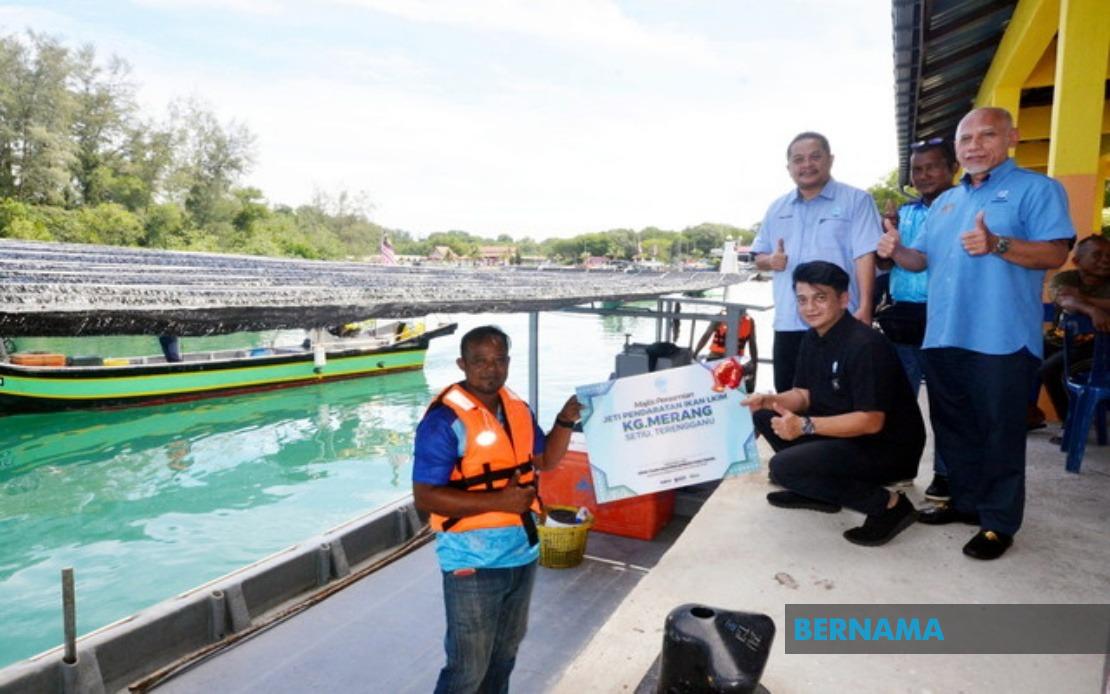
The Malaysian Fisheries Development Authority (LKIM) is stepping up its infrastructure modernisation efforts with a RM2 million investment dedicated to repairing, upgrading and constructing fish landing jetties throughout the nation. The initiative reflects growing recognition that adequate landing facilities are essential to sustaining rural fishing communities and unlocking productivity gains across the sector.
LKIM chairman Muhammad Faiz Fadzil outlined the agency's progress during the handover ceremony of the newly completed Kampung Merang Fish Landing Jetty in Bandar Permaisuri, Terengganu on June 30. The concrete structure represents a tangible upgrading of what was previously a villager-built facility that no longer met safety and operational standards. Constructed at a cost of RM500,000, the jetty officially commenced operations and is projected to serve 124 fishermen operating 68 vessels in the locality.
This year's achievement follows consistent expenditure since the allocation commenced in the previous financial year. Beyond the Merang success, LKIM has advanced two further jetty projects in Perak and Labuan, though both remain in planning and procurement phases. The measured pace of delivery suggests the authority is balancing infrastructure ambitions against budgetary constraints, a reality that Muhammad Faiz acknowledged when he called for enhanced government funding in the upcoming budget cycle.
The scope of LKIM's current portfolio underscores the scale of the challenge ahead. The authority manages 372 fish landing jetties nationwide alongside 48 additional fisheries complexes and ports. This extensive network serves as the physical backbone enabling fishermen to access markets efficiently. Yet the chairman's appeal for greater investment signals that the existing RM2 million allocation stretches thinly across such dispersed infrastructure needs, suggesting many facilities likely lag behind international standards or face deferred maintenance.
For Setiu district specifically, initial data provides encouragement. Current records show annual fish landings totalling approximately 243 metric tonnes. LKIM projects this volume will rise once the Merang jetty reaches full utilisation, indicating that infrastructure bottlenecks had previously constrained catch landing efficiency. This pattern likely repeats elsewhere, suggesting that systematic jetty upgrades could unlock hidden productivity across coastal regions.
The economic logic underpinning LKIM's infrastructure push is straightforward. Fishermen depend entirely on catch sales for income and household stability. When landing facilities are substandard, inefficient or unsafe, transactions become cumbersome and fishermen lose bargaining power with buyers. Modern concrete jetties reduce handling damage, enable faster sales cycles, and allow fishermen to access broader markets rather than accepting prices from middlemen who operate near inadequate landing points. Higher farm-gate prices translate directly to improved livelihoods for some of Malaysia's most vulnerable rural populations.
The Merang jetty replacement exemplifies the human dimension of infrastructure policy. The previous structure, built and maintained by villagers themselves, represents both community resilience and systemic neglect. That fishermen had to construct their own landing facility underscores how far some coastal communities remain from adequate public investment. The transition to a government-built concrete structure signals policy recognition that commercial fisheries require professional infrastructure if operators are to remain competitive.
For Malaysian policymakers and economists monitoring fisheries performance, the LKIM initiative carries broader implications. The fishing sector contributes meaningfully to rural employment and food security, yet faces structural challenges from declining stocks, global market competition and climate pressures. Improving shore infrastructure cannot resolve these deeper issues, but it removes unnecessary friction from the supply chain. When fishermen struggle with poor landing facilities on top of other sectoral headwinds, the compounded burden becomes untenable and drives consolidation or exit from the industry.
Regionally, Malaysia's fisheries infrastructure investments merit comparison with peer nations. Thailand, Indonesia and Vietnam have all pursued significant jetty and port modernisation programmes to enhance competitiveness in seafood supply chains serving Asian and global markets. Malaysia's measured pace of jetty investment, while appropriate given fiscal constraints, suggests the nation should prioritise this sector within development expenditure to avoid losing comparative advantage as neighbouring countries upgrade their own facilities.
The call for additional budget allocation reflects realistic assessment by LKIM leadership. With only RM2 million annually and a pipeline of projects across Perak, Labuan and beyond, the authority faces difficult sequencing choices. Maintaining existing 372 jetties while expanding coverage requires sustained funding commitment. Seasonal typhoons in eastern coastal states regularly damage facilities, necessitating emergency repairs that compete with development spending.
Looking forward, LKIM's infrastructure programme intersects with maritime security, food self-sufficiency and poverty alleviation objectives. Fisheries communities relying on outdated facilities represent both an equity concern and a policy failure, as these groups have limited economic mobility or alternative livelihoods. Strategic investment in jetties demonstrates tangible government commitment to place-based development affecting thousands of households across maritime states.
The Merang jetty serves as proof of concept that RM500,000 expenditure yields measurable operational improvements. If this template replicates successfully across the remaining infrastructure pipeline, the cumulative impact could meaningfully shift incomes and resilience for fishing families. The forthcoming budget cycle will reveal whether political leadership recognises fisheries infrastructure as strategic priority or treats it as peripheral to national development.

