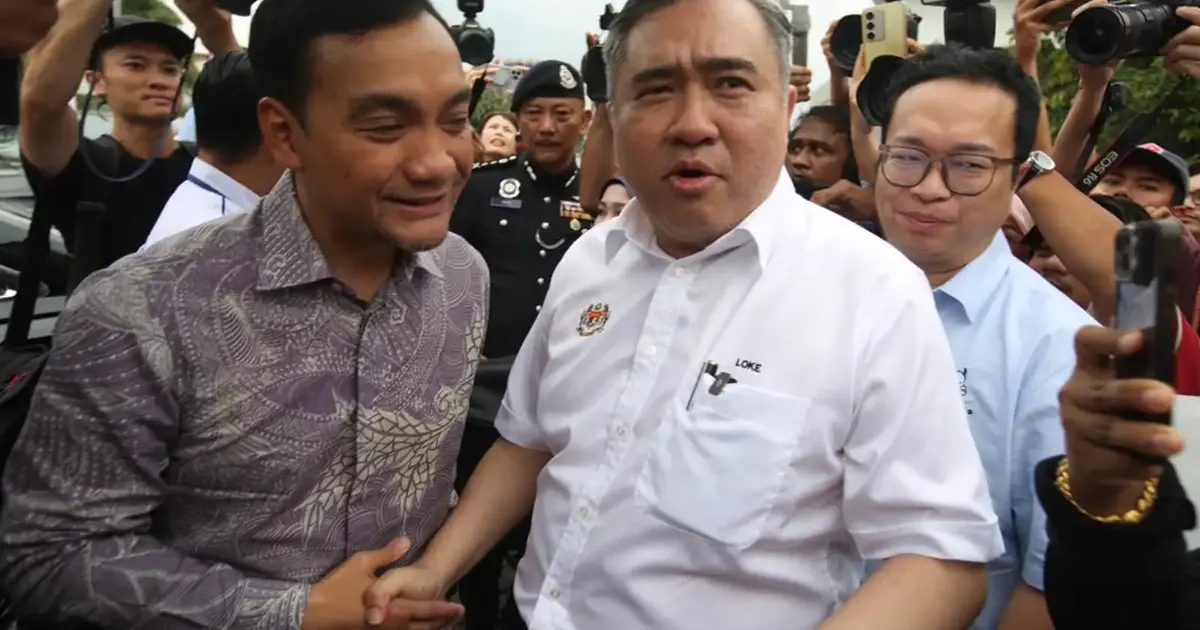
Transport Minister Anthony Loke and Johor Menteri Besar Onn Hafiz Md Salleh demonstrated political maturity by keeping their interactions cordial during their inaugural face-to-face engagement following a previous dispute that played out across social media platforms. The two leaders managed to navigate what could have become an awkward encounter by adhering to decorum befitting their respective positions, signalling that despite personal friction, Malaysia's political establishment can still function through channels of mutual respect and restraint.
Onn Hafiz, however, could not resist a subtle jab at the DAP leader during proceedings at the ministry event. The Johor state leader's remarks centred on the logistical inconvenience he had experienced, noting that his official schedule required significant rearrangement after receiving the ministry's invitation on short notice. The comment, while ostensibly focused on administrative matters, carried an unmistakable undertone directed at Loke, suggesting that the earlier antagonism had not entirely dissipated beneath the surface of their public interaction.
The nature of their prior disagreement reflected broader tensions that occasionally emerge between federal and state-level political figures in Malaysia, particularly when representatives from different coalitions or parties find themselves in positions where their interests or messaging diverge. Such incidents, often amplified through digital channels, can quickly escalate if left unmanaged, risking the kind of breakdown in inter-governmental cooperation that ultimately harms service delivery to citizens across state and federal lines.
Loke's transport ministry oversees critical national infrastructure and connectivity initiatives that frequently require coordination with state administrations. Johor, as the nation's southernmost peninsula state and home to major economic zones, ports, and transportation hubs serving regional trade, necessitates particularly close working relationships between federal transport authorities and state-level decision-makers. Any prolonged friction between these two officials could potentially obstruct important projects or create bureaucratic inefficiencies that ripple across the broader economy.
The decision by both Onn Hafiz and Loke to maintain professional courtesy despite their differences reflects an understanding that Malaysia's governance structures depend on functional relationships across political divides. In a system where coalition politics and shifting alliances are commonplace, leaders routinely find themselves collaborating with individuals with whom they have experienced conflict. The ability to compartmentalise personal disagreements and prioritise institutional function remains essential to effective governance.
The online spat that preceded their meeting had drawn public attention and commentary from political observers and social media users, as such disputes increasingly do in Malaysia's digital-first information landscape. The fact that both leaders chose not to escalate tensions during their physical encounter, despite the opportunity to do so in a high-profile setting, suggests a shared recognition that further deterioration would serve neither their political interests nor the state they collectively serve.
Onn Hafiz's pointed reference to the scheduling difficulty, while technically a complaint about the ministry's administrative process, also functioned as a face-saving gesture that allowed him to register dissatisfaction without breaking the facade of cooperation. This kind of subtle political communication, where grievances are expressed through acceptable channels and coded language, remains common practice among Malaysian political figures seeking to maintain public decorum while signalling displeasure to their counterparts.
The implications of this encounter extend beyond the personal dynamic between two individuals. It reflects the broader challenge facing Malaysia's political ecosystem as it navigates an era of fractured coalitions, competing state and federal interests, and an electorate increasingly divided along ideological and partisan lines. When senior leaders can manage their interpersonal conflicts and continue functioning effectively, it provides reassurance that the system retains enough structural resilience to deliver basic governance outcomes.
For ordinary Malaysians and businesses operating across state boundaries, particularly in Johor's thriving commercial and industrial sectors, the maintenance of functional relationships between federal and state authorities translates into smoother project implementation, more efficient regulatory processes, and reduced delays caused by political tension. Infrastructure projects, trade facilitation, and public services all depend on these working relationships functioning adequately, regardless of whether personal warmth exists between officials.
The transport ministry's Johor engagement, whatever prompted Loke's invitation, underscores the continuing relevance of face-to-face diplomatic engagement in an increasingly digital political environment. While social media provides platforms for leaders to address supporters directly and occasionally to spar with opponents, the formal event setting where Loke and Onn Hafiz met remains important for establishing the kind of understanding and mutual acknowledgement that can prevent routine disagreements from metastasising into genuine governmental dysfunction.
Moving forward, the tone established during this first post-dispute meeting may set parameters for future interactions between the two officials. Whether their relationship normalises into simple professional courtesy or whether another incident triggers renewed tension remains uncertain, but their demonstrated willingness to engage civilly despite prior conflict offers a modest but meaningful reassurance that Malaysia's leadership can still manage internal disagreements without sacrificing the broader institutional functioning that citizens depend upon.