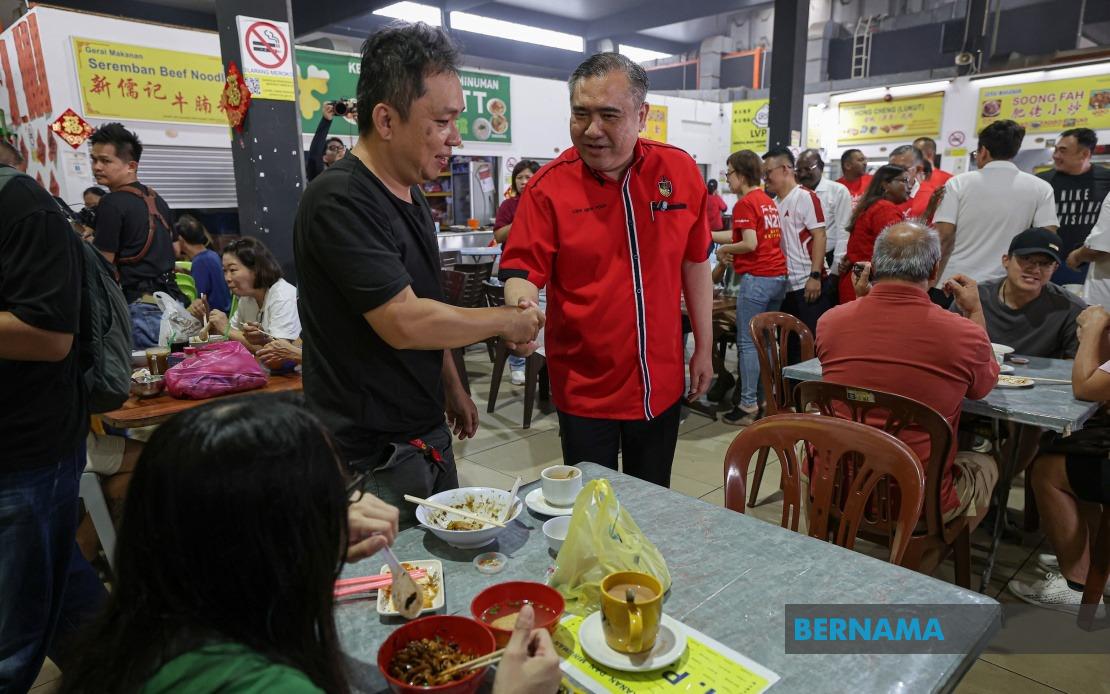
Transport Minister Anthony Loke has drawn a firm line on road safety during the 16th Negeri Sembilan state election campaign, declaring that compliance with traffic regulations is non-negotiable regardless of political ambitions. Speaking in Seremban following a campaign walkabout with Pakatan Harapan candidates, Loke underscored that the pursuit of electoral victory cannot come at the expense of public safety and orderly conduct on the roads. His intervention reflects growing concern about campaign-related traffic violations and reckless behaviour that have characterised previous election periods across Malaysia.
The DAP secretary-general, who also serves as the Seremban Member of Parliament, has personally implemented these standards within his own party machinery. He disclosed that he has issued direct instructions to all DAP campaign teams to wear helmets without exception when operating motorcycles throughout the campaign period. This top-down approach signals that enforcement will begin from within party structures rather than relying solely on external regulatory bodies, setting a template for other parties to follow.
Loke cited a concrete example from the nomination day proceedings held recently, where he led a convoy travelling from Pekan Titi to Kuala Klawang. He established and communicated an explicit condition before departure: participation in the convoy required helmet-wearing, with no exceptions tolerated. This zero-tolerance stance represents a departure from the casual attitudes that often characterise campaign activities, where the pressure to mobilise supporters and maintain momentum frequently overrides safety considerations.
Beyond helmet compliance, Loke has specifically called attention to the dangerous practice of supporters standing on vehicle tailgates during convoy movements. This particular behaviour, which has been documented in previous campaigns across the country, creates significant safety hazards for both participants and other road users. By singling out this conduct, Loke emphasised that campaign enthusiasm must not translate into abandoning basic precautions that protect human life.
The broader context of these directives involves the Electoral Commission's timeline for the state election. The Negeri Sembilan state assembly dissolution occurred on June 5, with polling scheduled for August 1 and early voting set for July 28. This compressed campaign schedule, spanning roughly a month of intensive activities, typically witnesses increased road traffic and vehicle movements associated with candidate visits, rally attendance, and voter engagement initiatives. The urgency to canvas voters within this timeframe can inadvertently pressure campaign teams to cut corners on safety protocols.
The electorate participating in this state election is substantial, with 889,490 registered voters eligible to cast ballots. This figure comprises 867,151 ordinary voters alongside 16,884 military personnel and their spouses and 5,455 police officers who are designated as early voters. The logistics required to campaign effectively across such a large and diverse voter base naturally involve extensive use of motorcycles, cars, and motorcades, multiplying the opportunities for traffic violations if discipline is not maintained.
Loke's intervention carries particular significance for Malaysian road safety discourse, as election campaigns have historically been periods when traffic incidents spike. Campaign-related activities generate additional vehicle movements, late-night convoys, and heightened emotional engagement among supporters, all factors that can contribute to accidents if not properly regulated. By positioning traffic compliance as a leadership issue rather than merely a legal or enforcement matter, Loke is attempting to shift the cultural dynamics that govern campaign conduct.
The candidates accompanying Loke during the Pasar Besar Seremban walkabout—Ho Weng Wah for Temiang, Lee Kai Yet for Mambau, Siau Meow Kong for Rahang, Nicole Tan for Bukit Kepayang, S. Mugunthan for Seremban Jaya, and Chew Seh Yong for Lobak—represent the geographic spread of Pakatan Harapan's Negeri Sembilan campaign. Each represents a different constituency where campaign movements will be sustained over the coming weeks, making the traffic compliance message particularly relevant to their respective campaign teams and supporters.
Loke's appeal to all parties and leaders to model behaviour through their own conduct addresses a fundamental challenge in Malaysian politics: the perception gap between official policies and actual implementation. By explicitly committing Pakatan Harapan to these standards, he creates a benchmark against which other political organisations can be measured. This approach transforms traffic compliance from an abstract regulatory requirement into a visible indicator of political discipline and maturity.
The implications extend beyond Negeri Sembilan. As one of Malaysia's ongoing state elections, the conduct established in this campaign period may influence expectations and standards in subsequent electoral contests. Political observers and voter advocacy groups will likely scrutinise how consistently these traffic safety commitments are maintained throughout the campaign season. Success in this instance could establish a precedent for more responsible campaign practices nationwide.
For transport authorities and road safety advocates, Loke's public stance provides a foundation for enforcement activities. Police and traffic officials can reference ministerial directives when stopping campaign convoys for violations, strengthening their position against political pressure that sometimes undermines traffic law enforcement during election periods. This institutional support can prove valuable in maintaining consistent application of road rules.
The messaging also carries implications for voter perception. Increasingly, Malaysian voters assess political parties not only on policy platforms but also on demonstrated values and operational standards. A campaign characterised by safe, orderly conduct may subtly influence voter assessments of which organisations demonstrate the discipline and responsibility required for effective governance. Conversely, persistent violations despite ministerial warnings would signal organisational weakness or indifference to public safety.
As the campaign progresses toward the August 1 polling day, the durability of these traffic compliance commitments will be tested by the practical pressures of competitive electoral politics. The willingness of party machinery to maintain these standards, the consistency of enforcement mechanisms, and public compliance will collectively determine whether this intervention achieves its intended impact on campaign-related road safety in Negeri Sembilan.

