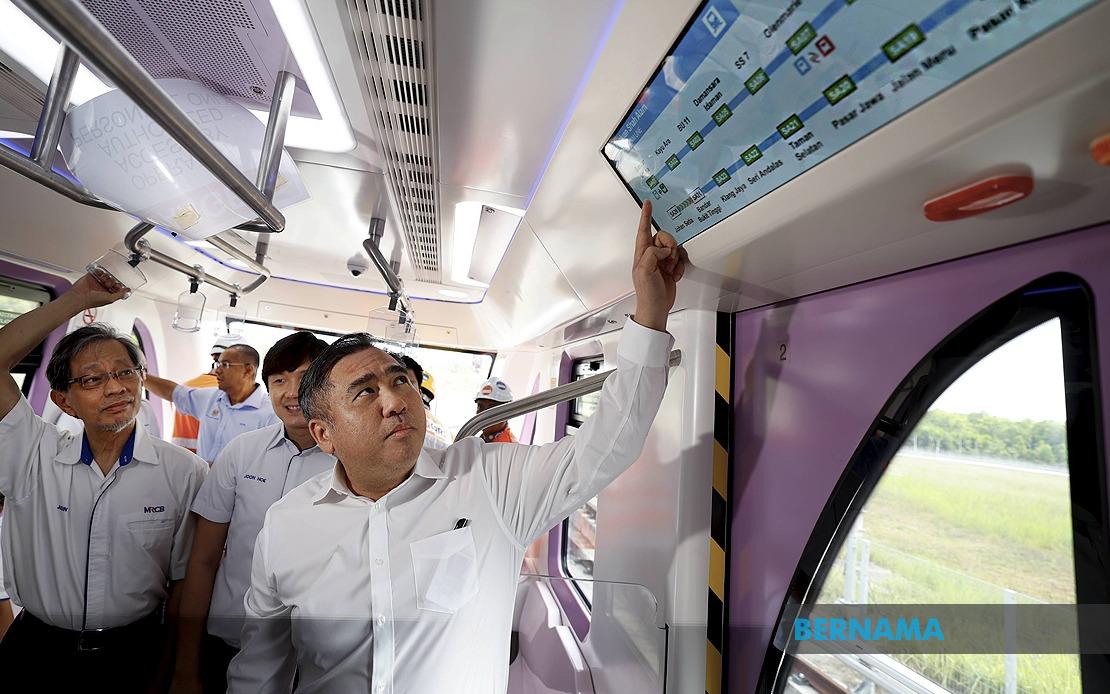
Malaysia's long-awaited Light Rail Transit 3 (LRT3) service will begin operating on Monday, June 29, Transport Minister Anthony Loke announced on Saturday, marking a significant milestone for the country's expanding rail infrastructure. The 37.8-kilometre line, which stretches from Bandar Utama to Johan Setia in Selangor, represents a major investment in addressing mobility challenges across the western Klang Valley corridor.
Prime Minister Datuk Seri Anwar Ibrahim will officiate the formal launch ceremony on Sunday, June 23, before the rail service opens to the public the following day. Loke made the announcement while inaugurating a new Road Transport Department branch at Terminal Bersepadu Selatan, underscoring the government's broader commitment to enhancing transport connectivity across the Greater Kuala Lumpur region.
The LRT3 project addresses critical transportation gaps in areas that have experienced rapid residential and commercial expansion. With an anticipated two million residents benefiting from the new line, the service represents one of the most significant public transport developments in recent years. The corridor encompasses key population centres, business districts, and industrial zones that previously relied heavily on road-based transport, contributing to chronic congestion along major highways during peak hours.
The route design strategically connects residential clusters in Shah Alam with commercial and industrial hubs throughout the western corridor. This integration of residential, commercial, and industrial areas was deliberately planned to create a comprehensive transport network that reduces dependency on private vehicles. The service is expected to provide commuters with a faster, more reliable alternative to road travel, particularly for workers travelling between residential areas and employment centres.
Previously, the western Klang Valley lacked modern rail connectivity despite housing substantial populations and significant economic activity. The LRT3 fills this critical infrastructure gap, complementing existing rail services such as the LRT1, LRT2, and MRT networks that primarily serve the central and eastern portions of the Klang Valley. This expansion demonstrates a multi-modal transport strategy designed to accommodate the region's growing mobility demands.
For Malaysian commuters, the LRT3 opening presents opportunities to shift from car-dependent commuting patterns to rail-based travel. The service promises reduced journey times for thousands of daily commuters, particularly those working in the Klang Valley's industrial zones and commercial centres. Additionally, the improved connectivity may stimulate economic activity in surrounding areas by making these locations more accessible to a broader workforce.
Regional implications are similarly substantial. As Southeast Asia's major economies increasingly prioritize mass rapid transit systems to manage urbanization and congestion, Malaysia's LRT3 demonstrates the region's commitment to sustainable transport solutions. The project aligns with broader trends across major Southeast Asian cities, where governments have invested heavily in rail networks to decongest urban areas and support sustainable development.
The project's completion also reflects Malaysia's recovery from pandemic-related construction delays that affected numerous infrastructure initiatives across the country. Successful delivery of the LRT3 signals improved project management capabilities and renewed momentum in the nation's rail expansion plans. Government officials had previously faced criticism regarding timeline slippages on major transport projects, making the LRT3's on-time delivery particularly noteworthy.
Looking beyond the immediate opening, the LRT3 is anticipated to serve as a catalyst for property development and economic growth in surrounding areas. Developers and investors typically accelerate residential and commercial projects near new transport infrastructure, potentially transforming previously underutilized areas into vibrant mixed-use destinations. This development pattern has been observed with previous rail line expansions in the Klang Valley and other major Asian cities.
The launch also carries political significance, coming at a time when the government seeks to demonstrate tangible progress on major infrastructure commitments. The Prime Minister's involvement in the inauguration ceremony underscores the project's strategic importance to the current administration's development agenda and its efforts to improve living standards for millions of residents across the Klang Valley.
With LRT3 operations commencing, authorities will closely monitor ridership patterns, service reliability, and passenger satisfaction. Early performance data will likely inform future expansion plans and refinements to the broader public transport network. The integration of LRT3 with existing transport services, including buses and other rail lines, will be critical to maximizing the system's effectiveness and encouraging sustained public patronage.

