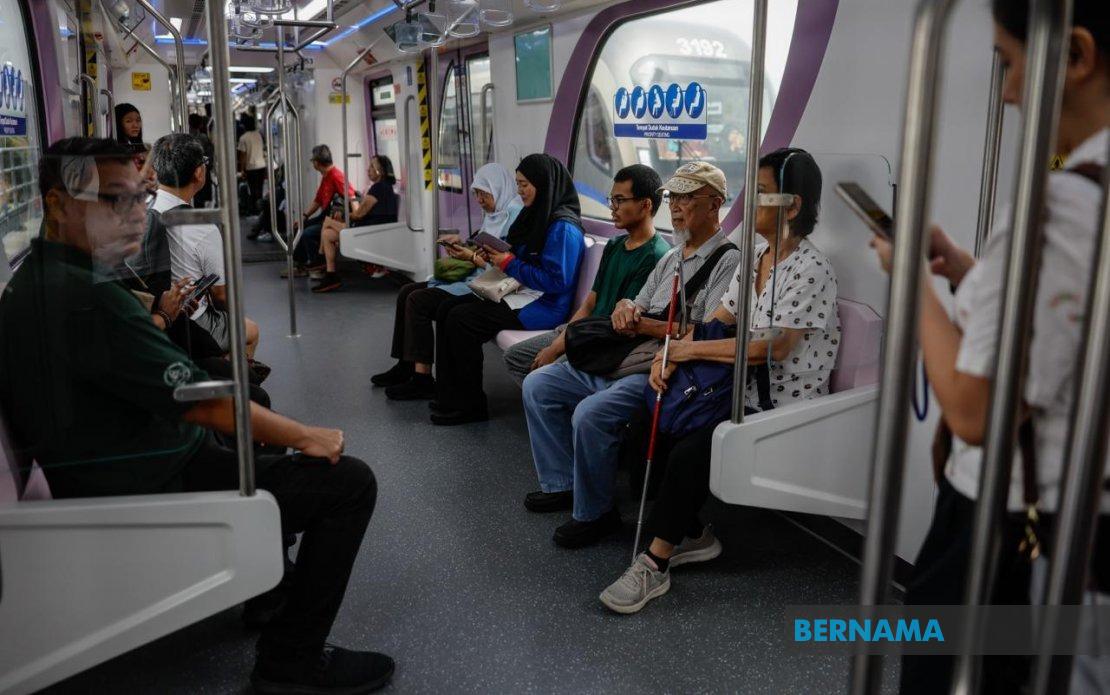
The Light Rail Transit 3 (LRT3) Shah Alam Line began operations on June 29 to encouraging reviews from its inaugural passengers, who highlighted the service's comfort, accessibility credentials, and significant time savings across the route. The enthusiasm was tempered, however, by constructive feedback pointing towards specific enhancements needed to serve all commuters adequately, particularly those with disabilities seeking fuller participation in the region's public transport ecosystem.
The project represents a substantial commitment to Malaysian infrastructure development, with a total investment of RM16.63 billion dedicated to strengthening the country's public transport framework. Prime Minister Datuk Seri Anwar Ibrahim marked the occasion by announcing complimentary travel from June 29 through July 31 for all passengers, encompassing both the main rail service and feeder bus operations run by Prasarana Malaysia Berhad. This promotional period offers a crucial window for diverse user groups to evaluate whether the new corridor meets their daily commuting needs.
Amongst the most vocal early adopters was Razlan Ibrahim, a 40-year-old visually impaired commuter who travelled the full route from Kajang to Glenmarie 2 station on opening day. His initial impression centred on genuine appreciation for the infrastructure's directional guidance systems. The tactile pathways embedded throughout the network, particularly those installed at Bandar Utama Station, proved highly effective in facilitating independent navigation for persons with disabilities. These raised tactile strips successfully guided users towards essential facilities including accessible toilets, prayer rooms segregated by gender, and lift access points.
Yet Razlan's nuanced assessment revealed a critical shortfall in information accessibility that could undermine the broader inclusivity mandate. He advocated for expanded Braille signage strategically placed at locations including prayer facilities and lift banks, recognising that while physical pathways now exist, the information environment remains inadequate for those with visual impairments. His recommendations stemmed not from theoretical understanding but from lived experience navigating the new system on its opening day, lending credibility to calls for rapid remediation before usage patterns become entrenched.
The practical commuting benefits were equally apparent to other early users. Samantha Fong, a 26-year-old office worker, highlighted how the direct routing between Bandar Utama and Glenmarie 2 eliminated the need for intermediate transfers, substantially reducing overall journey duration. Her enthusiastic endorsement of the service's efficiency came with a forward-looking suggestion: the introduction of women-only coaches to address safety concerns and enhance passenger peace of mind. This proposal, increasingly common across Southeast Asian transit systems, reflects gendered mobility patterns that transit planners must accommodate.
Rainchie Lee, also 26 and employed in the private sector, characterised her inaugural experience as notably smooth and comfortable, positioning the free-fare month as an invaluable testing ground. Her perspective highlighted how the promotional period creates conditions for marginalised user segments—particularly students and workers navigating tight budgets—to authentically assess the service's suitability without financial barriers. This democratic approach to trial adoption contrasts with full-price operations that might deter cost-conscious commuters from experimenting with new routes.
The LRT3 Shah Alam Line's inaugural performance carries significance extending beyond immediate operational metrics. For Malaysia's transport infrastructure aspirations, the project demonstrates commitment to expanding rapid transit coverage beyond the Klang Valley's traditional core, a necessary step given suburban population sprawl. The route's connection to emerging commercial hubs and residential nodes suggests strategic alignment with urban development patterns. However, the feedback cascade already evident on opening day underscores that physical construction alone cannot guarantee truly inclusive public transport.
The accessibility gap identified by visually impaired users points towards a broader systemic challenge in Malaysian infrastructure projects. While tactile guidance pathways represent genuine progress, the absence of corresponding Braille and audio information systems creates a partial solution that fails passengers with different sensory requirements. This inconsistency suggests that accessibility planning occurred in silos, with physical design teams and information systems teams operating independently rather than collaboratively ensuring comprehensive user experiences.
Looking forward, the immediate challenge involves translating opening-day feedback into rapid operational improvements during the critical first-month honeymoon period when user goodwill remains high. Prasarana and relevant authorities must demonstrate responsiveness by prioritising Braille signage installation and exploring women-only coach implementation. The free-fare period itself provides an opportunity not merely for marketing purposes but as genuine research into user needs and pain points that data collection and passenger surveys alone might miss.
The contrast between Razlan's praise for tactile pathways and his identification of information accessibility gaps reflects the nuanced reality facing Southeast Asian transport systems. Enthusiasm for new infrastructure frequently masks underlying inequities that only become apparent through sustained use. The LRT3 Shah Alam Line's opening thus represents both an achievement worthy of celebration and an inflection point demanding follow-through commitment. Whether authorities respond substantively to early user feedback will determine whether this RM16.63 billion investment truly advances inclusive mobility or merely creates a faster system that remains fundamentally inaccessible to significant population segments.

