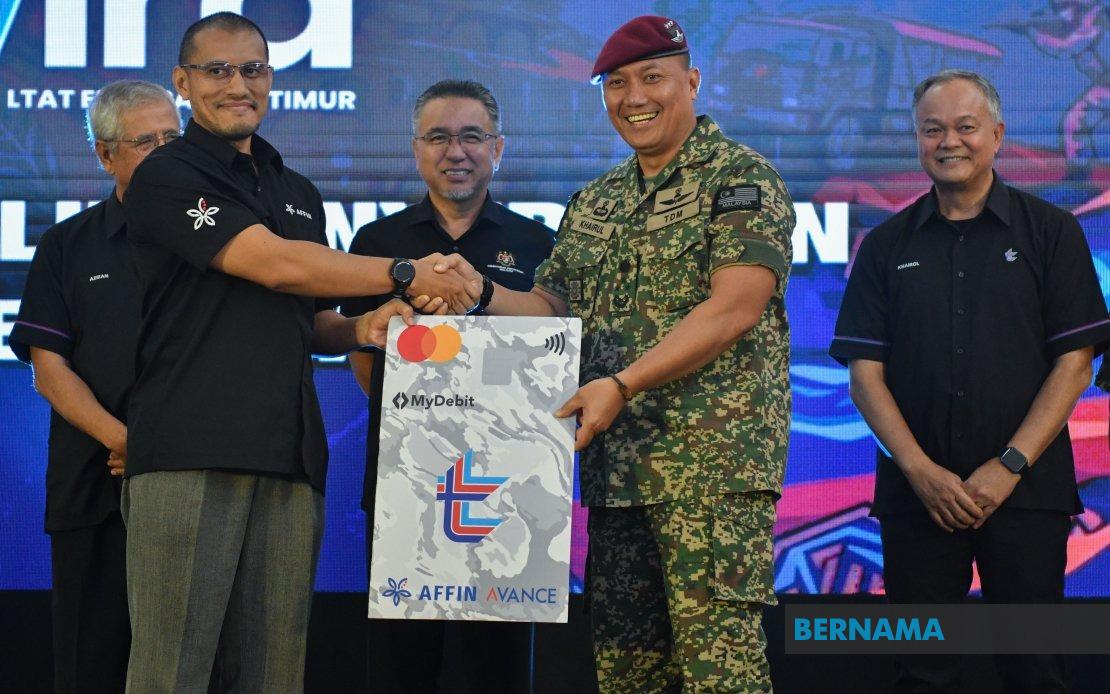
The Armed Forces Fund Board (LTAT) has rolled out an expanded digital version of its Jelajah Wira 2026 roadshow across the East Coast, marking a significant shift in how the organisation engages with Malaysia's defence community. Launched at Desa Pahlawan Camp in Kota Bharu on July 2 by Deputy Defence Minister Adly Zahari, the initiative combines traditional physical roadshows with live-streaming technology to create a hybrid engagement model that transcends geographical constraints. This evolution reflects the growing necessity for government agencies to adapt their service delivery mechanisms to better accommodate personnel stationed across dispersed military installations throughout the country.
The roadshow's physical footprint is substantial, with planners expecting to attract more than 3,600 Armed Forces personnel across the East Coast corridor. However, the real strategic impact lies in the digital component, which the board projects will extend awareness and engagement to exceed 10,000 military personnel nationwide. This dual-track approach effectively transforms what would traditionally be a limited regional engagement into a nationwide initiative, addressing a perennial challenge faced by military-focused programmes: reaching personnel scattered across remote bases and isolated postings who cannot easily attend centralised events.
According to LTAT's statement, this digital innovation aligns with the board's broader mandate to prioritise the financial security and social welfare of its contributors while simultaneously supporting Malaysia's MADANI Economy framework and the PuTERA35 aspirations. The connection to these national economic agendas suggests that military financial literacy and veteran economic empowerment are now being positioned as components of larger, economy-wide strategies. This signals recognition that defence personnel represent a significant human capital resource whose economic participation and entrepreneurial engagement contribute meaningfully to national economic objectives.
The physical roadshow will travel sequentially through key East Coast military installations. Following its launch at Desa Pahlawan Camp, the initiative proceeds to Sri Pantai Camp in Kuala Terengganu on July 9, then to Kuantan Air Base in Pahang on July 13. This phased geographic progression allows LTAT to customise presentations and engagement activities based on the unique composition and needs of each installation's personnel, while the parallel digital streaming ensures that those unable to attend in person can access identical content simultaneously.
Beyond raw engagement metrics, the roadshow introduces tangible value-added elements designed to improve financial inclusion and educational access for military families. The symbolic presentation of the AFFIN LTAT Affiliate Debit Card signals expanded financial product accessibility, while the distribution of smart devices under the 2026 SPM e-Perkasa programme directly addresses educational inequality by enabling children of Armed Forces personnel to access free online tuition classes. These initiatives recognise that military service often involves geographical displacement, which can disadvantage families in accessing commercial financial services and quality educational resources.
A particularly noteworthy component addresses veteran economic empowerment through the LTAT Wira Entrepreneur Empowerment Programme. The second series graduation ceremony and third series launch, specifically targeting the East Coast region's veteran community, demonstrate institutional commitment to post-service economic reintegration. Participation data reveals compelling outcomes: veterans completing the second series recorded an average monthly business income increase of 162 per cent, a remarkable figure that validates the effectiveness of structured business mentoring combined with financial literacy training. These results suggest that the barrier preventing military personnel from becoming successful entrepreneurs is often not entrepreneurial capacity but rather access to systematic mentoring, appropriate financial guidance, and ecosystem support.
The entrepreneurship programme operates as a comprehensive six-month economic intervention, suggesting that sustainable veteran business success requires sustained engagement rather than one-off training sessions. This structured approach contrasts with ad hoc entrepreneurial initiatives and reflects growing evidence that business sustainability among military veterans requires ongoing mentorship relationships and continued ecosystem access. The fact that the third series will specifically focus on the East Coast region indicates LTAT's data-driven approach to deployment, targeting geographical areas where veteran economic activity may require particular attention.
Complementing the entrepreneur focus, the broader LTAT Contributors' Briefing and Financial Literacy Programme has achieved considerable penetration since its December 2023 introduction. Having already reached over 68,000 Armed Forces personnel nationwide through continuous briefing sessions at various military camps, this programme has established itself as a scalable mechanism for enhancing military financial knowledge. The continuous session format, rolling across multiple installations throughout the year, creates accessibility for personnel regardless of their posting duration or rotation cycles.
The digital live-streaming component deserves particular analytical attention for Malaysian policymakers. As defence force recruitment and retention become increasingly competitive, organisations offering comprehensive non-combat support—financial literacy, entrepreneurial opportunities, family benefits—become more attractive employers. LTAT's digital expansion implicitly recognises that modern military personnel, especially younger cohorts, expect institutional engagement through familiar digital channels rather than exclusively through traditional physical briefings. This technological adaptation positions LTAT as an institution capable of meeting contemporary expectations while maintaining its core mandate.
The integration of these various initiatives—financial literacy, veteran entrepreneurship, family education support, and digital accessibility—reflects a sophisticated understanding that military personnel welfare encompasses economic security, entrepreneurial opportunity, and family stability. By packaging these elements within a single roadshow initiative, LTAT creates a comprehensive narrative about how defence service translates into long-term economic advancement. For Southeast Asian militaries grappling with retention and morale challenges, the LTAT model offers a replicable framework combining financial and entrepreneurial support with strategic digital distribution.
Looking forward, the success of this digital expansion will likely determine whether similar hybrid models become standard across Malaysian government agencies serving dispersed personnel populations. If the projected 10,000-person reach materialises and generates measurable improvements in financial literacy and economic participation among Armed Forces personnel, this initiative could establish a template for how defence and security sector engagement programmes balance inclusive access with personalised, locally-adapted interaction.

