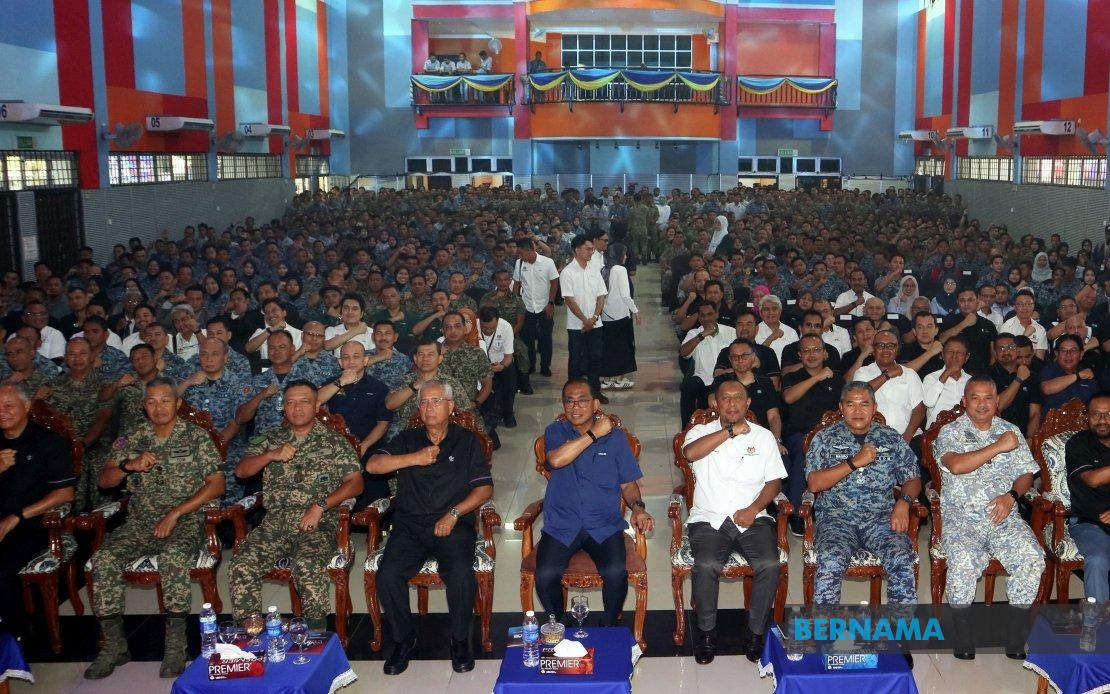
The Armed Forces Fund Board (LTAT) has completed an extensive engagement campaign across Malaysia's east coast, making direct contact with 28,500 military personnel and reinforcing the fund's commitment to servicemembers' financial security. Conducted in Kuantan during mid-July, the 'Jelajah Wira' initiative represents a structured effort to deepen relationships between fund administrators and the armed forces community that forms the backbone of LTAT's contributor base.
LTAT Chief Executive Mohammad Ashraf Md Radzi outlined the strategic rationale behind the nationwide tour, emphasising that the initiative creates meaningful opportunities for fund management to engage directly with contributors across all military ranks. The phased approach reflects LTAT's recognition that understanding the needs and concerns of its members requires presence at installations throughout the country rather than reliance on centralised communication channels. By visiting operational bases where personnel carry out their duties, LTAT management gains firsthand insight into how the fund's offerings resonate with servicemembers who dedicate a significant portion of their salary—a mandatory 10 percent of monthly income—to this scheme.
A central feature of the tour was the launch of the LTAT-Affin Debit Card, a tangible gesture acknowledging the contributions and loyalty of Malaysia's armed forces. Rather than merely introducing a financial product, the card symbolises official recognition of military personnel's sacrifice and dedication to national defence. For an institution managing funds accumulated over decades of military service, such recognition carries symbolic weight beyond transactional utility. The card launch reflects LTAT's evolving understanding that military welfare encompasses not just financial returns but also dignity, recognition, and practical tools that simplify daily financial transactions.
The fund's approach to engagement reveals a sophisticated understanding of military community dynamics. Mohammad Ashraf characterised LTAT's perspective as distinctly holistic, extending beyond individual contributors to encompass their families and the broader ecosystem that military service creates. Servicemembers do not exist in isolation; their financial security directly affects household stability, family planning, and quality of life during service and after retirement. By framing welfare initiatives through this lens, LTAT positions itself not merely as a pension administrator but as an institution invested in the wellbeing of the entire military community.
Feedback from younger personnel highlighted the scheme's attractiveness as a long-term savings vehicle. Airman I Muhammad Syahmi Mohd Shobri, age 23, noted that annual dividends offered through LTAT consistently outpace competing savings schemes available to military personnel. This comparison matters significantly in a context where junior ranks face numerous financial pressures and limited opportunities to build wealth through conventional channels. For personnel early in their careers, the accumulation potential over 20 or more years of service creates substantial financial foundation for post-military life.
Retirement represents a critical transition point where LTAT's value becomes particularly evident. Airman I Muhammad Izzuddin Mohd Hanapi highlighted how accumulated contributions combined with annual dividends provide critical financial security during the transition from military to civilian employment. For personnel whose entire professional identity has centred on military service, the financial cushion provided by LTAT can ease the psychological and economic adjustment to life beyond uniform. The continuing dividend payments address a fundamental concern among servicemembers: that retirement security extends beyond a single lump sum to provide ongoing income support.
The venues selected for the tour—including Kem Desa Pahlawan in Kelantan, Kuantan Air Force Base, Kem Seri Pantai housing the 16th Royal Malay Regiment in Terengganu, Kem Sungai Udang in Melaka, KD Sultan Ismail in Johor, and Kem Mahkota Kluang also in Johor—demonstrate commitment to reaching personnel across multiple service branches and geographical areas. Rather than concentrating engagement in major metropolitan centres, the itinerary encompasses east coast bases and southern installations, ensuring that personnel in less densely populated regions receive equivalent attention and access to fund management representatives.
The inclusion of element recognition, such as the lucky draw that awarded an electric motorcycle to Royal Malaysian Air Force Air Sergeant Haidil Jafar, serves multiple purposes within the engagement strategy. Such incentives generate enthusiasm and create memorable positive associations with LTAT participation, while also acknowledging individual contributors whose names are drawn. For mid-career personnel like the 39-year-old air sergeant, such recognition provides unexpected tangible benefit that reinforces the value of consistent fund participation over many years.
High-level representation at the Kuantan event underscored the institutional importance LTAT assigns to this engagement initiative. Presence by Defence Ministry Secretary-General Datuk Lokman Hakim Ali, LTAT Chairman General Tan Sri Azizan Ariffin, and LTAT Investment Panel Chairman Datuk Khairol Anuar Mohamad Tawi signalled that the 'Jelajah Wira' tour received senior leadership attention rather than being delegated to junior administrative staff. Such visible commitment from leadership hierarchy reinforces the message that servicemembers' concerns and feedback carry weight within institutional decision-making processes.
For Malaysia's broader defence and welfare framework, the LTAT initiative reflects evolving expectations regarding institutional responsibility toward military personnel. Beyond basic salary provision, modern military organisations increasingly recognise that comprehensive welfare—encompassing financial security, recognition, and accessible communication with fund administrators—contributes to retention, morale, and professionalism. The 'Jelajah Wira' campaign acknowledges that personnel who feel genuinely valued by their institutions perform more effectively and maintain commitment to their duties.
The tour's success in reaching 28,500 personnel demonstrates that demand exists among servicemembers for direct engagement with LTAT management. This participation level suggests that many military personnel value opportunities to understand their fund's operations, voice concerns, and receive personalised guidance regarding benefits and retirement planning. By meeting this demand through structured nationwide visits, LTAT positions itself as responsive to constituent needs rather than distant bureaucratic institution managing mandatory contributions.

