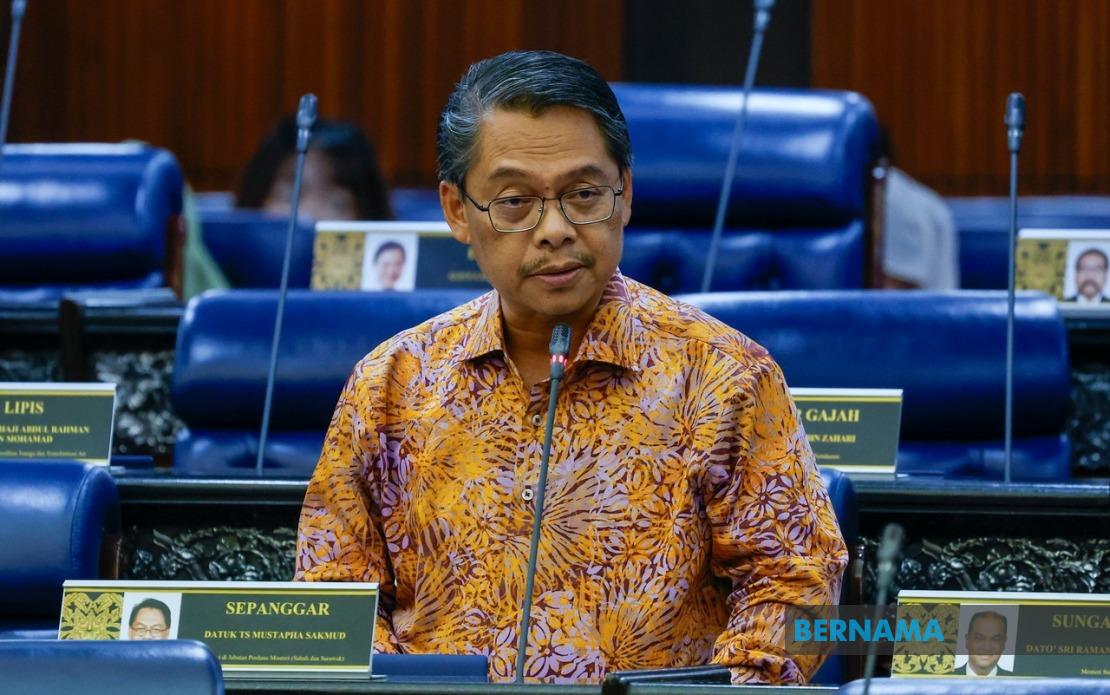
The Federal Government has made incremental progress on the Malaysia Agreement 1963, with 13 of 29 disputed matters now fully settled through the official negotiation framework. Datuk Mustapha Sakmud, Minister in the Prime Minister's Department overseeing Sabah and Sarawak Affairs, revealed this update during parliamentary proceedings, signalling that decades-long constitutional tensions between Kuala Lumpur and the two East Malaysian states are gradually being addressed, albeit at a measured pace.
Beyond the resolved matters, negotiations have produced interim solutions for five additional issues, according to Mustapha's statement to the Dewan Rakyat. These partial resolutions emerged from a Technical Committee meeting held on March 2, marking a shift toward compromise on contentious points that have stalled progress for years. The categorisation of these five issues as "interim" suggests they remain open to further refinement rather than constituting final settlements, a distinction that reflects the complexity of renegotiating colonial-era constitutional arrangements.
Four of the five interim matters centre on expanding state public service positions under Article 112 of the Federal Constitution, a crucial issue for Sabah and Sarawak, which have long argued for greater autonomy in staffing government agencies within their territories. The government has also made headway on health and education matters under MA63, two areas where the states claim the original agreement granted them greater control that has since been eroded. Additionally, discussions have progressed on the Borneonisation of the Federal public service in both states, an initiative intended to ensure that more senior federal positions are held by locally recruited personnel rather than officers posted from peninsular Malaysia.
The eleven remaining unresolved matters continue to receive attention from the Sabah and Sarawak Affairs Division, which functions as the secretariat for MA63 negotiations. Both the federal government and state authorities are engaged in ongoing consultations to identify pathways toward resolution. The persistence of these unresolved questions underscores the substantial disagreements that persist, particularly on matters touching state sovereignty, resource allocation, and the division of executive powers under the 1963 agreement.
Particularly contentious is the demand from Sabah and Sarawak for increased representation in Parliament, specifically seeking a 35 per cent quota of Dewan Rakyat seats to reflect the constitutional bargain they believed was implicit in forming the Federation of Malaysia. This issue remains a lightning rod in Malaysian politics, touching on fundamental questions of federal structure and electoral fairness. The states argue that their original agreement to join Malaysia was predicated on substantial parliamentary influence, a claim that federal negotiators have consistently resisted.
Mustapha explained that any reallocation of parliamentary seats faces significant constitutional and procedural hurdles. The Election Commission possesses exclusive authority to conduct electoral redelineation exercises, but these can only proceed once an eight-year cycle has expired from the previous redistricting. This technical requirement has become a practical constraint on rapid resolution of the issue. Moreover, any constitutional amendment to alter the composition of the Dewan Rakyat under Article 46 requires a two-thirds supermajority in Parliament, a demanding threshold that makes legislative reform difficult when political consensus is fragile.
For Malaysian and Southeast Asian observers, the incremental pace of MA63 resolution carries broader implications. The agreement itself represents one of the most significant federalism experiments in modern Asia, binding together territories with distinct legal systems, religious compositions, and historical trajectories. Progress on these negotiations affects not only Sabah and Sarawak but also sets precedents for how Malaysia manages internal constitutional disputes without destabilising the federation. The interim categorisations suggest a pragmatic approach: where full agreement proves elusive, negotiators are willing to establish working arrangements that can be revisited.
The role of BHESS as the secretariat indicates institutional commitment to the process, yet the slow resolution rate raises questions about political will at the highest levels. Thirteen resolutions across three years of formal negotiation represents movement, but the remaining eleven matters—particularly those involving resource control and state autonomy—represent the genuinely intractable issues. These are precisely the matters where federal and state interests diverge most sharply, and where constitutional interpretation becomes contested.
For Sabah and Sarawak citizens, the government's framing of progress emphasises incrementalism and consensus-building rather than dramatic breakthroughs. The interim categorisation of health, education, and public service issues suggests that while negotiators recognise state grievances as legitimate, finding solutions acceptable to both sides requires careful navigation of federal-state relations and bureaucratic interests. The stalling of the parliamentary seats question remains particularly frustrating for Sabah and Sarawak politicians, as this issue touches on representation and democratic voice.
The MA63 negotiation platform itself represents a formal acknowledgement that the original agreement has accumulated grievances and unresolved tensions. By creating a dedicated technical committee and secretariat, the government has essentially institutionalised what were previously ad hoc disputes, potentially providing a framework for long-term resolution. However, the slow pace also suggests that some matters may require generational shifts in political leadership or evolving public opinion before resolution becomes feasible.
Looking forward, the distinction between resolved, interim, and outstanding matters will likely shape discussions in Sabah and Sarawak state governments and among federal opposition figures. The interim status of five matters means these could either progress to full resolution or regress if consensus fractures. The eleven outstanding issues, meanwhile, represent an ongoing negotiation where both sides have thus far found the costs of compromise unacceptable, necessitating continued engagement and potentially new approaches.

