Federal and state authorities are being mobilised to accelerate the resolution of longstanding matters under the Malaysia Agreement 1963, as a high-level technical committee met in Putrajaya to assess progress on what remains one of the most significant constitutional frameworks governing Sabah and Sarawak's relationship with the federation. The directive issued by the Technical Committee under the MA63 Implementation Action Council signals renewed momentum in a process that has gathered pace since the MADANI Government took office, with ministers and agency heads now expected to treat outstanding issues as urgent priorities requiring immediate attention.
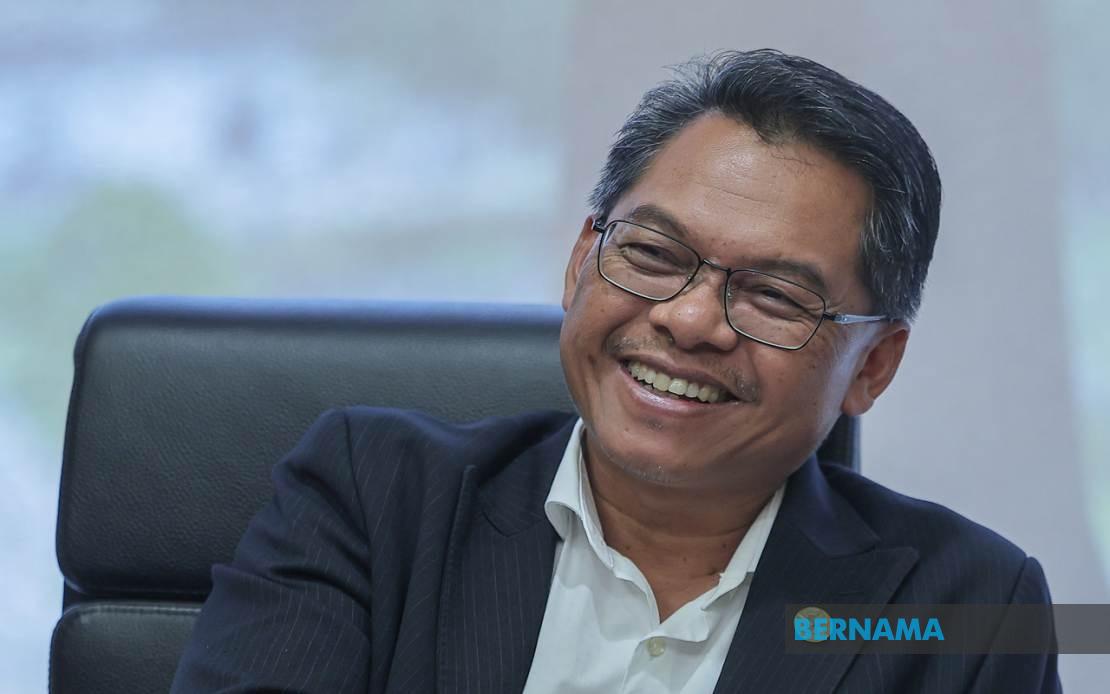
Datuk Mustapha Sakmud, the Minister in the Prime Minister's Department responsible for Sabah and Sarawak affairs, conveyed the committee's determination during a recent session where implementation status reports were tabled and reviewed. The meeting served as preparatory groundwork for a fuller discussion scheduled to take place under Prime Minister Datuk Seri Anwar Ibrahim's direct oversight next month, suggesting that the federal government intends to demonstrate tangible progress on MA63 matters during that higher-level engagement. The technical deliberations reflect an administrative approach designed to clear the ground and resolve bureaucratic obstacles before they reach the prime ministerial level, where decisions of greater political consequence will ultimately be made.
The agenda expanded beyond procedural matters to encompass several substantive policy areas that define how federal-state governance operates in Malaysian Borneo. The committee examined progress toward Borneonisation of the public service—a concept seeking to increase the proportion of local recruitment and advancement in government positions across Sabah and Sarawak. This represents more than an administrative reform; it addresses historical grievances about employment opportunities and representation in the state bureaucracies, and reflects commitments made under the original MA63 framework regarding the preservation of state identity and local control over key institutions.
Healthcare service provision also featured prominently in the committee's discussions, with particular attention to how federal resources and policies might better bridge existing gaps in medical infrastructure and accessibility across the geographically dispersed regions of Sabah and Sarawak. The vast territories involved, combined with challenging terrain and dispersed populations in rural areas, have historically created disparity in healthcare availability compared to peninsular Malaysia. Addressing these gaps carries significant implications for public health outcomes and living standards in East Malaysia, and signals federal acknowledgment that MA63 implementation must address tangible quality-of-life improvements.
Educational advancement in both states also commanded the committee's focus, with deliberations centred on mechanisms to strengthen the sector. Educational development carries strategic importance beyond immediate classroom concerns; it shapes economic opportunity, social mobility, and the ability of Sabah and Sarawak to develop skilled workforces capable of competing in modern economic sectors. Federal support for education infrastructure, curriculum development, and teacher training capacity thus represents a critical dimension of meaningful MA63 implementation that extends beyond symbolic gestures.
Musapha Sakmud's characterisation of the working relationship emphasised the collaborative framework underpinning these discussions. He noted that progress achieved through the technical and working committees demonstrated the value of consensus-building grounded in mutual trust and respect for federal and state interests. This language reflects a deliberate effort to position MA63 implementation as a cooperative venture rather than a contested domain where Sabah and Sarawak must extract concessions from reluctant federal authorities. The rhetorical framing matters because it shapes how citizens in both states perceive the federal government's commitment to honouring constitutional obligations.
Two concrete achievements received specific mention as evidence of this commitment in practice. The increase of Sabah's Special Grant to RM1.5 billion for the current financial year represents tangible additional resources flowing to the state government. Special Grants under Article 112D of the Federal Constitution represent direct fiscal transfers intended to support state development priorities, and the upward revision signals either growing recognition of Sabah's development needs or a political decision to demonstrate goodwill toward state governments through enhanced financial allocations. The magnitude of the grant makes it a substantive commitment rather than symbolic recognition.
The successful transfer of Bintulu Port to the Sarawak government on July 21 exemplifies the type of practical asset devolution that MA63 contemplates. Port control carries significant commercial and strategic importance; it influences economic development prospects, revenue generation, and state autonomy over maritime resources and commerce. The timing of this transfer—accomplished relatively recently and highlighted prominently in the committee's assessment—suggests that the federal government is moving beyond discussion into concrete implementation of arrangements that devolve meaningful control and assets to state authorities. Such transfers carry demonstrable impact on state capacity and economic management.
Musapha Sakmud characterised these developments as evidence that MA63 implementation under the present government represents not merely the fulfilment of previously deferred commitments but an evolving and dynamic process responsive to contemporary needs. This framing counters narratives that MA63 represents a fixed historical bargain requiring only archaeological excavation and literal application. Instead, it positions the agreement as a living framework capable of adaptation to meet current circumstances while remaining anchored to its constitutional foundations. This perspective could shape how future governments approach MA63 matters, establishing precedent for interpreting the agreement as flexible rather than immutable.
For Malaysian observers, particularly those in Sabah and Sarawak, the committee's recent actions suggest that federal-state relations remain constructive and that institutional mechanisms for resolving MA63 questions continue functioning. The presence of a dedicated minister, dedicated technical committees, and scheduled high-level reviews indicates sustained institutional attention to what could otherwise languish as historical grievance. The next prime ministerial review will likely demonstrate whether the accelerated pace indicated by this technical committee meeting translates into further concrete outcomes, or whether committees and meetings represent the primary output of MA63 implementation efforts.

