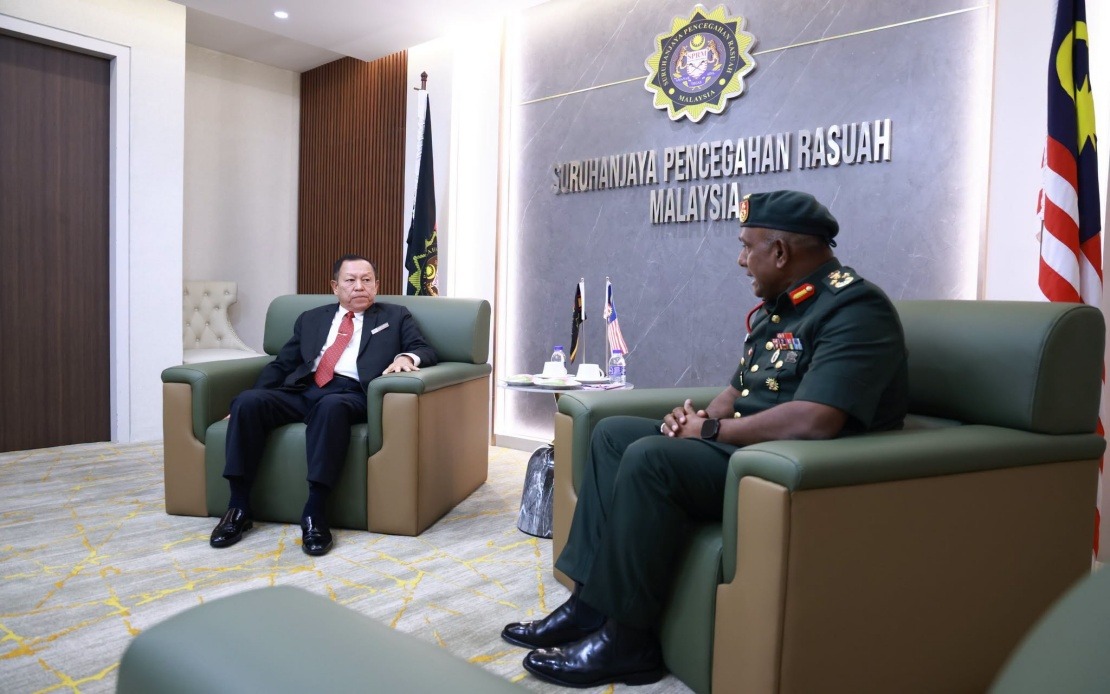
Malaysia's top anti-corruption authority and its military establishment have moved to deepen their institutional alliance, signalling a coordinated approach to combating graft across defence and security operations. The Malaysian Anti-Corruption Commission (MACC) and Malaysian Armed Forces (MAF) have reaffirmed their commitment to strengthening strategic cooperation through expanded intelligence sharing, information exchange mechanisms, and governance enhancement initiatives designed to bolster anti-corruption efforts and protect national security interests.
The collaborative framework was reinforced during a meeting at MACC headquarters in Putrajaya involving senior leadership from both organisations. MACC Chief Commissioner Datuk Seri Abd Halim Aman underscored the agency's appreciation for the longstanding working relationship with the defence establishment, emphasising that the institutional synergy between the two bodies remains vital for the nation's integrity architecture. He articulated confidence that the partnership would intensify across key operational domains, particularly in the systematic sharing of intelligence, the exchange of critical information, and the implementation of enhanced governance protocols.
The timing of this reinforced commitment coincides with the formal appointment of Lt Gen Datuk Fazal Abdul Rahman as director-general of the Malaysian Defence Intelligence Organisation (MDIO), a position he assumed on May 21. His courtesy visit to MACC headquarters represented not merely a ceremonial gesture but a substantive opportunity to establish operational foundations for the agencies' expanded collaboration. The appointment of a senior military intelligence official to this critical role suggests the armed forces intends to leverage enhanced intelligence capabilities in support of broader anti-corruption objectives within the defence sector.
Lt Gen Fazal reiterated the armed forces' unwavering commitment to maintaining rigorous governance standards and emphasised the institution's prioritisation of disciplinary excellence across all operational domains. His remarks underscored the military establishment's recognition that professional conduct and internal accountability mechanisms are prerequisites for institutional credibility and operational effectiveness. The armed forces leader characterised close cooperation with MACC as essential to advancing the national integrity and good governance agenda, reflecting a growing institutional understanding that corruption threatens both organisational effectiveness and public confidence in defence institutions.
The expansion of intelligence-sharing protocols between these agencies addresses a critical governance gap in Malaysia's anti-corruption infrastructure. Defence establishments globally face particular vulnerabilities to corruption due to their access to substantial budgets, complex procurement processes, and classified operational frameworks that can obscure irregular transactions. By formalising intelligence exchange mechanisms between MACC and the armed forces, Malaysia is attempting to create systematic oversight pathways that penetrate traditionally insular military structures. This represents a significant shift toward transparency within traditionally opaque defence bureaucracies.
Information exchange arrangements hold particular significance for Malaysian anti-corruption efforts. The armed forces manages extensive procurement operations, personnel deployment resources, and infrastructure development initiatives that collectively represent substantial public expenditure. Enhanced information flows between MACC investigators and military intelligence units could facilitate the detection of fraudulent procurement schemes, embezzlement operations, and conflicts of interest that might otherwise remain concealed within classified military administrative systems. The establishment of formalised protocols for such exchanges signals institutional maturity and recognition that national security is strengthened rather than compromised by transparency and accountability mechanisms.
Governance enhancement initiatives constitute the third pillar of the reinforced partnership. These likely encompass the development of standardised compliance frameworks, the establishment of audit mechanisms, the implementation of financial control systems, and the creation of institutional reporting structures designed to discourage corrupt practices at multiple organisational levels. Such frameworks require sustained coordination between the MACC's anti-corruption expertise and the armed forces' operational knowledge to ensure that compliance measures remain operationally realistic and institutionally achievable.
The involvement of MACC Intelligence Division senior director Datuk Saiful Ezral Arifin and MAF Security and Counter Intelligence Directorate director Lt Col Muhamad Zainol Md Yusof in these discussions indicates that both organisations are deploying their most specialised personnel to operationalise this partnership. Intelligence divisions possess the analytical capabilities, investigative methodologies, and secure communication infrastructures necessary to handle sensitive information that corruption investigations might uncover. The prominence of these specialised units in the arrangement suggests that both agencies recognise that effective anti-corruption work within defence establishments requires sophisticated intelligence capabilities rather than conventional investigative approaches.
For Malaysia's regional standing, this institutional strengthening holds significance beyond domestic governance considerations. Southeast Asian defence establishments face increasing scrutiny from international partners regarding corruption standards and procurement transparency. Nations that successfully embed anti-corruption mechanisms into military structures enhance their credibility in international defence partnerships and secure defence-related agreements. Malaysia's formalisation of MACC-Armed Forces cooperation positions the nation as increasingly serious about defence sector governance, potentially strengthening its position in bilateral and multilateral defence relationships within the region.
The partnership also reflects broader governmental recognition that compartmentalised anti-corruption efforts prove insufficient in complex institutional environments. Rather than relegating anti-corruption oversight exclusively to dedicated agencies, Malaysia is attempting to distribute responsibility for governance standards across multiple institutional actors. This systemic approach acknowledges that sustained cultural change toward integrity requires engagement from organisational leadership, operational personnel, intelligence specialists, and anti-corruption professionals working within coordinated frameworks rather than in isolation.
Implementation success will depend substantially on the willingness of military personnel at all ranks to report suspected corruption without fear of career consequences, the establishment of secure and confidential reporting mechanisms, and the development of investigation protocols that respect operational security requirements while ensuring thorough anti-corruption scrutiny. The coming months will reveal whether this partnership develops beyond symbolic commitment into a functional institutional reality that meaningfully reduces corruption opportunities within Malaysia's defence establishment.

