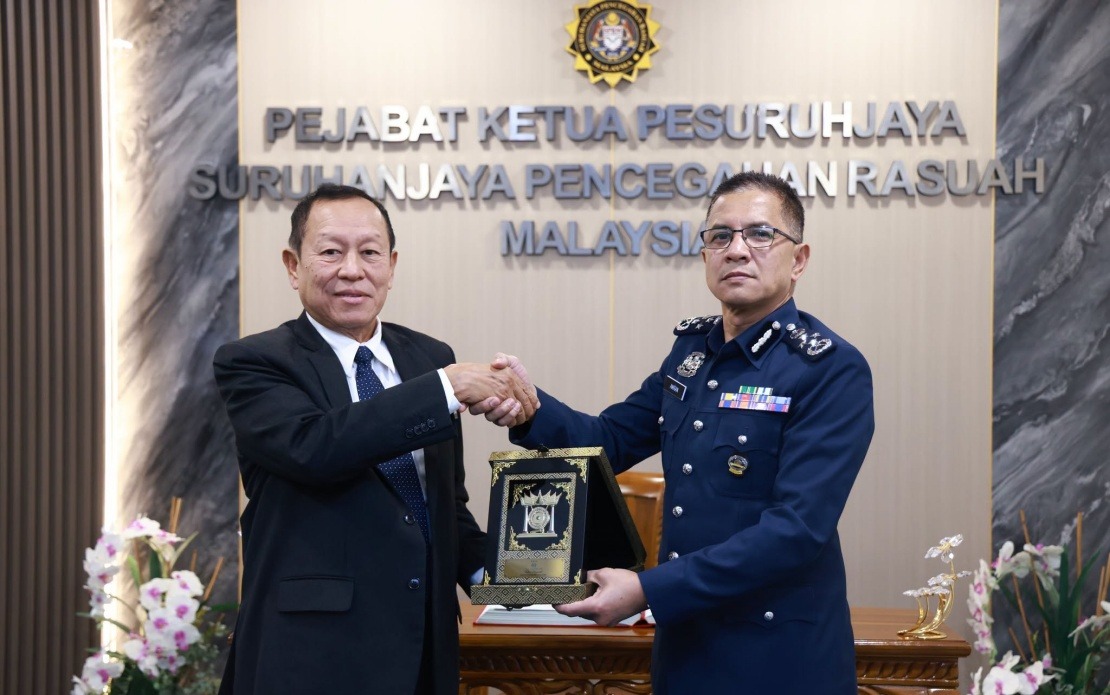
Malaysia's two premier enforcement agencies have unveiled plans to establish a dedicated task force aimed at tightening controls at the country's critical shipping ports. The Malaysian Anti-Corruption Commission (MACC) and the Royal Malaysian Customs Department (JKDM) detailed this initiative during high-level talks at MACC headquarters in Putrajaya on July 15, signalling a coordinated push to combat revenue leakage and corrupt practices at maritime chokepoints that handle billions in annual trade.
The proposal emerged from discussions between MACC chief commissioner Datuk Seri Abd Halim Aman and JKDM director-general Datuk Amran Ahmad, who led a delegated visit to the anti-corruption body. The one-hour strategic meeting served as a platform for the agencies to align their operational priorities and devise shared approaches to longstanding challenges that have historically plagued port operations across the country. Both leaders acknowledged the complexity of securing Malaysia's maritime infrastructure while maintaining the efficiency needed for a trading nation reliant on international commerce.
A central concern driving the collaboration is the sophistication of schemes designed to circumvent customs procedures and tax obligations. JKDM has documented syndicate operations involving falsified documentation, misdeclared cargo values, and systematic underreporting of goods crossing Malaysia's borders. One particularly troubling modus operandi involves deliberately misrepresenting the actual quantity or worth of shipments to Customs authorities, allowing smugglers to avoid substantial tariffs and excise duties. These leakages directly diminish government revenue and create unfair competitive advantages for unscrupulous traders operating outside regulatory frameworks.
Currency manipulation represents another critical vulnerability the agencies have identified. JKDM personnel have detected instances where individuals bringing substantial cash into Malaysia deliberately declare significantly lower amounts than they actually carry, effectively laundering funds while evading reporting requirements. Such practices intersect with money laundering and corruption concerns that fall squarely within MACC's mandate, making the inter-agency approach essential. The false cash declaration scheme exemplifies how port security gaps can facilitate financial crimes with implications extending far beyond customs revenue.
The task force will focus particular attention on container management systems nationwide, where opportunities for pilferage, substitution, and documentation fraud remain prevalent. Malaysia's position as a major transshipment hub in Southeast Asia magnifies the stakes—containers moving through Malaysian ports may contain contraband, counterfeit goods, or undeclared items destined for regional markets. Better coordination between MACC's investigative capabilities and JKDM's inspection authority could substantially improve detection rates and prosecution success. The joint task force represents recognition that fragmented enforcement approaches have historically allowed sophisticated criminal networks to exploit jurisdictional gaps and procedural ambiguities.
Integrity cultivation across both organisations forms the philosophical foundation of this partnership. JKDM has explicitly welcomed MACC's involvement in conducting anti-corruption awareness programmes for customs personnel, acknowledging that prevention depends partly on institutional culture and employee ethics. Customs officers at Malaysian ports handle immense discretionary authority—deciding which containers to examine, how thoroughly to inspect cargo, and which declarations to challenge. When integrity weakens within these ranks, systematic corruption becomes possible. By integrating MACC's anti-corruption messaging into customs training, the agencies hope to strengthen the human firewall against compromise.
The bureaucratic dimensions of port operations also featured prominently in discussions between the officials. Both agencies identified that outdated procedures, overlapping jurisdictions, and inefficient information-sharing mechanisms inadvertently create opportunities for law-breakers. Customs inspection protocols sometimes conflict with broader trade facilitation objectives, forcing officers to make rushed decisions under time pressure. A coordinated task force offers potential to streamline these processes, reducing both delays and opportunities for corruption. Better systems benefit legitimate traders while improving authorities' ability to identify genuine threats.
For Malaysian exporters and importers, the initiative carries mixed implications. Businesses operating legitimately may face heightened scrutiny during a transition period as the new task force establishes operational protocols. However, the longer-term effect should be a more level playing field where honest traders face less competition from smugglers and tax evaders. Companies importing goods or exporting produce through Malaysian ports have every interest in a customs environment where proper documentation and declarations are reliably enforced. Conversely, any operation dependent on customs shortcuts or undisclosed arrangements faces increased risk.
Southeast Asian regional dynamics add further context to this domestic enforcement move. Malaysia competes with Singapore, Thailand, and other regional hubs for containerised trade volumes. Corruption or inefficiency at Malaysian ports disadvantages the country in this competition, as shippers favour ports with reliable, swift, and trustworthy operations. By demonstrating commitment to tighter enforcement and reduced opportunities for irregular arrangements, Malaysia signals to international traders that its ports operate under rigorous oversight. This institutional credibility translates into competitive advantage in attracting legitimate regional trade.
The participation of MACC Investigation Division senior director Datuk Mohd Hafaz Nazar and JKDM Integrity branch head Azian Umar in the discussions underscores that implementation details are already being refined. These operational leaders would shape the task force's actual structure, resource allocation, and working methodologies. The presence of integrity specialists from both sides suggests the agencies recognise that effective enforcement requires not only investigative capability but also systematic approaches to preventing corrupt behaviour within their own ranks.
Broader challenges remain despite this inter-agency initiative. Port corruption in developing economies worldwide often extends beyond individual officers to involve organised networks spanning multiple government departments, shipping agents, and customs brokers. Malaysian authorities have previously uncovered major scandals involving systematic document fraud and collusive arrangements between officials and traders. A single joint task force, however well-resourced, cannot entirely eliminate these structural vulnerabilities. Long-term success requires sustained political will, adequate funding, modern technology infrastructure, and continuous operational refinement as criminals adapt their methods.
The announcement signals that Malaysian authorities increasingly recognise port security as a governance priority demanding high-level attention and coordinated institutional response. As global commerce grows and smuggling networks become more sophisticated, enforcement agencies must evolve beyond traditional methods. The MACC-Customs task force represents progress toward this modernisation, though real-world effectiveness will depend on consistent implementation and genuine operational integration between historically separate institutional cultures.

