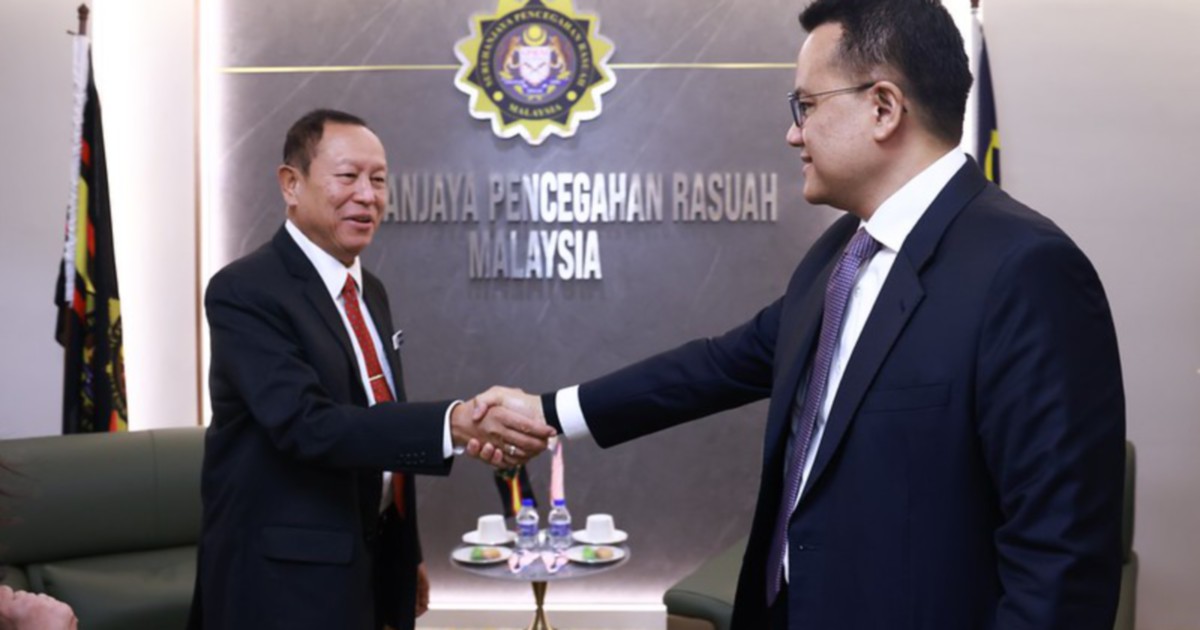
The Malaysian Anti-Corruption Commission and Permodalan Nasional Berhad have elevated their working relationship in a move designed to fortify transparency and accountability across Malaysia's investment landscape. Announced in Putrajaya, the strengthened partnership reflects growing recognition that combating corruption and ensuring sound governance of public funds require coordinated action between dedicated anti-corruption authorities and the institutions entrusted with managing the nation's wealth.
The timing of this collaboration carries significance for Malaysia's broader governance agenda. As public trust in institutions remains a crucial factor in national development, initiatives that visibly unite watchdogs and custodians of state assets send a powerful message about institutional commitment to clean management. PNB, which oversees vast portfolio holdings including strategic stakes in major Malaysian corporations, operates at the intersection of public interest and investment management—a domain where governance lapses can have cascading effects across the economy.
For Malaysian investors and the broader business community, this partnership carries tangible implications. When anti-corruption bodies and investment managers work in alignment, the institutional framework supporting capital deployment becomes more robust. This can enhance investor confidence, both domestically and internationally, by demonstrating that Malaysia takes seriously the governance of public investment funds. Such confidence translates into more efficient capital markets and potentially better returns for the underlying beneficiaries of these investments.
The collaboration likely encompasses multiple operational dimensions. Enhanced information-sharing protocols between the two organisations can facilitate early detection of irregularities or suspicious patterns that might indicate governance breaches. Training initiatives may strengthen the compliance capacity of personnel within both institutions, ensuring that staff at all levels understand evolving risks and best practices in integrity management. Joint investigations into complex matters affecting the investment sector can leverage the distinct expertise of corruption investigators and investment professionals.
For the Southeast Asian region, Malaysia's emphasis on tightening governance of state investments reflects a broader trend among developing economies seeking to differentiate themselves as secure, well-managed jurisdictions. Thailand, Indonesia, and Vietnam have undertaken similar reforms in recent years, recognising that transparent, accountable management of sovereign wealth and strategic investments attracts quality international partnerships and supports long-term economic competitiveness.
The investment sector presents particular vulnerability to corruption because of the scale of transactions, the complexity of deal structures, and the discretionary authority often vested in decision-makers. A reinforced relationship between MACC and PNB allows both institutions to establish clearer lines of accountability and to move beyond reactive investigation toward proactive governance design. This shift from catching misconduct to preventing it from occurring in the first place represents a maturation in how Malaysia approaches institutional integrity.
PNB's portfolio encompasses influence over multiple economic sectors, from finance to plantation to manufacturing. The decisions made about which companies to invest in, how to exercise shareholding rights, and when to divest carry implications for resource allocation across the economy. Corruption or poor governance in these decisions can distort markets, favour connected parties over merit, and ultimately erode the returns that ordinary Malaysians—through pension funds and savings accounts linked to PNB instruments—depend upon for their financial security.
The partnership also addresses an evolving challenge in corruption prevention: the sophistication of schemes designed to circumvent oversight. As detection methods improve, actors seeking to misappropriate funds or obtain improper advantage develop more elaborate approaches. By bringing together anti-corruption specialists and investment professionals, the two organisations can anticipate emerging risks and adapt their controls accordingly. This cat-and-mouse dynamic is a reality in governance work, and institutional coordination enhances Malaysia's ability to stay ahead of emerging threats.
For corporate Malaysia, clearer governance standards flowing from enhanced MACC-PNB coordination create a more level playing field. Companies competing for PNB investments or partnerships with PNB-linked entities can be assured that selection and oversight processes operate within stronger integrity frameworks. This should reduce competitive advantages derived from proximity or improper relationships, theoretically rewarding business performance and innovation rather than political connections or corrupt practices.
The strategic partnership also signals to international investors and development partners that Malaysia maintains institutional mechanisms for self-correction and continuous improvement. In an era where environmental, social, and governance standards increasingly influence global capital allocation, demonstrating commitment to domestic anti-corruption work and transparent investment management has financial implications. Funds and investors considering Malaysian exposure as part of regional portfolios assess governance quality as a risk factor; institutional collaborations like this one contribute to more favourable assessments.
Implementation and sustained commitment will determine the partnership's ultimate impact. Successful governance collaborations require clear mandates, adequate resourcing, and protection from political interference. Both MACC and PNB must maintain independence in their respective domains while working cooperatively toward shared objectives. The strength of institutional cultures within each organisation will influence whether this partnership becomes merely ceremonial or truly operational.
Looking forward, this collaboration provides a template that could extend to other state-linked entities managing public assets or wielding significant economic influence. Education, healthcare, infrastructure, and social security funds all require governance integrity. Expanding similar partnerships across these sectors would create a more comprehensive institutional ecosystem supporting transparent management of Malaysia's collective wealth.

