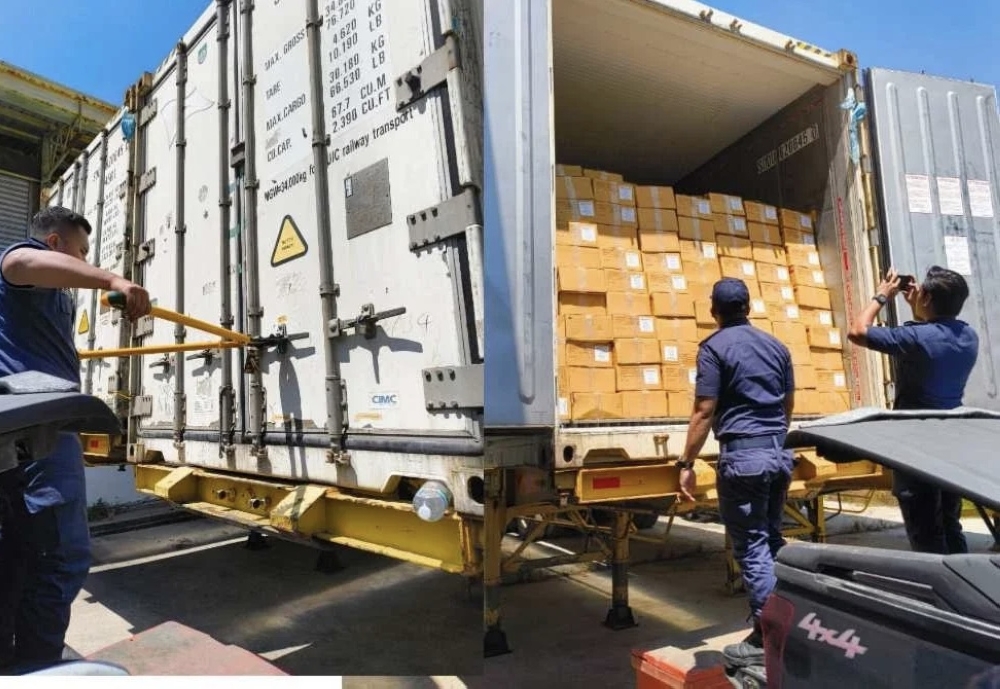
Malaysia's anti-corruption watchdog has successfully shut down an organised smuggling operation centred on the illegal importation of frozen chicken from China, resulting in the arrest of three suspects in Sabah. The Malaysian Anti-Corruption Commission (MACC) uncovered the scheme during what authorities are calling Operation Chick, marking another enforcement success in the country's ongoing battle against illicit trade and corruption-linked criminal activities.
The discovery of this smuggling ring underscores a persistent vulnerability in Malaysia's food import regulations and border security frameworks, particularly in Sabah where geographical proximity to regional trade routes creates both logistical opportunities and enforcement challenges. The operation targeted what investigators believe was a well-organised syndicate profiting from the illegal movement of frozen poultry products, bypassing standard quarantine protocols and customs declarations that exist to protect domestic food safety standards and local agricultural industries.
Sabah has emerged as a critical flashpoint for such contraband activities due to its maritime borders and complex supply chain networks. The state's position as a gateway for regional trade, while economically beneficial, has simultaneously attracted criminal elements seeking to exploit enforcement gaps. The MACC's intervention suggests that authorities are increasingly applying anti-corruption resources to combat food security threats, recognising that smuggling operations often involve corrupt officials who enable illegal goods to pass through checkpoints in exchange for bribes or kickbacks.
The three individuals detained represent different nodes within the smuggling apparatus, though full details of their specific roles remain under investigation. Such networks typically involve importers who arrange shipments abroad, logistics coordinators who manage transport, customs brokers who facilitate paperwork manipulation, and potentially corrupt government personnel at ports who turn a blind eye to suspicious cargo. Breaking these connections is crucial to dismantling not just individual operations but entire corrupt ecosystems that facilitate illegal trade.
The frozen chicken trade has attracted particular scrutiny from Malaysian authorities in recent years, as imported poultry—whether legal or illegal—represents a substantial segment of domestic consumption. Illegal imports undercut legitimate producers who comply with stringent halal certification, health screening, and customs procedures. For consumers, particularly in price-sensitive markets, the availability of cheap smuggled goods creates demand that incentivises further criminal activity, establishing a problematic cycle that regulatory bodies must actively interrupt.
Operation Chick's success reflects evolving investigative techniques that blend financial forensics with traditional intelligence gathering. The MACC, increasingly focusing beyond conventional corruption cases, has recognised that major smuggling operations leave paper trails through banking systems, import-export documentation, and communications records. By following these trails, investigators can construct comprehensive pictures of criminal networks and establish the involvement of officials who may have received bribes or facilitated falsified paperwork.
For Malaysia's agricultural sector, such enforcement actions carry significant economic implications. Local chicken producers compete against imported products on price, and when illegal imports flood the market, legitimate businesses face margin compression and reduced demand. Farmers' associations have repeatedly called for stronger border enforcement, and operations like this represent tangible responses to those demands, though the persistent emergence of new smuggling attempts suggests that resources and vigilance must remain consistently elevated.
From a food security perspective, bypassing import procedures presents genuine health risks. Legal importation involves quarantine inspections, disease screening, and traceability protocols designed to prevent the entry of pathogens or contaminated products that could threaten public health. Illegal consignments circumvent these safeguards entirely, potentially introducing diseases harmful to humans or to local livestock populations. In a post-pandemic environment where food supply chain security has gained prominence, such breaches carry magnified significance.
The operation also highlights the transnational nature of organised smuggling, which typically involves collaboration with criminal networks in source countries like China where frozen poultry exports represent a significant commercial sector. The profitability of smuggling depends partly on price differentials between wholesale markets in origin countries and black-market prices in destination markets, meaning operations persist as long as such spreads remain substantial. Addressing smuggling therefore requires not just enforcement at receiving ports but also supply-side interventions and international cooperation.
For Malaysian readers and businesses, the MACC's action signals that authorities are actively pursuing corruption-enabled smuggling schemes, which should provide some reassurance regarding border integrity. However, the persistence of such operations suggests that challenges remain considerable. The successful prosecution of these three suspects will depend on evidence quality and the willingness of courts to impose sentences that deter future participation in similar schemes.
Looking ahead, the case underscores the necessity for sustained cooperation between the MACC, the Royal Malaysian Police, customs authorities, and port security agencies. Intelligence sharing and coordinated operations have proven effective in disrupting organised smuggling, yet resource constraints and the sophistication of modern criminal operations mean that complacency would be dangerous. For Sabah specifically, heightened vigilance and potentially enhanced border infrastructure at key ports may prove necessary to prevent future iterations of such smuggling networks from establishing operations.
The broader implication extends to food supply chain governance across Southeast Asia, where similar vulnerabilities exist in other nations. Malaysia's anti-smuggling efforts, when publicised and discussed regionally, contribute to international awareness and can prompt neighbouring countries to strengthen their own enforcement frameworks, creating a more hostile environment for regional smuggling operations that typically involve cross-border movements of illicit goods.

