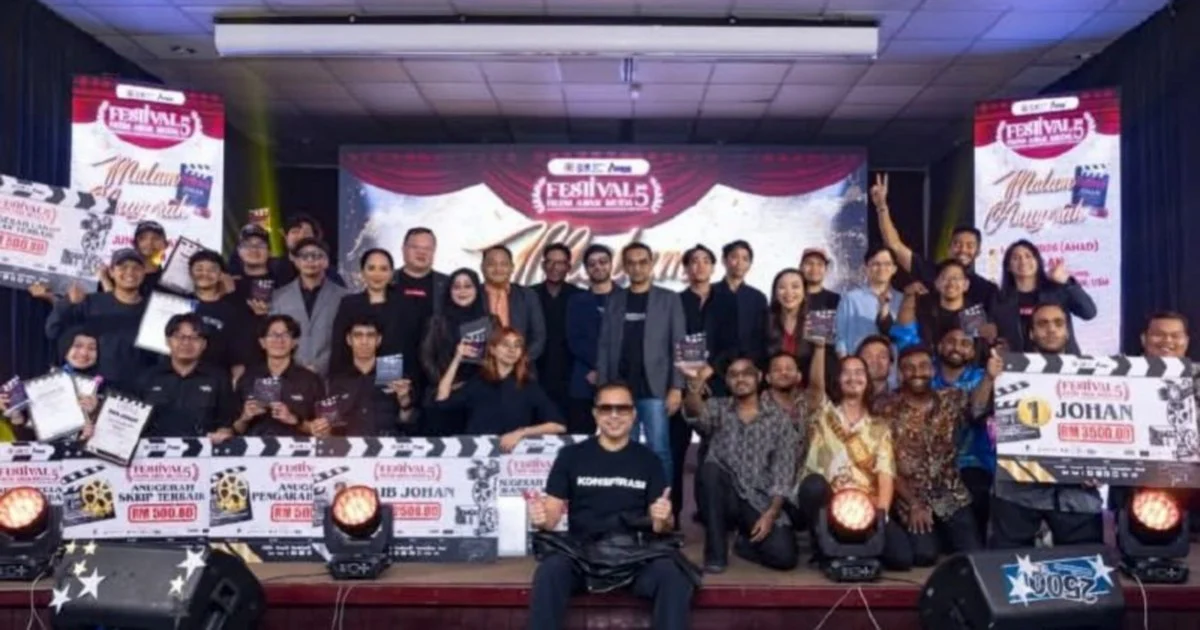
The Malaysian Anti-Corruption Commission (MACC) has identified youth-focused creative platforms as a crucial avenue for embedding integrity values into Malaysian society, announcing a partnership role in the 5th Youth Film Festival (FFAM) at Universiti Sains Malaysia (USM) in Penang. This strategic alignment represents a shift in how governance agencies approach public education, moving beyond traditional compliance messaging to engage younger demographics through the storytelling medium that resonates most powerfully with them.
Film festivals have emerged globally as effective instruments for social messaging, offering a platform where complex ethical themes can be explored through narrative and visual language rather than institutional directives. The MACC's participation in FFAM reflects recognition that conventional anti-corruption campaigns—pamphlets, seminars, and regulatory announcements—often fail to penetrate youth consciousness or motivate behavioural change. By positioning integrity narratives within a competitive creative festival, the commission transforms what could be perceived as a bureaucratic mandate into culturally relevant discourse that young filmmakers and audiences genuinely engage with.
The festival setting allows diverse perspectives on corruption, institutional accountability, and ethical decision-making to surface organically through student productions. Young filmmakers from across Malaysia bring their own experiences and observations of how corruption manifests in their communities, schools, and everyday transactions. This grassroots storytelling approach generates authenticity that external messaging campaigns struggle to achieve, particularly when addressing sceptical audiences who may view official communications with inherent suspicion.
For the MACC specifically, this partnership addresses a persistent institutional challenge: building public trust and awareness among cohorts that have grown up during periods of high-profile corruption cases and subsequent reforms. Rather than positioning the commission as an enforcement body—a characterisation that can create distance between the agency and younger citizens—the festival collaboration allows MACC to function as a platform for youth voices and creative expression on integrity matters. This reframing potentially softens institutional perceptions while simultaneously deepening young people's understanding of why anti-corruption work matters to their own futures.
Universiti Sains Malaysia's hosting role carries particular significance within the Malaysian higher education context. USM has established itself as a research and innovation hub, and its commitment to hosting a youth film festival signals that integrity and ethical awareness belong within academic excellence conversations. Universities occupy a formative position in shaping emerging professional cohorts—future civil servants, lawyers, journalists, business leaders—making campus-based anti-corruption initiatives strategically important for long-term institutional health across Malaysian society.
The fifth iteration of FFAM indicates this is an established initiative with growing reach and credibility among Malaysian youth, rather than a one-off awareness effort. Sustained involvement from the MACC across multiple editions builds cumulative impact, as participants become repeat engagers with anti-corruption themes and potentially advocates within their own networks. Festival-goers who screen films exploring corruption's human costs may become more attuned to institutional malfeasance in their professional environments, more likely to report misconduct, or more demanding of ethical conduct from authority figures.
Regionally, Malaysia's approach through this festival demonstrates how Southeast Asian nations are adapting anti-corruption strategies beyond enforcement toward cultural engagement. Singapore's Corrupt Practices Investigation Bureau and Indonesia's Komisi Pemberantasan Korupsi have similarly explored public communication innovations, yet Malaysia's emphasis on creative festival platforms specifically positions youth as primary stakeholders rather than secondary beneficiaries of governance reform. This distinction matters because it acknowledges that corruption prevention ultimately depends on institutional cultures shaped by entrants to those institutions.
The practical mechanics of the festival—film submissions, judging criteria, public screenings—create multiple touchpoints where anti-corruption principles embed themselves. Young participants research corruption topics for scripts, shaping their own understanding through creative work. Festival attendees encounter perspectives on institutional ethics in compelling cinematic form, potentially triggering conversations among peers. Industry observers and media covering the festival amplify these messages to broader audiences beyond Penang's campus grounds.
However, the festival's effectiveness ultimately depends on how genuinely the MACC and USM facilitate diverse creative voices versus steering submissions toward predetermined messaging. Youth audiences are sufficiently media-literate to detect patronising institutional messaging disguised as grassroots creativity. The commission's partnership succeeds only if it creates genuine space for critical examination of how corruption operates, how institutional systems enable or prevent misconduct, and what individual and collective responsibilities citizens hold in maintaining integrity standards.
The initiative also reflects broader Malaysian policy recognition that anti-corruption requires cultural transformation alongside regulatory enforcement. No single enforcement agency, however well-resourced, can prevent corruption without shifts in social norms, institutional behaviour, and individual ethical reasoning. By investing in creative platforms that help young Malaysians develop sophisticated understanding of corruption's causes and consequences, the MACC contributes to the foundational attitudinal changes necessary for sustained integrity improvement across Malaysian institutions and society more broadly.