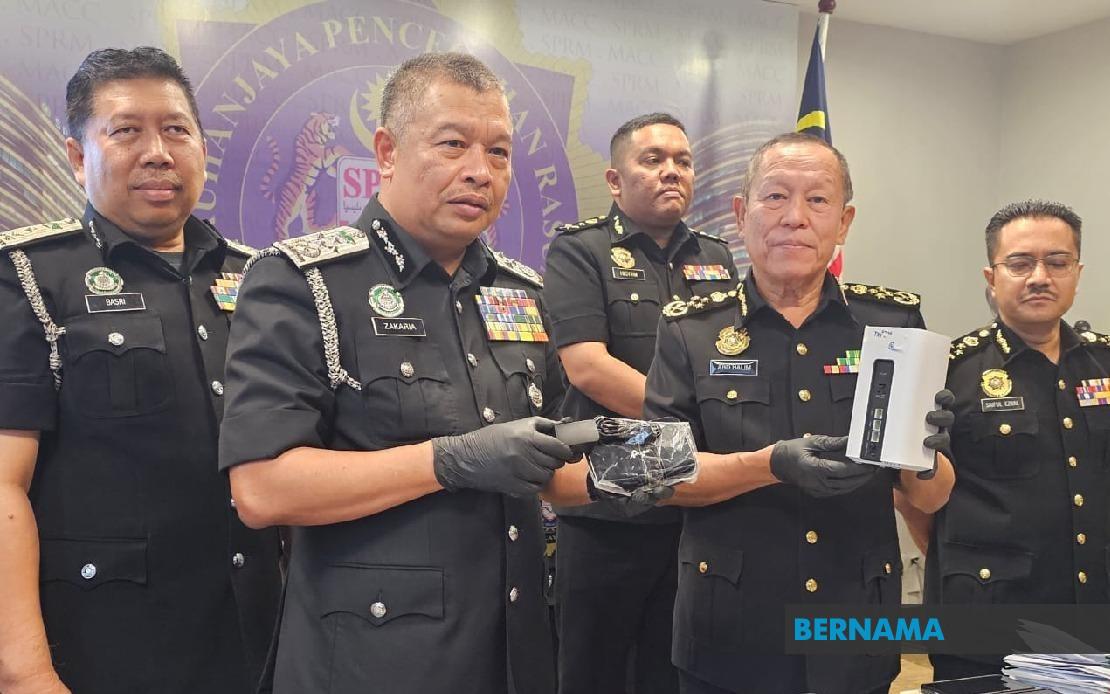
The Malaysian Anti-Corruption Commission (MACC) has launched a comprehensive investigation into the affairs of Tabung Haji, dispatching eight officers to the pilgrimage fund's headquarters on Wednesday following the public release of a Royal Commission of Inquiry (RCI) report that exposed systemic governance failures and questionable financial decisions. The move comes as Prime Minister Datuk Seri Anwar Ibrahim called for enforcement agencies to pursue appropriate action based on the RCI's findings, signalling top-level commitment to addressing the scandal that has tarnished one of Malaysia's most prominent Islamic financial institutions.
MACC chief commissioner Datuk Seri Abd Halim Aman outlined the investigative strategy at a press conference, explaining that officers immediately began collecting and cataloguing documentation referenced in the RCI report while simultaneously building a list of individuals who will be compelled to provide formal statements. The commission's approach is methodical rather than rushed, reflecting the scale and complexity of potential violations spanning multiple years and numerous transactions. Abd Halim stressed that the investigation transcends any predetermined timeframe and will be guided comprehensively by the RCI's detailed findings and recommendations, ensuring no relevant period or transaction escapes scrutiny.
The RCI's examination of Tabung Haji's management and operations from 2014 to 2020 revealed a troubling pattern of problematic investments that systematically eroded the fund's asset value, alongside concealment of information and suspicious financial activities. These discoveries have prompted recommendations for a forensic audit to dissect past investment decision-making processes and determine how institutional safeguards failed so dramatically. For Malaysian pilgrims who entrust their savings to Tabung Haji to fulfil the Hajj obligation, the revelations represent a profound breach of fiduciary responsibility by those entrusted with stewardship of their funds.
When questioned about whether the investigation would extend to former leadership ranks, Abd Halim confirmed that any individual identified through the evidence-gathering process would be summoned to record statements, a commitment that potentially implicates senior management figures who presided over the problematic period. This suggests the MACC's net will cast widely across organisational hierarchies, from decision-makers at the executive level to operatives who may have facilitated questionable transactions. The absence of predetermined investigative boundaries indicates that no position or rank will automatically shield individuals from accountability.
The MACC has constituted a specialised team headed by Investigation Division senior director Datuk Mohd Hafaz Nazar to examine the RCI report through the lens of applicable legislation. This team will assess potential violations encompassing corruption, embezzlement, document falsification, abuse of authority, and money laundering under the MACC Act 2009 and the Anti-Money Laundering, Anti-Terrorism Financing and Proceeds of Unlawful Activities Act 2001. The dual-statute approach acknowledges that some conduct may constitute money laundering even where conventional corruption charges are difficult to establish, expanding the prosecutorial arsenal available to enforcers.
The RCI's findings carry particular significance given Tabung Haji's role as the primary vehicle through which Malaysian Muslims accumulate savings for the obligatory pilgrimage. The fund manages contributions from hundreds of thousands of Malaysians, many of whom view their accounts as sacred trusts held in accordance with Islamic principles of fiduciary honesty. Asset value deterioration resulting from mismanagement therefore represents not merely financial loss but a violation of religious and ethical expectations that animate the entire institutional relationship.
The investigation's timing reflects broader governance reform initiatives under the current administration, which has elevated anti-corruption enforcement as a policy priority following the previous government's governance scandals. The swift deployment of investigative resources to Tabung Haji signals that high-profile institutional failure will not be shelved or deprioritised when politically inconvenient. Regional observers monitoring Malaysia's institutional integrity will interpret the MACC's vigorous response as indicative of the government's willingness to pursue accountability even where entrenched interests resist such scrutiny.
For the Malaysian public and particularly the millions with personal financial stakes in Tabung Haji, the investigation represents both reassurance and cause for concern. Reassurance derives from visible enforcement action and commitment to uncovering wrongdoing; concern stems from confirmation that systemic lapses occurred within an institution considered foundational to Islamic financial service delivery in the region. The investigation must navigate complex questions about who authorised questionable investments, what approval mechanisms failed to prevent such decisions, and whether intentional deception or mere incompetence drove the deterioration.
The RCI report's placement on the Department of Islamic Development Malaysia (JAKIM) website represents a deliberate transparency measure, ensuring public access to findings rather than permitting bureaucratic obscuration. This institutional openness creates pressure for the MACC investigation to demonstrate visible progress and eventual accountability, as lengthy deliberations without prosecutorial outcomes would validate concerns about enforcement capacity or political reluctance to pursue powerful figures. The investigation's scope—encompassing forensic examination of investment rationales and transaction authentication—will likely occupy MACC resources for several months, with findings potentially implicating numerous individuals across organisational levels.

