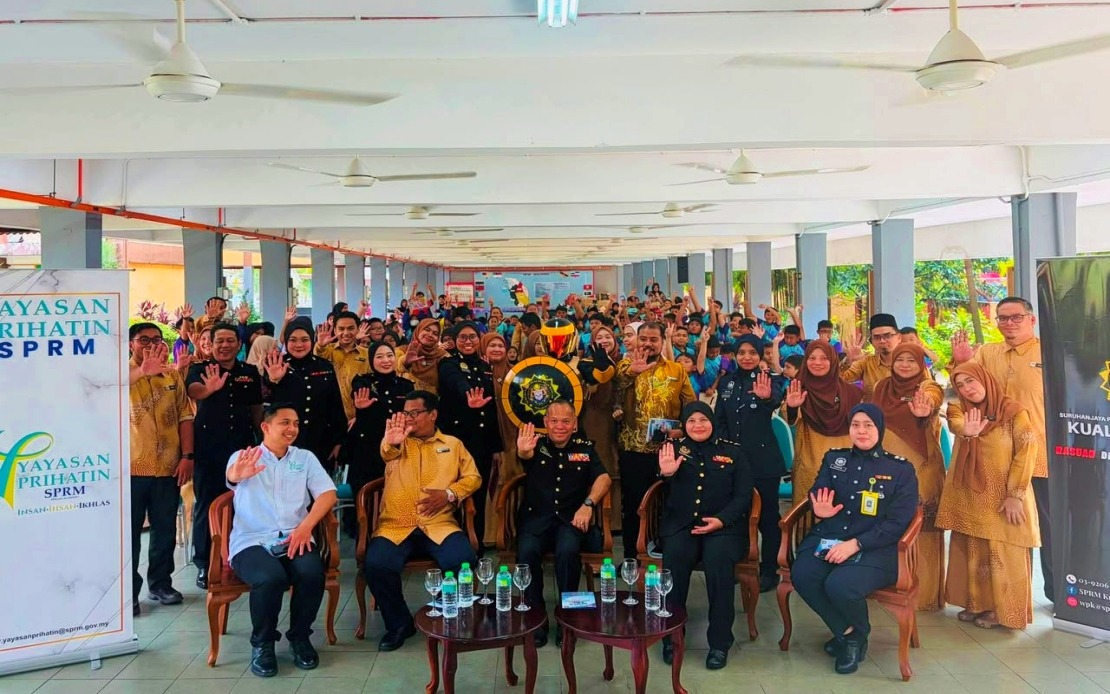
The Malaysian Anti-Corruption Commission's Kuala Lumpur office has intensified its push to embed anti-corruption principles at the community level through an educational initiative launched at Sekolah Kebangsaan Jalan Pasar 1 on August 14. The Wira Antirasuah (WAR) programme represents a deliberate strategy to address misconduct before it takes root, targeting formative school years when values and habits solidify. Rather than focusing exclusively on high-level prosecutions and enforcement actions, the MACC recognises that lasting institutional change requires cultivating ethical mindsets among the younger generation who will shape Malaysia's future governance landscape.
Mohamad Zakkuan Talib, director of the Kuala Lumpur MACC office, articulated a philosophy that extends beyond conventional anti-corruption messaging. He contended that integrity is fundamentally about character and the willingness to act righteously, regardless of whether such actions garner public recognition or tangible reward. This framing is significant because it decouples ethical behaviour from incentive structures, instead positioning it as an intrinsic personal commitment. In a Malaysian context where corruption has historically been intertwined with patronage networks and transactional relationships, redefining integrity as a personal virtue rather than an institutional obligation offers a valuable counter-narrative to normalised misconduct.
Zakkuan emphasised that ethical conduct originates not in dramatic moments of moral choice, but in the accumulation of small decisions that comprise daily life. He identified several mundane examples—resisting the temptation to cheat, respecting others' property, avoiding plagiarism, honouring commitments, and preserving the confidence others place in us—as the building blocks of an integrity-based character. This pedagogical approach aligns with contemporary understanding of habit formation and behavioural psychology, suggesting that integrity functions similarly to other learned behaviours and can be reinforced through consistent practice and social reinforcement during developmental years. For Malaysian educators and policymakers, this methodology offers a practical framework for embedding anti-corruption education without requiring specialized expertise or extensive institutional restructuring.
The WAR programme itself combines multiple engagement modalities to maximise its educational impact. Interactive activities formed the core of the initiative, supplemented by educational briefings conducted by the Kuala Lumpur MACC's Community Education Branch, known as PenMas. The inclusion of Kapten MACC, the commission's mascot character, demonstrates recognition that younger audiences respond more effectively to engaging, accessible communication channels rather than formal bureaucratic messaging. By personalising anti-corruption education through a recognizable character, the MACC increases memorability and emotional connection to core messages about ethical conduct, potentially extending the initiative's influence beyond the immediate classroom setting into families and peer networks.
A complementary dimension of the programme involved establishing the SKJP1 Anti-Corruption Corner, conceived as an ongoing information hub within the school infrastructure. Rather than treating anti-corruption education as episodic—delivered during special programmes and subsequently fading from consciousness—this physical space maintains sustained visibility and accessibility for both staff and students. The corner serves as a daily reminder of institutional commitment to integrity while providing convenient access to materials, resources, and information that reinforce the programme's core messages. For Malaysian schools contemplating similar initiatives, this model demonstrates how modest infrastructure investments can yield significant long-term cultural benefits.
Beyond the explicitly anti-corruption components, the programme incorporated holistic support mechanisms addressing student welfare. Yayasan Prihatin SPRM contributed a smart television to the school, modernising teaching resources and potentially expanding pedagogical possibilities. Simultaneously, the initiative extended aid to 29 pupils from asnaf (eligible poor Muslim) families, acknowledging the intersection between economic vulnerability and susceptibility to corruption. This integrated approach reflects sophisticated understanding that integrity cannot flourish where basic needs remain unmet; students grappling with food insecurity or educational resource scarcity operate under fundamentally different constraints than their economically secure peers. By addressing material welfare alongside moral education, the MACC tacitly recognises that sustainable anti-corruption work requires attention to underlying socioeconomic conditions.
The programme's incorporation of the Keep Malaysia Clean (KMC) campaign, coupled with National Month commemorations, positioned anti-corruption within broader narratives of national pride and environmental stewardship. Special education pupils participated in planting hibiscus, Malaysia's national flower, creating symbolic and practical connections between integrity, national identity, and environmental responsibility. This multi-layered symbolism—ethical conduct as patriotic duty, environmental care as collective responsibility, inclusive participation across ability levels—reinforces that corruption represents not merely a legal violation but a betrayal of shared national identity and collective wellbeing.
The timing and location of this initiative carry particular significance for Malaysia's anti-corruption landscape. Kuala Lumpur, as the national capital and administrative centre, experiences disproportionate levels of institutional corruption and public sector misconduct. Targeting schools in the capital city means reaching populations in proximity to government decision-making structures and bureaucratic processes, potentially creating a generation of voters and officials more attuned to detecting and reporting corruption. Moreover, early intervention in densely populated urban centres offers greater reach-per-resource-unit than equivalent programmes in less populated areas, maximising the efficiency of anti-corruption education investment.
For Southeast Asian context, Malaysia's MACC outreach programmes represent one of the region's more sophisticated attempts to embed anti-corruption values institutionally through education. While Indonesia's Komisi Pemberantasan Korupsi and Thailand's National Anti-Corruption Commission have undertaken similar initiatives, Malaysia's approach distinguishes itself through integration with broader welfare support and environmental stewardship narratives. This comprehensive methodology potentially offers replicable models for other regional jurisdictions seeking to move beyond reactive enforcement toward preventative, values-based anti-corruption strategies.
The effectiveness of such grassroots programmes ultimately depends upon reinforcement through institutional culture and senior leadership example. Students exposed to anti-corruption education throughout their schooling years will inevitably notice inconsistencies between taught values and observed behaviours within government, business, and civil society institutions. Consequently, the success of initiatives like WAR cannot be measured solely through immediate changes in school-based conduct, but through their capacity to create constituencies of citizens who expect and demand integrity from institutions throughout their subsequent lives. The MACC's willingness to invest in long-term values cultivation rather than exclusive reliance on detection and prosecution suggests recognition that sustainable corruption reduction requires generational commitment and cultural transformation alongside enforcement mechanisms.

