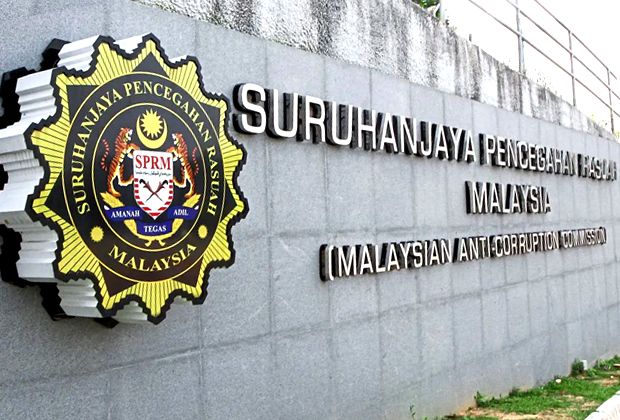
The Malaysian Anti-Corruption Commission has taken steps to unfreeze financial restrictions imposed on Rohas Tecnic, a telecommunications and power transmission tower manufacturer, and its subsidiary HGPT, lifting legal holds that had constrained the group's banking capabilities. The decision brings relief to the company's board and management team, whose personal bank accounts were similarly restricted, and signals a resolution to a two-month compliance investigation that had raised concerns about potential money laundering and illicit financing activities.
In a disclosure to Bursa Malaysia, Rohas Tecnic confirmed that the MACC has formally cancelled all seizure orders originally issued under Section 50(1) of the Anti-Money Laundering, Anti-Terrorism Financing and Proceeds of Unlawful Activities Act 2001 (AMLA). The revocation extends beyond the corporate entities to encompass the individual bank accounts of both serving and former officers affiliated with HGPT, reinforcing the breadth of the original investigation and the comprehensiveness of its closure.
The lifting of these restrictions now permits Rohas Tecnic to resume unfettered management of its financial operations and banking relationships. The company emphasized that all previously frozen accounts are now accessible, allowing the group to conduct routine transactions, meet payroll obligations, service supplier payments, and pursue capital deployment activities without regulatory impediment. For a manufacturer dependent on supply chain continuity and workforce stability, the restoration of banking access represents a material step toward operational normalcy.
The timeline of events provides context for understanding the investigation's progression. In mid-October 2025, Rohas Tecnic announced that it and its subsidiaries HGPT and Rohas-Euco Industries Bhd (REI) had been served with freezing and seizure orders emanating from the MACC. These initial actions were executed under both Section 44(1) and Section 50(1) of AMLA, with the Section 50 provisions specifically targeting designated bank accounts suspected of involvement in illicit financial flows. Such enforcement actions, while necessary tools for anti-corruption authorities, typically generate market uncertainty and can disrupt operational cash flow.
The resolution came relatively swiftly for a formal anti-money laundering investigation. By late November 2025—roughly five weeks after the initial seizure announcement—Rohas Tecnic and HGPT had both received formal revocation orders issued by the Deputy Public Prosecutor, the senior law officer responsible for AMLA proceedings. A day prior, REI had separately received cancellation of its own freezing orders, issued directly by the MACC under Section 44A of the legislation. The staggered nature of the revocations across the three entities suggests that the legal authority may have conducted differentiated assessments of each subsidiary's exposure or compliance status.
The implications of this development extend beyond the immediate relief to Rohas Tecnic stakeholders. Malaysia's anti-corruption apparatus, anchored by the MACC and supported by prosecutorial oversight, plays a critical role in maintaining international confidence in the country's financial system and regulatory credibility. The swift resolution of this case, following proper investigation, demonstrates the functionality of these institutional safeguards and the willingness of authorities to reverse restrictive measures when evidence does not substantiate continued legal action. This approach balances the legitimate enforcement imperative against the risk of wrongful or prolonged financial paralysis of legitimate enterprises.
For Rohas Tecnic's investors and trading partners, the revocation orders provide legal certainty regarding the company's financial standing and operational capacity. Bursa Malaysia-listed companies operating under AMLA suspicion face potential reputational damage, reduced access to credit, and hesitancy from business partners. The formal clearing of these accounts and the cessation of investigation-related financial controls should facilitate the company's return to normal capital markets standing and enhance its ability to pursue strategic initiatives.
The broader sectoral context matters as well. Companies in Malaysia's telecommunications infrastructure and power transmission domains occupy strategically important positions within the economy's backbone. Disruptions to their operations—whether from regulatory investigation or other causes—can have cascading effects on service continuity and investment confidence. The removal of MACC seizure orders thus extends benefits beyond Rohas Tecnic itself to customers reliant on uninterrupted tower services and telecommunications operators dependent on infrastructure stability.
From a governance perspective, the case illustrates both the reach and the precision of Malaysia's anti-money laundering framework. The fact that authorities pursued individual officer accounts alongside corporate accounts demonstrates the holistic nature of modern financial crime investigation, where personal and institutional financial activity are examined in concert. The subsequent revocation of these same individual restrictions, once investigative evidence proved insufficient, underscores the importance of proportionate application of enforcement powers and respect for procedural fairness even within the context of corruption control.
Moving forward, Rohas Tecnic must focus on restoring investor confidence and demonstrating robust compliance controls that would withstand heightened regulatory scrutiny. The experience of investigation, though ultimately cleared, may prompt management to review internal financial controls, anti-money laundering protocols, and reporting mechanisms to ensure alignment with contemporary regulatory expectations. Such proactive measures would serve both the company's operational interests and the broader goal of systemic financial integrity.
The revocation orders represent a return to normal legal status for Rohas Tecnic, its subsidiary HGPT, and the officers whose personal accounts were restricted. While the investigation period created operational constraints and market uncertainty, the prompt resolution and formal clearing reaffirm the company's legitimacy. This outcome demonstrates the MACC's commitment to thorough but fair investigation processes, important for maintaining public trust in anti-corruption enforcement while protecting businesses from prolonged unjustified restriction.

