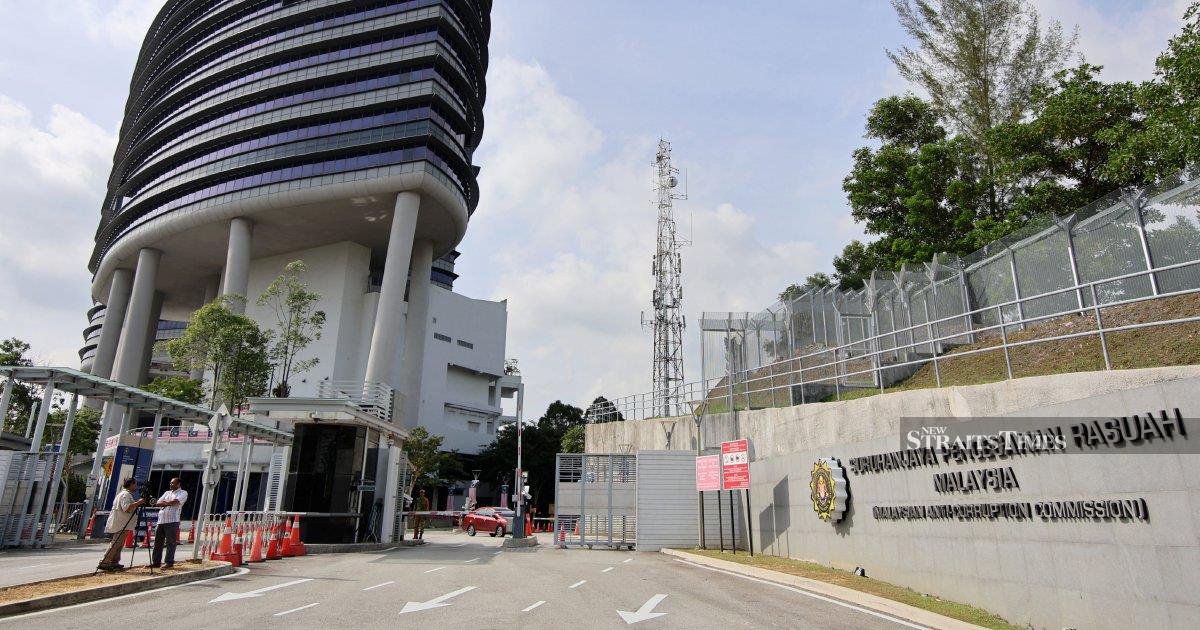
The Malaysian Anti-Corruption Commission has thrown its weight behind a coordinated push to fortify legal and institutional protections for those who report wrongdoing within government ranks, framing the measure as critical to Malaysia's ambitions of improving its international standing on corruption metrics over the next five years. Officials at the MACC have signalled that ministry secretaries-general and department directors-general must treat whistleblower safeguards as a governance priority, reflecting mounting recognition that robust reporting channels and personal protections remain insufficient in the country's current anti-corruption framework.
This intervention arrives against a backdrop of persistent challenges to Malaysia's Corruption Perceptions Index score, which measures perceptions of public-sector corruption across nations and has become a focal point for policymakers seeking to demonstrate governance improvements to international investors and development partners. The MACC's positioning of whistleblower protection as a lever for CPI advancement underscores a strategic insight: countries with credible mechanisms for reporting misconduct and shielding informants from reprisal typically register measurably higher scores with international anti-corruption monitors. Such frameworks signal institutional maturity and a genuine commitment to accountability.
Whistleblower protections have emerged globally as a cornerstone of effective anti-corruption systems, yet implementation remains patchy across Southeast Asia. When individuals fear retaliation for exposing graft, embezzlement, or abuse of public office, corrupt actors operate with reduced risk of exposure. Conversely, jurisdictions offering legal guarantees against dismissal, transfer, or harassment of those who report violations create organisational cultures in which wrongdoing becomes riskier to conceal. Malaysia's decision to elevate this issue signals recognition that passive complaint mechanisms—where people can report but face uncertain consequences—are insufficient.
The MACC's directive targets senior bureaucratic leadership directly, implying that institutional buy-in at the top is essential. Secretaries-general and directors-general control budget allocation, personnel policies, and organisational priorities within their ministries and departments. By engaging them as custodians of whistleblower protection rather than issuing top-down mandates alone, the MACC appears to be fostering ownership of the agenda. This approach acknowledges that sustainable governance reform requires not merely compliance but genuine commitment from those steering large public institutions.
Malaysia's historical struggles with corruption have drawn international scrutiny, and the country's CPI rankings have fluctuated in recent years, reflecting inconsistent progress. Improving that score carries material implications: sovereign credit ratings, foreign direct investment flows, and the country's reputation as a stable governance destination all bear some correlation to perceived corruption levels. For multinational corporations and development partners, a rising CPI score signals reduced transaction costs and regulatory uncertainty. Hence the MACC's focus on an auditable, externally-monitored metric like CPI reflects pragmatic recognition of global stakeholder interests.
The timeframe of 2030 is deliberately chosen; it aligns with Malaysia's medium-term development strategy and provides sufficient runway for institutional changes to take root and demonstrate results. Whistleblower protection systems, once established, require organisational socialisation and gradual embedding into practice norms. Early wins—documented cases in which informants were protected and their complaints acted upon—become powerful validators that the system functions as advertised. Building that track record takes time.
Implementation challenges are real, however. Whistleblower protections require not just policy documents but operational infrastructure: confidential reporting channels, ombudsman-like oversight of alleged retaliation, legal remedies for aggrieved informants, and cultural shifts in organisations accustomed to hierarchical decision-making where questioning superiors carries stigma. Overcoming such entrenched patterns demands sustained institutional effort and consistent messaging from leadership that reporting improper conduct is valued, not punished.
Regional context matters too. Several Southeast Asian nations, including Singapore and Vietnam, have recently tightened or clarified whistleblower frameworks, creating a competitive dynamics around governance reputation. For Malaysia, lagging in this domain relative to regional peers risks talent and investment flight to jurisdictions perceived as cleaner. The MACC's initiative thus reflects not merely domestic anti-corruption zeal but positioning within an increasingly competitive regional governance landscape.
Complementing whistleblower safeguards with other measures—stronger financial disclosure rules, asset declaration transparency, and merit-based civil service advancement—will amplify impact. The MACC is, in effect, signalling that CPI improvement requires a comprehensive assault on corruption enablers. Whistleblower protection is one pillar but cannot stand alone. The commission's engagement with secretaries-general and directors-general hints at a broader agenda being negotiated behind the scenes, one aimed at embedding anti-corruption disciplines across government.
For Malaysian businesses and citizens, the immediate significance of this push lies in signalling direction. Investors evaluating operational risks factor governance quality into cost-of-doing-business calculations. Strengthened whistleblower protections reduce that risk by increasing the likelihood that internal misconduct gets surfaced and addressed rather than festering as a vulnerability. Employees in the public sector benefit directly from knowing that raising concerns carries legal backing rather than career jeopardy. The cascading effects of such system-level shifts are difficult to quantify immediately but compound over time into measurably different institutional behaviours.

