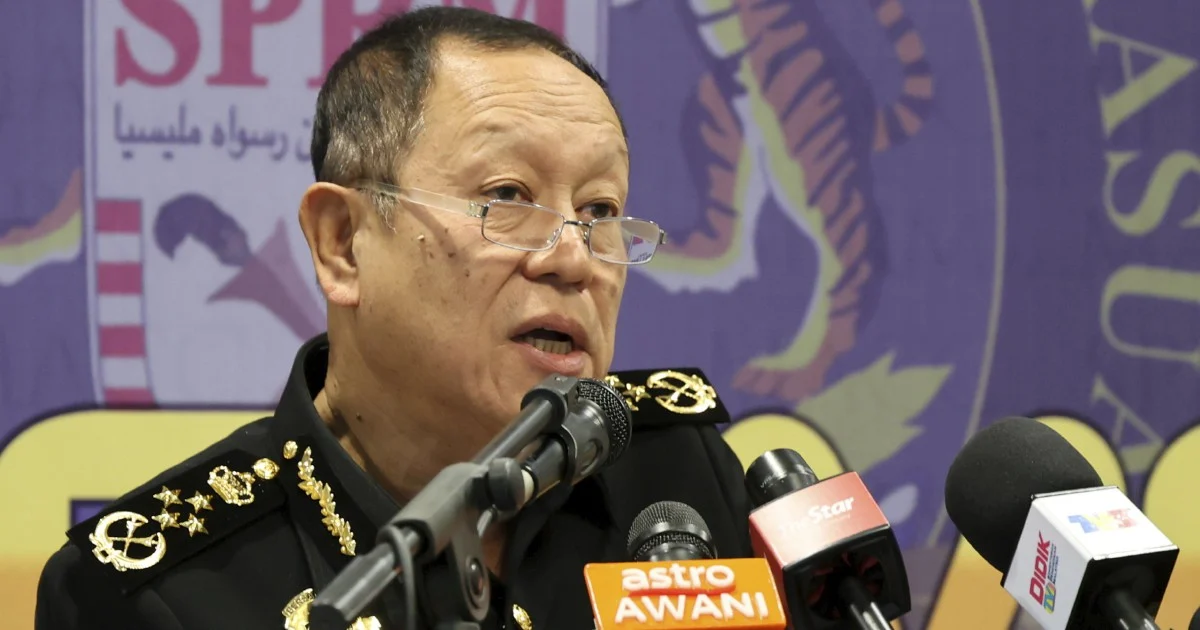
The Malaysian Anti-Corruption Commission has widened its investigation into the acquisition of a high-value property in the United States, signalling fresh momentum in efforts to uncover the financial trails of the scandal-plagued 1Malaysia Development Bhd fund. The anti-graft agency plans to call multiple witnesses for questioning, among them the spouse of a former Malaysian prime minister, as investigators seek to establish whether funds misappropriated from 1MDB were channelled into this overseas real estate transaction.
The inquiry represents a continuation of MACC's systematic examination of how billions of ringgit allegedly siphoned from 1MDB were deployed internationally. Over recent years, authorities in Malaysia and abroad have traced questionable transactions spanning multiple continents, with real estate acquisitions emerging as a favourite vehicle for asset concealment. The focus on this particular property suggests investigators have identified documentary or financial evidence linking it to the broader 1MDB embezzlement network, though details about the specific location, value, and ownership structure remain undisclosed.
The involvement of a former premier's family member in the investigation reflects the entanglement of political connections with 1MDB's collapse. The fund, originally established as a vehicle for sovereign wealth management and economic development, became synonymous with one of the world's largest financial frauds after multiple billions disappeared through fraudulent schemes involving shell companies and international transfers. The inclusion of high-profile individuals in the witness list suggests MACC believes this property transaction formed part of a coordinated scheme to hide ill-gotten wealth outside Malaysian jurisdiction.
For Malaysian readers, the expansion of this investigation carries significant implications for the nation's anti-corruption standing. The MACC's determination to pursue international asset trails demonstrates that efforts to recover misappropriated funds have not been abandoned despite the complexity of tracing money moved across borders years ago. Each witness interview and piece of evidence collected strengthens the legal foundation for potential future prosecutions or asset recovery actions, benefiting the Malaysian public who ultimately bore the cost of 1MDB's failures.
The timing of these summonses also reflects the global nature of 1MDB prosecutions. International authorities in countries including the United States, Switzerland, and Singapore have conducted parallel investigations, recovering billions in seized assets. Malaysia's continued engagement in this process ensures the country remains part of international coordination mechanisms designed to hold multiple parties accountable regardless of where they reside or where assets are held.
Sources of funds invested in United States property markets become important forensic markers in tracing financial crime. Investigators typically examine banking records, wire transfer documentation, and ownership structures to establish whether funds originated from known legitimate sources or from suspicious channels. The MACC's focus on this particular transaction suggests that preliminary analysis has flagged irregularities warranting deeper scrutiny through direct questioning of individuals with knowledge of the acquisition.
The investigation also underscores Malaysia's continued commitment to prosecuting 1MDB-related offences despite the passage of time. Several years after the scandal's initial exposure, authorities remain methodically working through accumulated evidence. This persistence is particularly relevant for Southeast Asia, where investor confidence in regional financial systems depends partly on demonstrating that even complex, multi-jurisdictional fraud cases will be investigated thoroughly and prosecuted fairly.
For the individuals being called for questioning, the MACC inquiry represents a potentially significant development. While being asked to assist does not necessarily imply culpability, the formal nature of MACC involvement and the specific focus on a US property allegedly funded by diverted 1MDB money places matters within a highly sensitive legal and political context. Cooperation with investigators and transparent disclosure of information has become a critical consideration for all parties touched by the 1MDB saga.
The broader context includes Malaysia's efforts to reform governance structures and strengthen anti-corruption frameworks in the post-1MDB era. Agencies like MACC have received increased resources and political support to pursue outstanding cases. The continued pursuit of this luxury property investigation signals that the commission views unfinished business in this area as meriting sustained investigative effort, notwithstanding competing demands on its institutional capacity.
International asset recovery remains challenging, particularly when properties are held through complex corporate structures spanning multiple jurisdictions. MACC's approach of interviewing key witnesses builds the case file necessary for potential asset recovery actions, even if criminal prosecution becomes difficult. Money recovered through civil forfeiture mechanisms or international cooperation agreements ultimately returns value to the Malaysian state and contributes to remedying the financial damage inflicted by the 1MDB collapse.
The investigation also reflects evolving international standards regarding beneficial ownership transparency. Authorities have become increasingly sophisticated in unravelling layered ownership structures designed to obscure the true beneficiaries of assets. Property holdings in sought-after overseas markets have become less effective as hiding places for illicit wealth, particularly when funding sources come under international scrutiny.
As this inquiry proceeds, observers across Malaysia and Southeast Asia will monitor whether MACC successfully uncovers additional evidence linking the property to diverted 1MDB funds and whether this leads to recovered assets or criminal charges. The outcome will further demonstrate whether regional anti-corruption institutions possess the competence and determination to pursue complex financial crime across international boundaries, a critical message in an era of heightened global scrutiny of developing-market governance.

