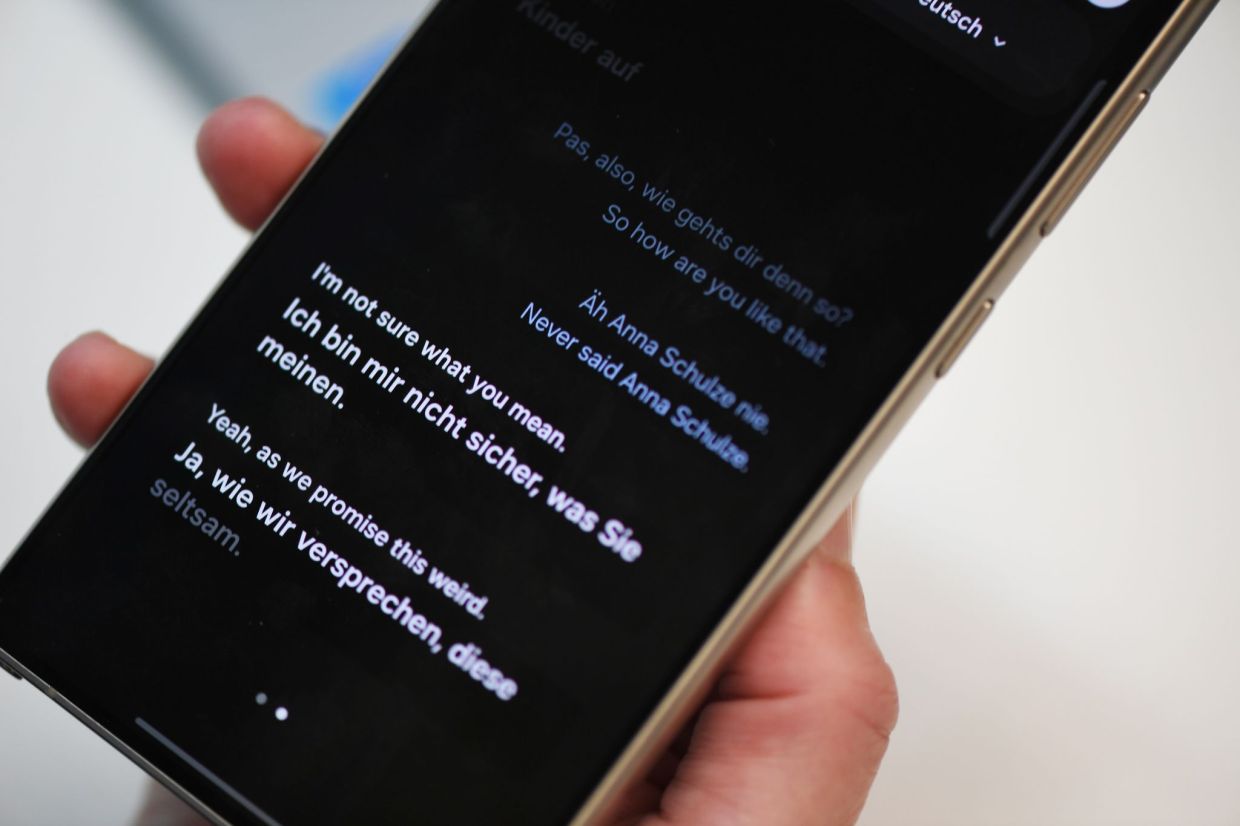
While artificial intelligence has made remarkable strides across numerous professional fields, translation and interpretation remain domains where human expertise continues to demonstrate clear superiority. A comprehensive study conducted by researchers at Lingnan University in Hong Kong and Chongqing University of Posts and Telecommunications has documented significant limitations in how chatbot-powered translation systems handle the complexities inherent in converting text between languages, particularly when cultural sensitivities and political implications are at stake.
The research team, led by Wang Binhua from Lingnan University's Centre for English and Additional Languages alongside Gao Fei, examined how AI translation systems performed when tasked with rendering speeches and formal communications. Their findings paint a sobering picture for those who assume that technological advancement will render human translators obsolete in the near term. Even when researchers provided the AI systems with contextual information such as the speaker's professional title, the date of the speech, and relevant social and political circumstances, the machine-generated translations diverged significantly from professional human versions in both structure and meaning.
One of the most striking discoveries involved what the researchers identified as "ideological disparities" between machine and human translation approaches. This concept carries particular resonance for readers in Southeast Asia, where political sensitivities and cultural meanings can shift dramatically based on subtle word choices and rhetorical positioning. The AI systems, despite their computational power and access to vast training datasets, demonstrated a systematic inability to replicate the interpretive choices that experienced human translators make almost intuitively when navigating such treacherous terrain.
The study highlighted how AI translation systems gravitated toward excessive use of passive grammatical constructions, a tendency that fundamentally alters how meaning is conveyed. In diplomatic and political discourse, the distinction between active and passive voice carries profound implications for assigning responsibility and establishing agency. When an AI system transforms an active statement about leadership decisions into a passive formulation, it essentially reshapes the message in ways that can obscure crucial contextual meanings and power relationships. For Malaysian readers accustomed to navigating multilingual political environments, this distinction takes on heightened importance.
Another critical flaw identified in the research involved the systematic elimination of rhetorical flourishes in favour of generic, neutral language. Professional translators understand that certain phrases, metaphors, and stylistic choices carry cultural weight and communicative purpose beyond their literal meaning. When AI systems strip these elements away in pursuit of technical accuracy, they sacrifice the essential communicative intent. This tendency to flatten meaning into blandness becomes particularly problematic when translating statements where tone, emphasis, and rhetorical force constitute integral parts of the message itself.
Wang Binhua emphasised that human interpreters maintain irreplaceable value precisely because they possess the capacity to make informed judgements about interpersonal relationships, the deliberate choices speakers make in how they construct their language, and how cultural expressions manifest across different linguistic communities. This competence extends far beyond mere word-for-word conversion; it represents a sophisticated understanding of how language functions as a social instrument and carries meaning layered across multiple cultural registers. Such expertise cannot be easily quantified or replicated through machine learning alone.
The implications of these findings gain particular urgency given Microsoft's recent assessment that translators and interpreters face significant employment vulnerability in the years ahead. The technology giant's analysis, based on enquiries directed to its Copilot AI system, suggested that these professions would experience substantial job displacement due to advancing artificial intelligence. However, the Lingnan University research suggests a more nuanced reality—while routine translation tasks may eventually be automated, work requiring careful attention to cultural meaning, political sensitivity, and contextual sophistication will likely remain fundamentally human work.
For Malaysian and Southeast Asian organisations operating across multiple languages and cultural contexts, these findings offer reassurance that the wholesale replacement of human translation services remains a distant prospect. Diplomacy, government communications, legal documentation, and business negotiations in the region routinely depend on translation quality that goes far beyond mechanical accuracy. The ability to navigate political implication, cultural reference, and rhetorical strategy distinguishes professional translation from algorithmic conversion.
Yet the research also suggests that the role of translation professionals may be evolving rather than disappearing. As AI systems become more prevalent, human translators might increasingly focus on the most intellectually demanding and culturally sensitive work while relying on machine tools for preliminary drafts or routine documentation. This hybrid model could prove more efficient than either pure human or pure machine approaches, though it would necessarily demand that professional translators develop new competencies in working alongside artificial intelligence systems.
The fundamental insight from this research transcends the specific question of AI translation systems. It demonstrates that human judgment remains essential in domains where communication carries political, diplomatic, or cultural weight. For a region like Southeast Asia, where cross-cultural communication constantly mediates complex relationships between nations and communities, this conclusion affirms the enduring value of skilled professionals who understand not just languages but the worlds those languages represent and the consequences their choices carry.

