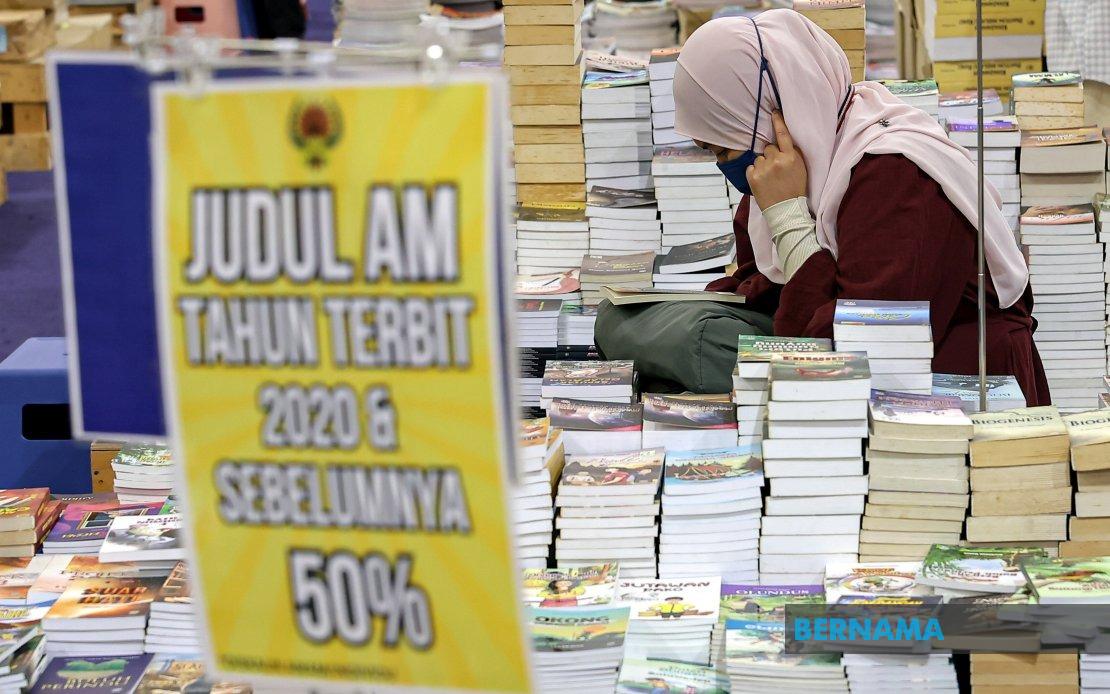
The Ministry of Education has launched redemption for the MADANI Book Voucher Programme 2026, a nationwide initiative designed to ensure equitable access to reading materials for more than 2.2 million students across Malaysia. Deputy Education Minister Wong Kah Woh announced in Parliament that the scheme, supported by a substantial allocation of RM221.6 million, will distribute RM100 e-vouchers to eligible recipients beginning July 1 and continuing until October 31. The beneficiaries span a broad educational spectrum, encompassing students from Remove Class through Form Six, along with those enrolled in vocational colleges, matriculation institutions, and the Malaysian Institute of Teacher Education.
The redemption process operates exclusively through the BookCapital digital platform, which has established partnerships with 1,238 registered booksellers across the country. This entirely online mechanism represents a deliberate shift toward technological accessibility, enabling students to browse and purchase books without geographic constraints. The platform's extensive bookseller network ensures that participating retailers are distributed nationwide, making the service available even in Malaysia's more remote communities where physical bookstores may be scarce or nonexistent.
A defining feature of this year's iteration is the introduction of the MADANI Special Title Focus category, curated to emphasise literary merit and intellectual development. This category encompasses both enduring classics and contemporary literary works, alongside carefully selected non-fiction titles spanning history, philosophy, economics, and geopolitics. The government has specifically prioritised books addressing human capital development, recognising that knowledge in these domains strengthens citizens' understanding of their society and global context. Each voucher recipient must allocate at least one purchase from this designated category, ensuring a baseline quality of intellectual engagement.
The 2026 programme reflects growing ministerial emphasis on science and technology literacy. Priority consideration has been extended to publications covering artificial intelligence, information technology, and the broader Science, Technology, Engineering and Mathematics spectrum. This curricular alignment indicates the government's intent to prepare students for an increasingly digitalised economic landscape, where technological competency will be essential for employment and innovation. By incentivising purchases in these domains, the MADANI initiative functions not merely as a reading subsidy but as a strategic tool for workforce development aligned with Malaysia's transformation into a knowledge-based economy.
Evidence from earlier implementation cycles demonstrates the programme's tangible impact on participating students. An impact study conducted by the Darul Ehsan Institute found that 97.5 percent of surveyed recipients agreed the vouchers had meaningfully assisted their educational pursuits, with particularly pronounced benefits for students from lower-income households. Furthermore, 92.2 percent of respondents indicated the vouchers had enhanced their examination preparation capabilities. These metrics suggest that the programme successfully bridges a genuine access gap that previously disadvantaged economically vulnerable segments of the student population.
The programme's digital architecture has yielded impressive operational outcomes since its introduction in 2024. The system achieved a 100 percent redemption rate in its inaugural year, indicating not only high student awareness and engagement but also effective platform functionality that eliminated friction points in the purchasing process. This complete redemption rate stands as a notable achievement for a nationwide government initiative, suggesting that technological barriers to participation have been successfully minimised. The absence of reported leakages or misappropriation reflects both robust system design and institutional accountability.
Geographic equity represents a central achievement of the digital-first approach. By eliminating dependence on physical bookstore locations, the online platform ensures that students in peninsular Malaysia's urban centres enjoy identical access and identical book selection as their counterparts in East Malaysia or other remote regions. Wong emphasised that the programme guarantees "the same books, the same opportunities and the same future for all Malaysian children," articulating a fundamental principle of educational equity that transcends geography. This democratisation of access addresses a longstanding structural inequality in Malaysian education.
The programme's transparency mechanisms have become increasingly sophisticated. Ministry officials have highlighted the convergence of three objectives: 100 percent redemption, complete transparency in fund allocation and usage, and zero instances of corruption or diversion of resources. Achieving this triumvirate in a programme of this scale—affecting over two million individuals and managing hundreds of millions in public funds—represents a significant institutional accomplishment. The emphasis on transparency reflects broader government commitments to demonstrate fiscal responsibility and rebuild public confidence in educational administration.
Parliamentary scrutiny has reinforced the programme's legitimacy and encouraged continuous improvement. Opposition Members of Parliament have engaged substantively with the initiative, requesting detailed assessments of implementation outcomes and student demographics. This cross-party engagement suggests a degree of consensus on the programme's value, even as individual MPs advocate for specific enhancements or additional beneficiaries. Wong's responses have consistently positioned the scheme as data-driven and responsive to evidence gathered through systematic surveys and impact evaluations.
The MADANI Book Voucher Programme embodies a particular approach to educational equity that leverages digital infrastructure to overcome traditional barriers of geography and economic status. By making reading materials accessible to students regardless of family income or residential location, the initiative addresses a fundamental prerequisite for academic advancement and intellectual development. The expansion to encompass 2.2 million beneficiaries and the deliberate curating of titles toward technological and philosophical literacy indicate ministerial recognition that reading subsidies alone prove insufficient; content selection must align with broader national development objectives.
Looking forward, the programme's continued evolution will likely depend on sustaining high redemption rates and demonstrating measurable improvements in student outcomes. The integration of artificial intelligence and digital literacy materials reflects awareness that Malaysia's educational system must prepare students for economic structures fundamentally different from those that shaped previous generations. As digital transformation accelerates across Southeast Asia, programmes like MADANI position Malaysia's student population to engage competitively in knowledge-intensive sectors.
The redemption period extending through October 31 provides a four-month window for students to exercise their purchasing options. This extended timeline allows flexibility for academic calendars, examination schedules, and student circumstances while providing ample opportunity for booksellers to manage inventory and supply chain logistics. The Ministry of Education's commitment to evaluating outcomes suggests that data from this cycle will inform subsequent iterations, ensuring the programme continues evolving in response to demonstrated needs and emerging priorities within Malaysia's educational landscape.

