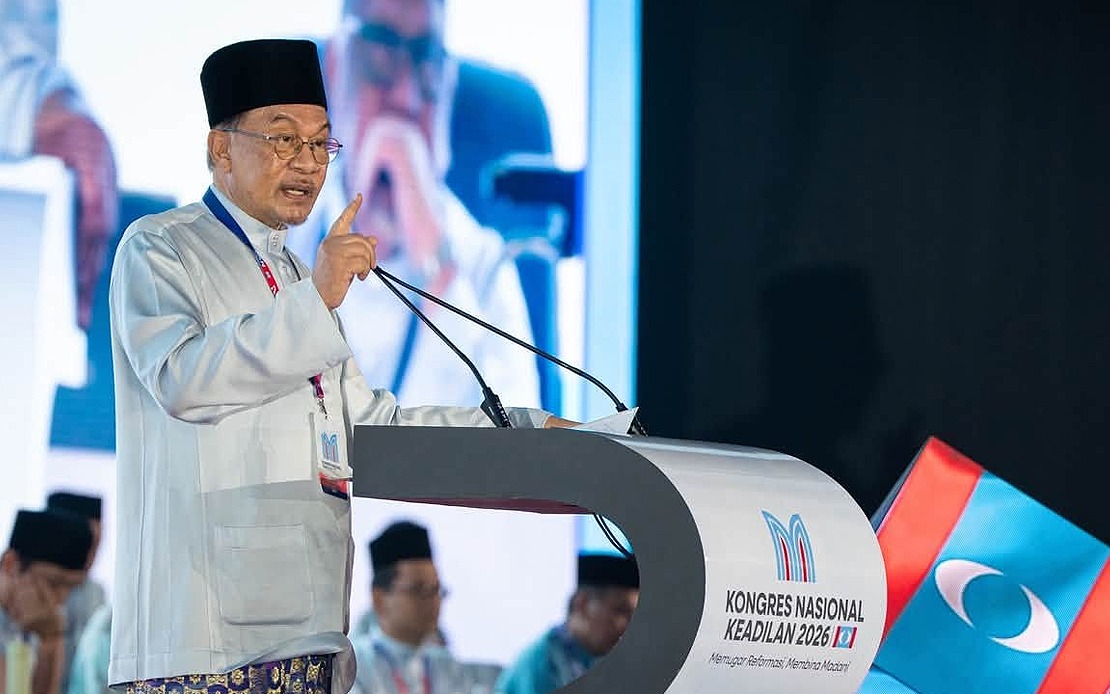
The government's ambitious reform agenda risks falling short unless its benefits translate into demonstrable improvements in everyday life for Malaysians across all income levels. This was the sobering message delivered by Prime Minister's Senior Political Advisor Tengku Datuk Seri Zafrul Tengku Abdul Aziz during the PKR National Congress in Melaka, where he cautioned that strong economic performance figures alone cannot justify the ruling coalition's continued mandate. Speaking via a Facebook post during the two-day congress at the Melaka International Trade Centre, Tengku Zafrul acknowledged that while the government has launched multiple initiatives, the translation of policy into tangible outcomes remains incomplete and uneven across Malaysian society.
The remarks underscore a persistent challenge facing the MADANI administration: the disconnect between headline achievements and public perception. Tengku Zafrul specifically referenced Malaysia's six percent economic growth, a performance that exceeded official forecasts and international expectations. Yet he emphasised that statistical success means little if ordinary Malaysians do not experience corresponding improvements in their purchasing power, employment security, or access to essential services. This sentiment reflects growing concerns within the government coalition that economic growth, while necessary, does not automatically translate into voter satisfaction or sustained political support. The challenge is particularly acute in Malaysia's multi-ethnic, regionally diverse landscape, where economic benefits frequently cluster around urban centres and particular sectors, leaving rural and less-developed areas behind.
The congress, themed "Reviving Reform, Building MADANI", gathered PKR members to assess progress and chart the party's direction ahead of what analysts expect will be competitive electoral contests. Tengku Zafrul noted that debate sessions generally aligned with the overarching message delivered by PKR President Datuk Seri Anwar Ibrahim in his policy address, suggesting that internal party consensus on reform priorities remains intact. However, his intervention on communication strategy revealed fractures between policy ambition and public awareness. He pointedly stated that if citizens remain ignorant of government initiatives and achievements, the fault lies not with the public but with the administration's failure to convey its message effectively. This acknowledgment of a communication deficit carries significant implications for the government's political standing, as public unawareness of policies inevitably leads to underutilisation of programmes and erosion of political goodwill.
Among the flagship initiatives highlighted by Anwar Ibrahim and referenced by Tengku Zafrul were the abolition of the Universities and University Colleges Act, commonly known as AUKU, a decades-old restriction on campus activism that has symbolised government control over student expression. The repeal represents a substantive shift in the MADANI Government's approach to civil liberties and institutional governance. Equally significant are ongoing efforts to rehabilitate the Federal Land Development Authority, a scheme-based development agency whose performance has deteriorated significantly over decades, affecting hundreds of thousands of settler families who depend on its support. These initiatives, alongside unspecified economic measures anticipated in the upcoming Budget, were presented as evidence that the government recognises the reform agenda remains incomplete and that sustained effort will be required to honour campaign promises.
The emphasis on institutional reform reflects the MADANI Government's stated philosophy that meaningful change requires overhauling structures and governance frameworks, not merely adjusting fiscal allocations. The AUKU abolition, in particular, signals ideological commitment to liberalisation within the state apparatus, a departure from previous administrations. Rehabilitation of FELDA, however, presents a more complex challenge, as it requires not simply policy amendment but operational transformation, financial restructuring, and restoration of confidence among beneficiaries who have experienced years of underperformance and governance concerns. These initiatives carry symbolic weight within the ruling coalition and among reform-minded constituencies, yet their actual impact on ground-level conditions will determine whether the MADANI brand delivers substantive change or merely rhetorical gestures.
Tengku Zafrul's call for intensified communication efforts reveals strategic recognition that Malaysia's competitive political environment demands not only good policy implementation but also sophisticated, sustained messaging. He noted explicitly that the MADANI Government's list of initiatives and achievements is substantial, but public knowledge of these measures remains limited. This gap between output and awareness represents a vulnerability that opposition parties are likely to exploit, particularly if economic conditions deteriorate or if visible improvements in public services remain slow to materialise. The challenge is particularly acute in Malaysia's media environment, where several major news outlets maintain varying degrees of political alignment, and where social media spreads both accurate information and misinformation at comparable speeds.
The political context for these remarks extends beyond PKR alone. The government comprises multiple coalition partners with distinct constituencies and priorities, and unified communication becomes exponentially more difficult as the number of political actors increases. PKR's particular strength within the coalition stems partly from its reform-oriented base and partly from Anwar's personal political capital. However, maintaining coalition cohesion while advancing an ambitious reform agenda requires constant negotiation and compromise. Tengku Zafrul's comments on improved working mechanisms and party solidarity suggest that tensions exist beneath the surface and that the government recognises the need to strengthen its internal coordination to sustain momentum.
The statement that "the struggle and efforts for the people are still far from over" carries both implicit acknowledgment of progress and warning against complacency. This framing positions the MADANI Government as engaged in ongoing transformation rather than as having achieved its objectives. For Malaysian voters, this messaging strategy presents a double-edged proposition: it suggests honesty about challenges remaining, but it also risks implying that promised improvements remain perpetually forthcoming without materialising. The government's ability to navigate this tension will significantly influence voter confidence in subsequent electoral contests.
Tengku Zafrul's confidence that improved working mechanisms and enhanced party machinery will enable the government to "win the people's trust to continue implementing fresh agendas" rests on an implicit assumption that Malaysians evaluate governments primarily on policy substance and tangible outcomes. Yet Malaysian electoral behaviour reflects multiple competing considerations, including ethnic and religious identity, personal economic circumstances, regional interests, and assessments of leadership competence. The MADANI Government's reform agenda, while substantively significant, operates within this broader context. Unless reforms demonstrably improve material conditions for substantial portions of the electorate, enhanced communication alone will likely prove insufficient to sustain political support.
Looking forward, the government faces the challenge of translating ambitious policy commitments into visible institutional change within timeframes that align with political cycles. The abolition of AUKU represents relatively straightforward legislative change, but FELDA rehabilitation will require years of consistent effort. Budget allocations for new economic initiatives will take months or quarters to generate observable effects. This mismatch between the speed of policy announcement and the velocity of real-world impact creates a window of vulnerability during which opposition narratives can gain traction if the government fails to manage public expectations effectively. The remarks by Tengku Zafrul suggest awareness of this risk, but translating awareness into effective strategy remains an ongoing test for the coalition.
The broader implications for Malaysian governance extend beyond immediate partisan politics. The MADANI Government's emphasis on institutional reform, combined with acknowledgment of implementation challenges and communication deficiencies, reflects a maturing approach to policymaking that moves beyond grand pronouncements toward recognition of complex execution requirements. Whether this sophistication translates into improved outcomes for ordinary Malaysians across different regions and socioeconomic strata will determine not only the government's electoral prospects but also the trajectory of institutional development in Malaysia more broadly. The conversation at the PKR congress thus represents not merely internal party management but a critical juncture in the nation's ongoing process of democratic and institutional renewal.

