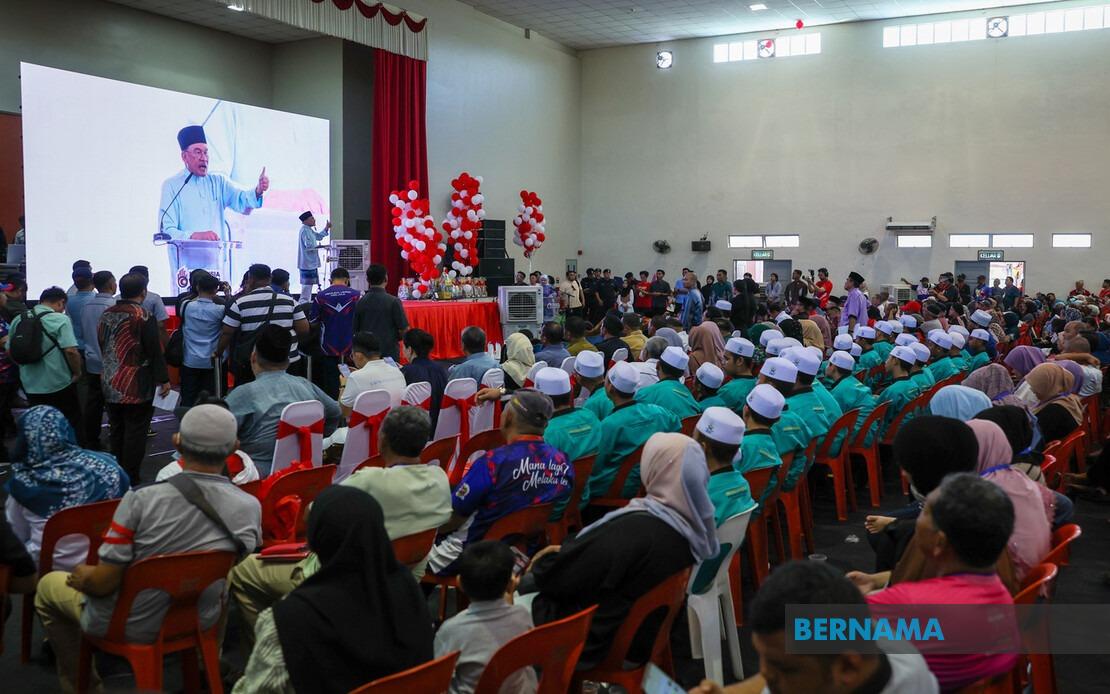
Prime Minister Datuk Seri Anwar Ibrahim has sought to reassure Malaysia's diverse educational landscape that the government's increased funding for Islamic institutions does not signal a retreat from supporting vernacular schools. Speaking at the Gelombang MADANI Carnival in Alor Gajah, Melaka, Anwar stressed that the MADANI administration remains dedicated to addressing the needs of all communities without marginalising any group, a statement that carries particular significance given ongoing sensitivities surrounding education funding allocation in a pluralistic society.
The Prime Minister's carefully calibrated message comes as the government navigates competing demands from different educational sectors. Anwar emphasised that while pondok schools and tahfiz institutions have historically suffered from chronic underfunding and neglect, this does not come at the expense of Chinese and Tamil vernacular schools. He signalled that comprehensive announcements regarding allocations for these institutions would be made in Kuala Lumpur within approximately two weeks, offering a concrete timeline that appears designed to quell concerns about prioritisation.
This balancing act reflects broader challenges facing Malaysia's education system, where three distinct streams—national, Chinese-medium, and Tamil-medium schools—operate alongside Islamic educational institutions. The vernacular schools, serving significant portions of the Chinese and Indian Malaysian communities, have long maintained their educational autonomy and quality standards, yet periodic anxieties about resource distribution have surfaced during transitions between government administrations. Anwar's reassurance implicitly acknowledges this historical context and the need to demonstrate consistent support.
The government's approach to educational funding carries implications far beyond schools and colleges. In a country where communal harmony depends substantially on perceived fairness in resource allocation, how different groups view governmental support for their educational institutions influences broader social cohesion. Anwar articulated this connection explicitly, arguing that comprehensive care for all communities remains essential for maintaining the peaceful, multiracial society that Malaysia has historically cultivated. He characterised Malaysia as a demonstrably successful model of plural coexistence, noting that peaceful integration of diverse religious and ethnic communities remains rare globally.
Anwar's invocation of the Islamic concept of 'ummatan wasatan'—a balanced community as described in Surah Al-Baqarah, verse 143—attempted to frame educational equity within a theological framework. He argued that Muslims should embody balance across faith, knowledge, character, interpersonal relationships, and environmental stewardship, positioning this balanced approach as exemplary for broader society. This theological positioning attempts to reframe support for Islamic institutions not as communal preference but as fulfilling religious obligations toward comprehensive community development.
The Prime Minister expanded on this concept by suggesting that exemplary conduct, moral integrity, absence of corruption, and environmental protection should distinguish Malaysia's national character. He contended that such distinctions derive not from narrow communal advancement but from demonstrating virtues that benefit society comprehensively. This framing attempts to address potential criticisms that increased Islamic education funding reflects prioritisation of Muslim communities, instead presenting it as part of broader institutional strengthening that serves national interests.
Contextualising the current initiatives, Anwar noted that assistance to Islamic educational institutions had effectively ceased before the Unity Government's formation in 2022. The restoration began in 2023 and has accelerated through 2024, suggesting a multi-year commitment to institutional rehabilitation. This historical narrative implies that the government views previous neglect as a correctable injustice rather than reflecting broader policy preferences, while current allocation increases represent restoration rather than preferential treatment.
The modernisation initiatives accompanying funding increases carry significant educational implications. Anwar specifically mentioned upgrading pondok schools and introducing artificial intelligence and computer training, recognising that Islamic institutions risk lagging behind better-resourced mainstream schools without contemporary technological integration. This approach addresses legitimate concerns that increased funding without modernisation could inadvertently isolate Islamic education from evolving educational standards and employment market requirements.
At the Alor Gajah event, Anwar announced a RM1.29 million allocation supporting infrastructure upgrades across thirteen Islamic educational institutions within Melaka state. The distribution of funding—ranging from RM100,000 to RM250,000 per institution—addressed diverse facilities including the Madrasah Tahfiz Al-Quran Wal Qiraat Kota Melaka, Arabic-language primary and secondary schools, and community-based religious schools. This multi-institutional approach suggests a strategy of distributed support rather than concentrating resources within flagship facilities.
For Malaysian readers and education stakeholders, these developments underscore ongoing negotiations regarding resource distribution within a complex educational ecosystem. The government's effort to communicate equitable treatment across streams reflects recognition that perception of fairness profoundly influences communal relations. However, translating assurances into tangible allocations remains crucial; the announced timeline for Chinese and Tamil school funding announcements will provide concrete evidence of government commitment beyond rhetoric.
The emphasis on preserving Malaysia's distinctive model of communal coexistence connects education funding to fundamental national identity questions. In regional context, Malaysia's relatively successful management of religious and ethnic diversity in education contrasts sharply with neighbouring countries experiencing greater communal tensions. Anwar's framing positions continued investment in educational equity as both moral obligation and pragmatic national interest, suggesting that educational fairness directly supports broader stability.
Looking forward, the success of this approach depends upon delivering promised announcements and demonstrating that funding increases across Islamic institutions genuinely complement rather than compete with allocations to vernacular schools. For parents, educators, and communities across Malaysia's diverse educational landscape, actions will ultimately determine whether the MADANI Government's multilingual commitment to equitable support translates into sustainable policy or remains primarily aspirational rhetoric.

