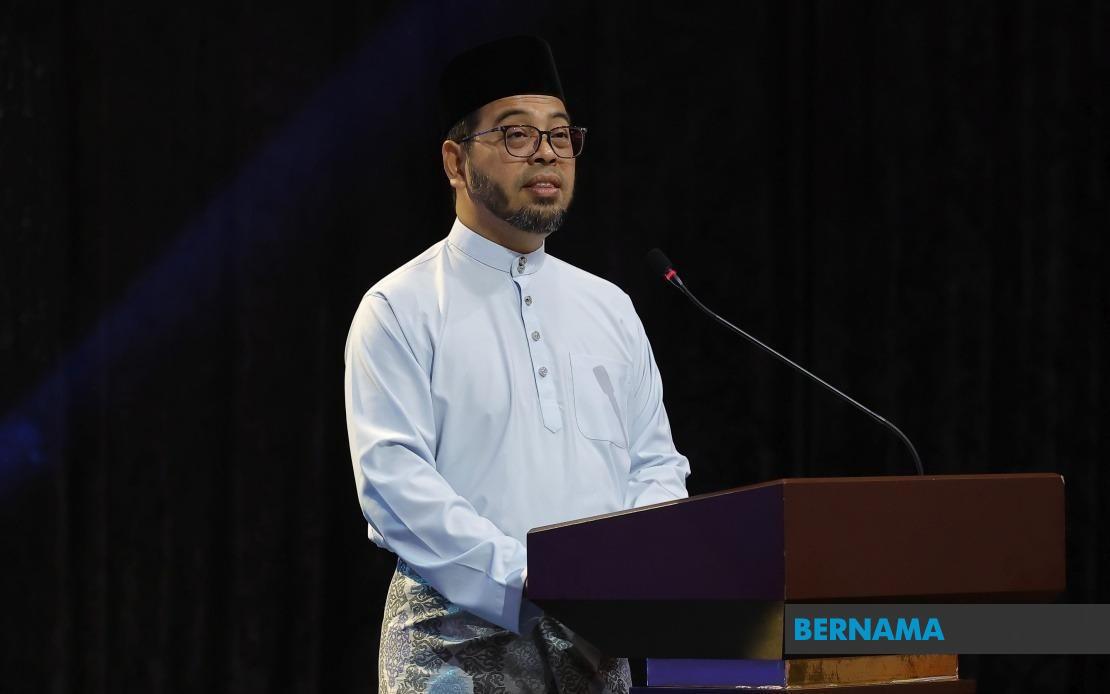
The Malaysian government intends to position Quranic memorisation education—known as tahfiz—as a strategic complement to the nation's mainstream education system, rather than viewing it as a separate or subordinate track. Minister in the Prime Minister's Department (Religious Affairs) Dr Zulkifli Hasan made this declaration on July 4 at the 34th convocation ceremony of Darul Quran JAKIM, one of Malaysia's premier institutions for Islamic learning based in Kuala Lumpur. His remarks signal that the MADANI administration views tahfiz education not as a niche religious programme but as an integral component of Malaysia's broader human capital development strategy.
The minister's statement reframes the purpose of tahfiz education beyond the traditional understanding of producing students who have memorised the Quran. Instead, he emphasised that these institutions should nurture balanced individuals equipped with intellectual rigour, ethical grounding, and practical competencies applicable across diverse professional sectors. This conceptual shift reflects an effort to integrate Islamic religious education more fully into Malaysia's socioeconomic development agenda, addressing historical perceptions that tahfiz graduates were confined to religious occupations. By positioning tahfiz learners as potential contributors to national development across multiple fields, the government appears to be attempting to broaden the appeal and accessibility of such programmes to Malaysian families across different socioeconomic backgrounds.
Darul Quran JAKIM, the institution hosting the ceremony, marked a significant milestone this year by celebrating its Diamond Jubilee—six decades of operation since its establishment in 1966. This anniversary provided occasion for Zulkifli to highlight the institution's track record of excellence and its proven ability to produce graduates of high calibre. The institution has awarded diplomas and certificates to approximately 12,633 huffaz (individuals who have memorised the Quran) since its inception, many of whom have gone on to positions of influence and responsibility within Malaysia's education sector, Islamic judiciary, religious outreach programmes, academic research, government administration, and private professional services. This diversified career distribution demonstrates that tahfiz graduates can and do transition successfully into mainstream professional environments.
The convocation itself reflected the multi-tiered nature of modern tahfiz education in Malaysia. Among the 700 graduates who received certificates at the ceremony were 37 students who completed bachelor's degree programmes developed collaboratively with Universiti Sains Islam Malaysia (USIM), indicating a movement toward integrating higher education pathways into tahfiz institutions. A larger cohort of 454 graduates completed diplomas in Quranic studies and Qiraat (the science of correct Quranic recitation), while 204 received tahfiz certification upon completing memorisation programmes. Additionally, five students were awarded basic tahfiz certificates, suggesting that entry pathways accommodate learners at different proficiency levels. This structural diversity suggests that Malaysia's tahfiz sector is evolving to serve students with varying educational aspirations and timeframes, from those seeking comprehensive academic credentials to those pursuing focused religious specialisation.
Zulkifli's vision for the coming decades extends beyond consolidating existing achievements. He called for the institution and the broader tahfiz sector to leverage the legacy of sixty years of institutional experience as a springboard for expanded transformation and innovation. His language—encouraging the sector to "build the next 60 years with greater excellence"—suggests that the MADANI administration views tahfiz education as a sector with significant unrealised potential, particularly as Malaysia seeks to develop a workforce that integrates technical skills, professional competencies, and deep ethical and spiritual foundations. This aspiration aligns with broader Malaysian policy discussions about the kind of citizens and workers the nation needs to remain competitive in Southeast Asia and globally.
The partnership between Darul Quran and USIM in delivering bachelor's degree programmes represents a concrete institutional mechanism for this integration. By embedding tahfiz education within university-level credentials, these collaborations help legitimise Islamic learning within Malaysia's mainstream higher education ecosystem and signal to employers that tahfiz graduates possess qualifications recognised across conventional professional hierarchies. This approach may address historical labour market barriers faced by tahfiz graduates seeking employment outside explicitly religious roles, a concern that has occasionally surfaced in Malaysian education policy discussions.
For Malaysian policymakers, Zulkifli's statement also implicitly acknowledges the need to ensure that tahfiz institutions themselves operate with transparency, accountability, and adherence to modern educational standards. By emphasising the professional and intellectual development of graduates, the government is signalling that tahfiz education should not be treated as educationally distinct or exempt from rigorous oversight. This framing may reflect responses to periodic concerns about quality assurance and governance within some tahfiz institutions, seeking to bring all such institutions into alignment with national educational expectations.
The timing of this commitment is noteworthy given Malaysia's broader socioeconomic transitions. As the nation pursues digital transformation and knowledge-economy development, the government is explicitly stating that Islamic religious education will constitute a valued and integral component of this vision rather than a parallel or competing system. By celebrating the diverse career achievements of tahfiz graduates and emphasising their contributions across multiple sectors, Zulkifli is working to counter narratives that might otherwise position Islamic education as disconnected from Malaysia's development priorities.
The MADANI Government's framing also carries significance for Malaysia's plural society. By positioning tahfiz education as an institution that produces well-rounded, professionally skilled individuals rather than narrowly defined religious specialists, the government may be attempting to build broader social acceptance of religious education as compatible with secular professional advancement and civic contribution. This messaging could be particularly important in reassuring non-Muslim Malaysians that Islamic education institutions, when oriented toward producing productive national contributors, serve legitimate socioeconomic purposes within Malaysia's multicultural framework.
Looking forward, the challenge for institutions like Darul Quran and the wider tahfiz sector will be translating this government commitment into concrete resources, curriculum development, and labour market integration mechanisms. Government support alone will be insufficient; private sector partnerships, professional associations, and educational accreditation bodies will need to actively work toward ensuring that tahfiz graduates enjoy genuine career mobility and recognition. The success of this agenda will ultimately be measured not merely by convocation attendance and certificate numbers, but by the professional trajectories of graduates and the tangible contributions they make across Malaysia's diverse economic and social sectors.

