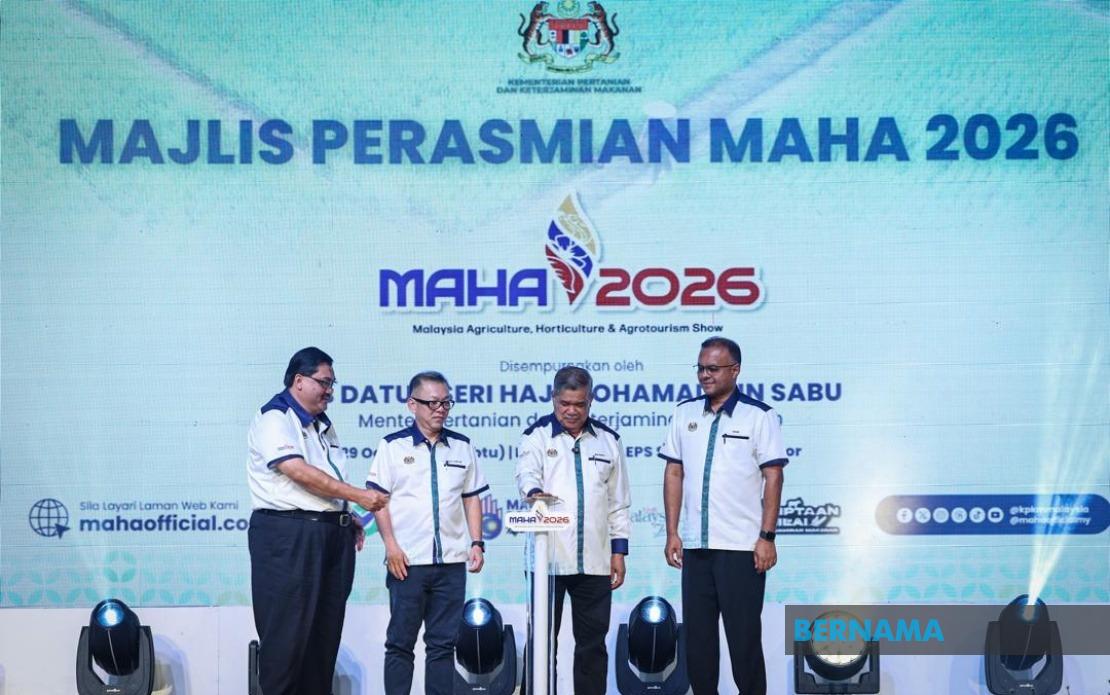
Agriculture and Food Security Minister Datuk Seri Mohamad Sabu has positioned Malaysia's premier agricultural exhibition as a watershed moment for the nation's farming sector, declaring that MAHA 2026 will prioritize environmental sustainability and climate resilience. Speaking at the opening ceremony of the Malaysia Agriculture, Horticulture and Agrotourism Show at the Malaysia Agro Exposition Park Serdang (MAEPS) on August 28, Mohamad framed the 10-day event as both a practical gathering of the industry and a statement of intent about Malaysia's agricultural future. With approximately 2,000 exhibitors and a target of over four million visitors through September 6, MAHA 2026 represents the country's largest platform for showcasing innovation in farming, fishing, and related sectors.
The minister's emphasis on sustainability reflects growing international pressure on agricultural nations to reduce their carbon footprint while maintaining productivity. Mohamad argued that adopting sustainable farming practices is not merely an environmental luxury but a strategic necessity for Malaysia, enabling the country to simultaneously lower greenhouse gas emissions, combat the consequences of climate change, and enhance the marketability of local agricultural products. By positioning Malaysian produce as environmentally responsible, he suggested, domestic farmers can strengthen their competitiveness in both domestic markets and export channels increasingly influenced by sustainability criteria. This dual benefit—environmental stewardship coupled with economic advantage—represents a sophisticated understanding of how global consumer preferences are reshaping agricultural trade patterns.
Mohamad highlighted the concrete sustainable practices that MAHA 2026 will showcase, including energy-efficient operations, systematic management of waste and food loss, reduction of single-use plastic packaging, regenerative agricultural techniques that restore soil health, and circular economy approaches centered on recycling. These represent practical measures that farmers and agribusinesses can implement immediately, moving sustainability from abstract principle to operational reality. The exhibition's focus on these tangible practices acknowledges that Malaysia's farming sector needs not just policy directives but real-world examples and working technologies that demonstrably improve both environmental outcomes and farm economics.
Central to Mohamad's vision is a revival of Malaysia's Green Book Policy, originally introduced in 1974 by the late Prime Minister Tun Abdul Razak. This historical policy sought to reduce the nation's vulnerability to food import dependence and address food price inflation through increased domestic production. In contemporary context, the appeal to this legacy carries particular resonance given current global supply chain pressures, geopolitical tensions affecting trade, and the rising cost of living that affects Malaysian households directly. By reconnecting current agricultural policy to this foundational principle of self-sufficiency, Mohamad is framing sustainability not as a modern environmental fad but as a fundamental element of Malaysia's enduring strategic interests.
The minister outlined specific investment priorities for strengthening key agricultural subsectors. The modernization of fishing vessel fleets and livestock farming operations forms the physical backbone of these improvements, while the development of high-value aquaculture industries promises better returns for producers and more nutritious domestic food supplies. Critically, Mohamad emphasized technological adoption in animal feed production and enhanced biosecurity protocols for disease prevention—measures that directly address productivity challenges while reducing the environmental footprint of livestock operations. This integrated approach recognizes that sustainable agriculture cannot mean simply reducing production; it must mean producing more efficiently with fewer environmental costs.
Beyond domestic focus, MAHA 2026 functions as a platform for international agricultural cooperation, with delegations from 14 participating countries. The exhibition is expected to facilitate the finalization of several bilateral and multilateral cooperation agreements addressing everything from trade to technology transfer. However, Mohamad issued a pointed warning against treating such agreements as mere ceremonial exercises. He stressed that the ministry intends for memoranda of understanding to evolve into substantive commitments with measurable outcomes, including increased export opportunities for Malaysian agricultural products and capital connections for local entrepreneurs and agritech startups seeking investment from both domestic and foreign sources.
This insistence on converting diplomatic agreements into tangible commercial benefits reveals a sophisticated understanding of how emerging agricultural nations must engage in international cooperation. For Malaysia, which maintains a significant agricultural sector but faces competition from larger regional producers, the value of international partnerships lies not in symbolic gestures but in concrete market access, technology acquisition, and financial investment. By channeling international engagement toward these practical ends, particularly supporting smaller enterprises and technology-driven startups, Mohamad is attempting to ensure that Malaysia's agricultural modernization benefits a broad cross-section of the sector rather than concentrating gains among large corporates.
The positioning of MAHA 2026 also reflects broader Southeast Asian trends in agricultural policy. Across the region, countries are grappling with how to enhance productivity and competitiveness while addressing climate vulnerabilities and environmental pressures. Malaysia's emphasis on sustainability, domestic food security, and technology-driven innovation mirrors similar initiatives in Thailand, Vietnam, and Indonesia, suggesting a regional consensus about the future direction of agriculture. For Malaysian farmers and agribusinesses, this alignment offers both opportunities for regional technology sharing and the risk of intensified competition in premium markets that reward sustainability credentials.
For ordinary Malaysian consumers, the policy focus outlined by Mohamad carries practical implications. Strengthened domestic agricultural production, particularly in fisheries and livestock, should moderate food price pressures while reducing dependence on volatile international markets. Investment in high-value agricultural sectors and agritech startups promises improved quality and variety of locally produced food options. Meanwhile, the international cooperation angle, if successful in facilitating actual trade relationships, could expand consumer access to diverse agricultural products while creating employment across the supply chain.
The inclusion of Deputy Minister Datuk Chan Foong Hin and Ministry Secretary-General Datuk Seri Isham Ishak at the opening ceremony underscores the government's institutional commitment to the agenda Mohamad articulated. This level of official presence signals that sustainability and food security represent genuine policy priorities rather than rhetorical flourishes. The sustained governmental attention—from cabinet level through bureaucratic structures—necessary to translate MAHA 2026's momentum into permanent sectoral change will ultimately determine whether this exhibition becomes a genuine turning point or a spectacular but temporary showcase.
As MAHA 2026 unfolds through early September, the exhibition will serve as a practical laboratory where Malaysia's agricultural sector confronts the genuine challenges of sustainable farming at scale. The success of this event in generating not just international agreements but functional commercial relationships, genuine technological adoptions among farmers, and measurable increases in domestic production will indicate whether Malaysia can successfully navigate the complex task of making its agriculture sector both more environmentally responsible and more economically competitive—a balance that remains elusive for most developing agricultural nations.

