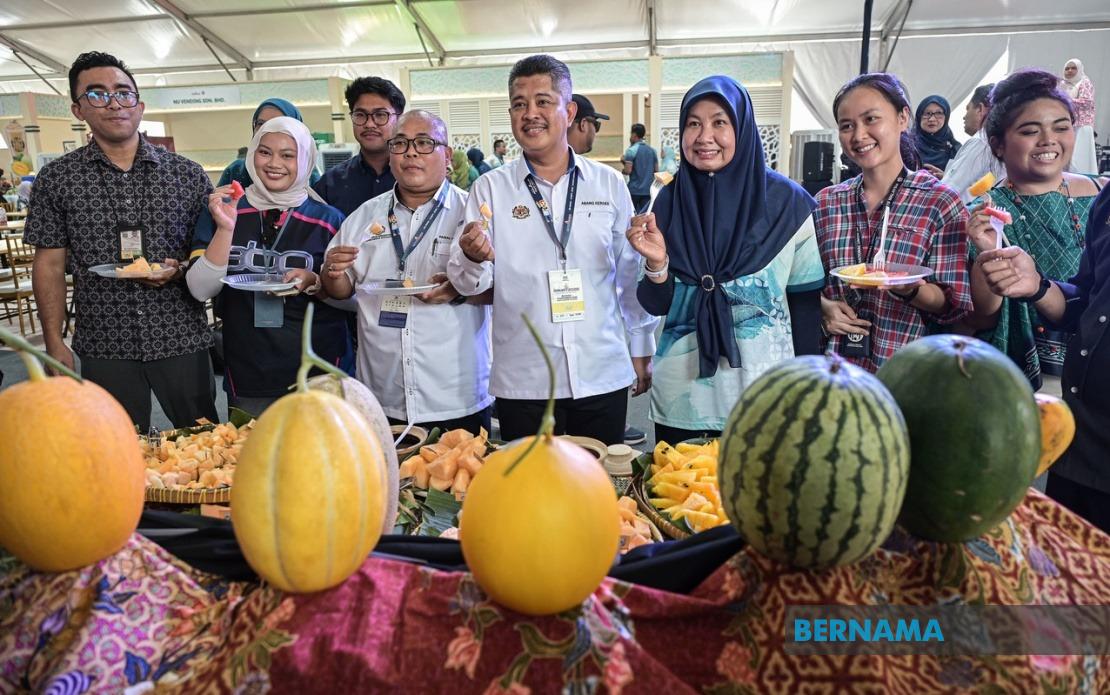
Malaysia's horticultural sector is poised to welcome a new domestically developed melon variety when MAHA 2026 opens its doors at the Malaysia Agricultural Expo Park in Serdang this week. The Federal Agricultural Marketing Authority (FAMA) has designated this melon as the symbolic fruit of the event, with its official launch and naming ceremony to be conducted by Minister of Agriculture and Food Security Datuk Seri Mohamad Sabu. The introduction represents a culmination of sustained research and collaborative effort spanning three years between FAMA and local farming entrepreneurs, underscoring the nation's commitment to advancing its agricultural sector through innovation.
The new melon variety embodies a strategic response to shifting consumer behaviour within the domestic market. Rather than pursuing larger, traditional formats, FAMA and its collaborators have engineered a compact alternative weighing approximately 1.3 kilogrammes. This sizing decision reflects deliberate market analysis, targeting households seeking single-serving or small-group consumption options without sacrificing quality or flavour. The variety's distinctive netted skin pattern and remarkably sweet flesh profile, measured at Brix level 18, distinguish it from imported and existing domestic alternatives currently retailing at considerably higher price points.
FAMA chairman Abang Ahmad Kerdee Abang Masagus emphasised the symbolic importance of establishing a recognisable icon for MAHA's identity during the media tasting session in Serdang. The presence of a distinctive fruit variety amplifies the exhibition's connection to Malaysia's agricultural heritage whilst simultaneously championing domestic innovation. The chairman underscored that the melon's crunchier flesh texture compared to conventional varieties offers tangible quality differentiation, positioning it as a premium domestic product rather than merely replicating imported offerings. The anticipated retail price of approximately RM15 per melon suggests competitive positioning within the ready-to-eat market segment, potentially displacing imported alternatives.
Director-general Faisal Sulaiman contextualised the development within broader consumer trend analysis conducted throughout the three-year research phase. Urban Malaysian households increasingly prioritise convenience and portion control, particularly among younger demographics and smaller family units. The mini melon format directly addresses this preference architecture, combining portability with freshness retention and maintaining high sweetness levels during storage. The practicality of the design—easy to transport and consume within days of purchase—positions it advantageously against both traditional larger melons requiring extended consumption timelines and imported pre-packaged alternatives with higher environmental footprints.
The commercial scale of MAHA 2026 demonstrates FAMA's confidence in the melon's market viability. The authority plans to supply more than 150,000 units throughout the ten-day exhibition, sourced from local growers and complemented by nearly 100 varieties from domestic and international suppliers. This volume commitment signals institutional backing for scaling production beyond the exhibition phase, potentially supporting expansion of cultivation across Malaysia's horticultural regions. The exhibition framework provides an optimal platform for introducing consumers directly to the product whilst simultaneously engaging farmers, distributors, and retailers in supply chain discussions.
Beyond immediate commercial considerations, the melon variety represents broader structural implications for Malaysia's agri-food value chain. By successfully developing and marketing a domestically engineered product, FAMA demonstrates capacity to compete with imported alternatives whilst empowering local entrepreneurs throughout production and distribution networks. This approach addresses persistent vulnerabilities within the agricultural sector, where import dependency in specialty crops remains substantial. Supporting local farmers and small-scale entrepreneurs through organised, systematic marketing infrastructure creates employment multiplier effects extending beyond farm gates into logistics, retail, and food service establishments.
The MAHA 2026 platform itself functions as a biennial showcase reinforcing Malaysia's position within Southeast Asia's agricultural innovation landscape. The exhibition features agrotech demonstrations, state-level pavilions, direct farm-to-consumer sales channels, and participation from hundreds of operators spanning regional and international markets. This ecosystem facilitates knowledge transfer, technology adoption, and business relationship formation essential for sector modernisation. For Malaysian stakeholders, exposure to international best practices and market intelligence enhances competitiveness whilst positioning domestic products within competitive frameworks.
The melon variety's characteristics address several contemporary agricultural imperatives simultaneously. Climate-responsive cultivation techniques developed during the R&D phase likely incorporated water efficiency considerations crucial for tropical environments experiencing increasing weather volatility. The compact size reduces transportation-related carbon emissions compared to larger traditional varieties. The extended shelf life associated with maintained sweetness and crunchiness supports supply chain resilience by reducing post-harvest losses, a persistent challenge within tropical agriculture. These sustainability dimensions, though not explicitly detailed in official communications, align with international agricultural development priorities increasingly influencing market access and consumer preferences.
Consumer perception and brand positioning will determine the variety's commercial trajectory beyond MAHA 2026. Initial tasting sessions with media and industry participants establish foundation narratives emphasising local innovation, quality consistency, and value pricing. Success requires sustained marketing effort, particularly targeting modern retail channels and younger demographics driving consumption trends. Supermarket integration, online agricultural platforms, and direct-to-consumer models through farmers' markets represent potential distribution pathways. Building brand recognition for a domestically developed agricultural product remains challenging within markets historically dominated by imported alternatives, yet the structured MAHA introduction provides substantial launch momentum.
For Malaysian agricultural policymakers, the melon initiative exemplifies productive collaboration between government agencies and private sector stakeholders generating commercially viable innovations. The three-year development timeline, whilst substantial, compressed relative to international standards for developing horticultural varieties, suggesting efficient research resource allocation and pragmatic commercialisation frameworks. Replicating this model across other specialty crops and value chains could systematically reduce import dependency whilst strengthening rural livelihoods. FAMA's coordinating role demonstrates institutional capacity building potential for supporting agricultural transformation extending beyond immediate exhibition objectives.

