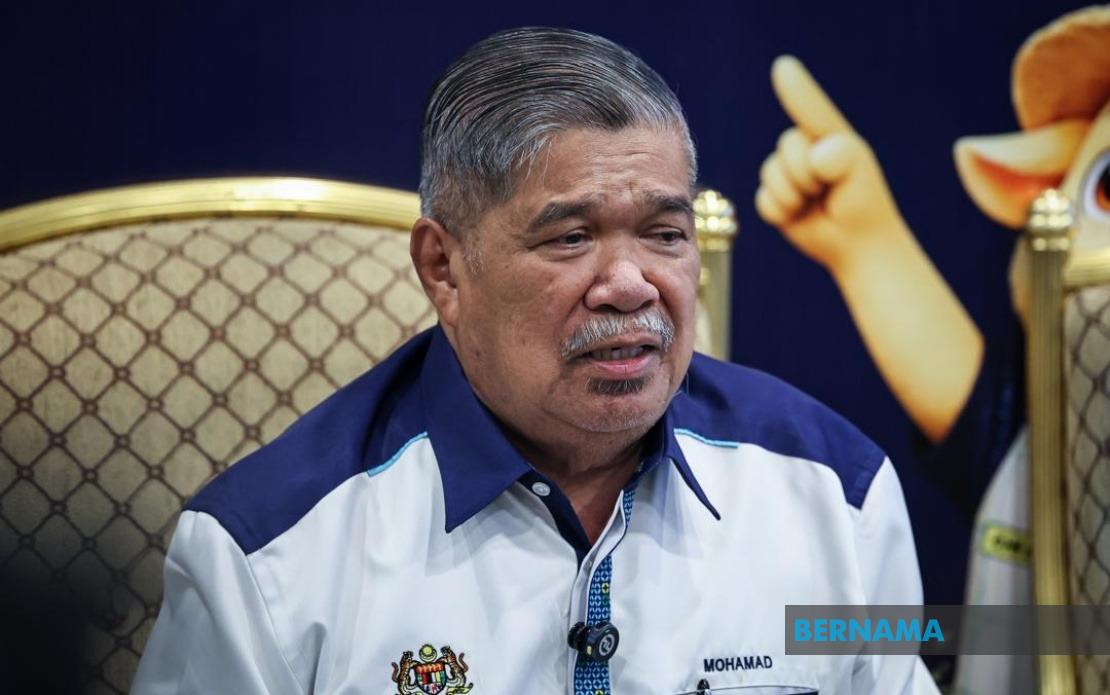
The Malaysia Agriculture, Horticulture and Agrotourism Show 2026 opened at Malaysia Agro Exposition Park Serdang with immediate health concerns at the forefront, as Agriculture and Food Security Minister Datuk Seri Mohamad Sabu urged the expected multitudes to take respiratory precautions during what promises to be the event's most heavily attended period. Speaking at the official launch, Mohamad emphasised that protective face masks represented a prudent safeguard against deteriorating air quality and elevated temperatures converging during the school holiday season—a timeframe historically associated with peak visitation to major outdoor events across Malaysia.
The opening day of MAHA 2026 already drew an impressive 140,000 attendees, a figure that ministry officials expect to climb substantially as families take advantage of the newly commenced school break and weekend periods approaching throughout the nine-day run. The minister's recommendation reflects a nuanced understanding of public health dynamics in Southeast Asia, where seasonal haze episodes have become recurring challenges that demand proactive communication from government agencies rather than reactive crisis management. By front-loading the message at the event's inauguration rather than issuing warnings only when conditions deteriorate, the ministry sought to normalise preventive behaviour among the anticipated four million visitors expected before the September 6 closing date.
Theme this year emphasises value creation for food security, a particularly resonant message across Southeast Asia where agricultural resilience and domestic food production remain central policy concerns following pandemic-era supply chain disruptions. The expo brings together approximately 2,000 exhibitors representing the breadth of Malaysia's agricultural sector, from conventional farming through horticultural innovations to agro-tourism ventures that increasingly blend rural development with leisure economics. This sectoral representation makes MAHA 2026 significant not merely as an entertainment draw but as a networking and knowledge-exchange platform where industry professionals, policymakers, and consumers converge to assess emerging trends and technologies shaping regional food systems.
The haze advisory carries particular weight in Malaysia's social and political context, where air quality fluctuations have historically triggered public anxiety and international diplomatic tensions when transboundary pollution from regional sources affects visibility and respiratory health. While the current episode appears localised rather than linked to large-scale land-clearing events, official guidance represents a measured attempt to acknowledge atmospheric challenges without magnifying alarm. For visitors planning attendance, the recommendation effectively communicates that outdoor event attendance during periods of elevated air pollution and heat stress requires personal health management rather than cancellation—a message calibrated to sustain economic activity while prioritising individual well-being.
Deputy Minister Datuk Chan Foong Hin and Secretary-General Datuk Seri Isham Ishak accompanied Mohamad at the launch, signalling institutional commitment to the event's public health dimensions. Their presence underscored that the ministry regards MAHA 2026 as sufficiently significant to warrant senior-level attention throughout its operational period, a posture that typically influences media coverage and public perception of event importance. For Malaysian agricultural stakeholders and rural development advocates, such ministerial engagement suggests that government views the expo as more than ceremonial—it represents a tangible platform for showcasing domestic agricultural capabilities and positioning Malaysia's food production sector within competitive regional and global contexts.
The Merdeka Eve celebration planned for tomorrow evening at MAEPS, featuring drone displays and fireworks at 11:30 pm, represents a calculated effort to interweave agricultural promotion with nationalist commemoration. This programming choice reflects how Malaysian public events increasingly function as multivalent spaces where economic promotion, cultural observation, and civic participation overlap. The addition of entertainment spectacles alongside agricultural exhibition transforms MAHA 2026 from a purely sectoral gathering into a family-oriented destination event, which partly explains the anticipated four million visitor projection and the corresponding health precautions necessary to ensure visitor safety during peak attendance periods.
Face mask adoption recommendations carry particular resonance in Malaysia post-pandemic, where public receptiveness to such guidance varies substantially along urban-rural and demographic lines. Some urban visitors, particularly those with respiratory sensitivities or prior experience with haze episodes, likely anticipated such advice and came prepared. Rural attendees or families with younger children may require greater persuasion, necessitating clear explanation of the correlation between air quality, temperature stress, and respiratory vulnerability. The minister's personal endorsement at the event opening thus served a communication function extending beyond mere suggestion—it represented institutional validation of preventive behaviour from a trusted government voice.
From a Southeast Asian perspective, MAHA 2026 exemplifies how agricultural expos function as soft infrastructure for regional economic integration and knowledge transfer. Malaysian agricultural innovations, farming techniques, and agro-tourism models attract interest from neighbouring countries facing analogous challenges in food production, climate adaptation, and rural economic diversification. The four million visitor projection likely encompasses substantial international attendance, particularly from Singapore, Brunei, and increasingly from other ASEAN nations. Health precautions therefore carry cross-border implications—visitors transporting haze-related respiratory irritation across international boundaries could amplify regional awareness of shared air quality challenges.
The sequential messaging strategy—opening with health guidance while simultaneously promoting the event's significance—demonstrates sophisticated understanding of how large gatherings operate during challenging environmental periods. Rather than downplaying atmospheric conditions or suggesting cancellation, ministry communications frame attendance as feasible provided visitors adopt individually appropriate precautions. This approach preserves the economic and cultural benefits of the nine-day expo while acknowledging that external conditions require adaptive behaviour from participants. For Malaysian authorities, MAHA 2026 thus becomes a practical laboratory in managing large public events amid environmental variability—an increasingly relevant capability as climate volatility shapes seasonal weather patterns across Southeast Asia.

