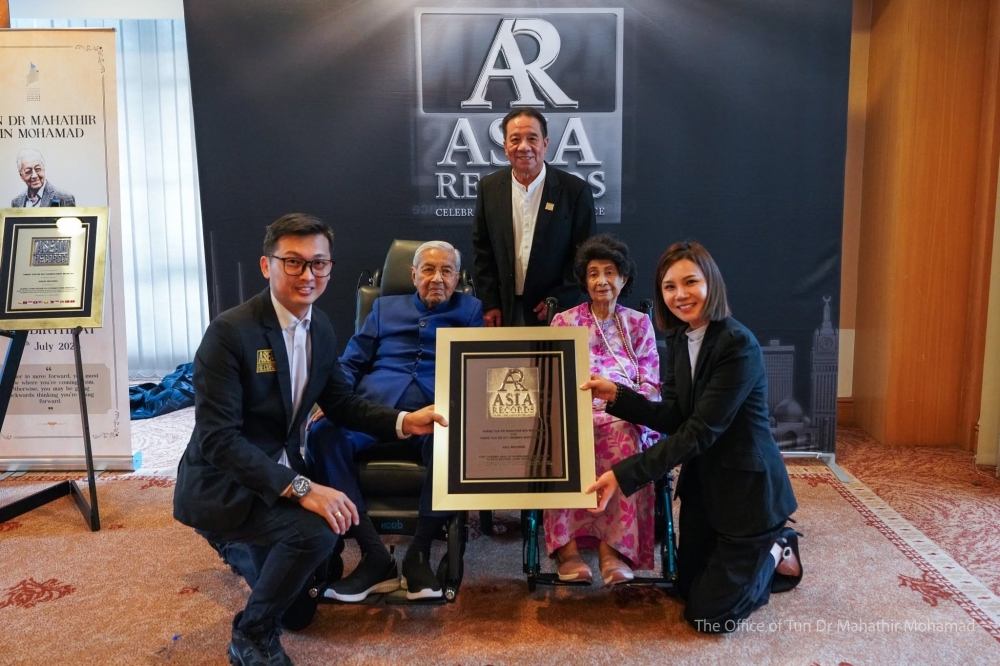
Tun Dr Mahathir Mohamad and his wife Tun Dr Siti Hasmah Mohd Ali have reached a historic milestone, crossing into their second century of life while simultaneously establishing three new Guinness World Records. The distinction places the couple in rarefied company globally, acknowledging not merely their longevity but the broader significance their partnership holds within Malaysia's national narrative.
The accomplishment reflects a broader gerontological reality reshaping Malaysian demographics. Rising living standards, improved healthcare infrastructure, and greater awareness of wellness practices have expanded the nation's centenarian population in recent years. The recognition of Dr Mahathir and Dr Siti Hasmah transcends personal achievement, serving as a testament to improved quality of life across the country. Their dual milestone underscores how medical advancement and social development combine to extend human lifespans in ways previous generations could scarcely imagine.
Dr Mahathir's prominence in Malaysian public consciousness spans decades, from his rise through the political hierarchy to his tenure as Prime Minister and subsequent re-election in 2018. His wife has maintained a quieter but equally influential presence throughout, known for her medical background and philanthropic endeavours. Their joint recognition at this advanced age carries particular weight because it acknowledges the contributions of both individuals to Malaysian society, rather than focusing solely on one figure. This inclusive recognition reflects contemporary understanding that behind major public figures often stands a partnership worthy of equal acknowledgment.
The three Guinness World Records awarded to the couple distinguish different facets of their achievement. Such recognition operates beyond mere curiosity value, functioning as international validation of Malaysian success stories. For a nation continuously projecting soft power across regional platforms, the records represent tangible evidence of healthy ageing and family stability. International audiences recognizing Malaysian centenarians reinforces positive national imagery, particularly among Southeast Asian neighbours evaluating Malaysia's development trajectory.
The health profiles required to reach one hundred years substantially exceed statistical averages. Both individuals must have navigated decades of medical challenges, lifestyle decisions, and fortune to arrive at this point. Dr Siti Hasmah, trained as a medical professional, likely applied specialized knowledge to health management throughout her life. Such expertise, combined with access to quality healthcare, demonstrates how education and resources amplify longevity prospects. Their example illuminates pathways toward extended healthspans, though acknowledging that privilege and circumstance significantly influence such outcomes.
The symbolic weight of simultaneous centenarianism within a married couple resonates deeply in Malaysian culture, where family structures and intergenerational bonds carry profound meaning. The couple's joint achievement reinforces narratives about commitment, partnership, and shared life journeys. Within societies increasingly grappling with fragmenting family units and geographic dispersal, the Mahathirs' partnership provides a countervailing symbol of enduring togetherness. Their milestone invites reflection on how modern Malaysians might cultivate similar stability and longevity within their own family structures.
From a political perspective, the honour carries nuanced implications. While Dr Mahathir no longer holds executive office, his continued vitality and visibility maintain his relevance within Malaysian political discourse. The records affirm his status as an elder statesman whose presence remains consequential. However, the recognition also subtly reinforces generational transitions within Malaysian politics, suggesting that figures who dominated late twentieth-century governance now occupy different roles within the national imagination. Their centenarian status paradoxically emphasizes their distance from contemporary political operations even as it elevates their iconic standing.
The achievement also resonates within broader Southeast Asian contexts where leadership longevity patterns differ markedly from Western democracies. Malaysia's political history features figures wielding extended influence across decades, sometimes continuing into advanced age. The Mahathirs' milestone illuminates questions about succession planning, institutional development, and whether concentration of experience and authority within individuals of advanced years represents strength or impediment to organizational renewal. Their continued vitality might encourage some toward extended engagement while prompting others to emphasize generational transition.
From a healthcare perspective, the achievement validates approaches emphasizing preventive medicine and lifestyle management across extended timespans. The couple's longevity demonstrates that reaching one hundred remains achievable through sustained attention to health fundamentals, though also reflecting advantages of education, resources, and family support unavailable to all Malaysians. Their example might inspire public health messaging promoting behaviours associated with extended lifespans while acknowledging that individual outcomes depend substantially on circumstance beyond personal control.
The international recognition through Guinness World Records positions Malaysia within global conversations about human longevity and health outcomes. As populations worldwide age dramatically, nations demonstrating successful models for supporting extended lifespans gain prominence in health policy discussions. The records provide Malaysia with legitimate grounds for contributing such conversations, leveraging the Mahathirs' achievement as evidence of national capacity for healthy ageing.
Looking forward, the couple's centenarian status will likely influence how Malaysians conceptualize aging, family partnership, and legacy. Their milestone becomes reference point for younger generations considering long-term health planning and relationship commitment. The Guinness World Records formalize their achievement in globally recognized terms, ensuring their accomplishment extends beyond domestic media cycles into permanent recognition. Such validation encourages broader Malaysian society to contemplate both individual and collective responsibilities toward supporting extended, healthy lives across the population.

