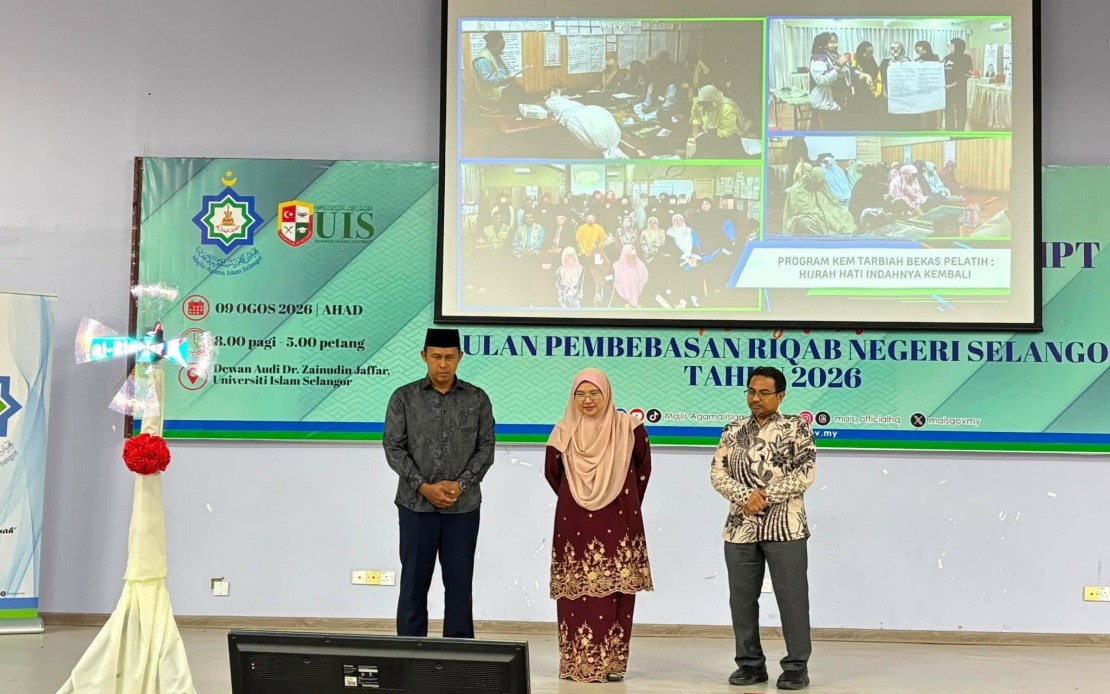
The Selangor Islamic Religious Council (MAIS) has mobilised significant resources to address the needs of vulnerable populations facing interconnected social and spiritual challenges. Over the past financial year, the council distributed more than RM17 million in zakat collections—the obligatory Islamic tithe—to reach 13,945 individuals categorised as asnaf riqab, whose circumstances encompass addiction, behavioural difficulties, and religious disengagement. This substantial allocation underscores MAIS's commitment to rehabilitation and preventive intervention across the state.
The funding structure reflects a comprehensive approach to social welfare aligned with Islamic principles. Rather than direct cash assistance alone, MAIS channelled resources into structured interventions delivered through its network of facilities and programmes. The council operates three dedicated rehabilitation homes alongside 24 additional rehabilitation centres, collectively serving as hubs for therapeutic and spiritual guidance. Within these spaces, beneficiaries access training courses, counselling services, and structured welfare support designed to address root causes rather than merely symptoms.
Continuity remains evident in the ongoing commitment throughout 2024. Between January and June, MAIS extended assistance to 1,656 individuals from the asnaf riqab population, allocating RM4.1 million in zakat funds. This mid-year pace suggests the council is tracking towards maintaining or exceeding previous financial allocations. The distribution pattern indicates sustained institutional focus on this demographic, with resources flowing consistently into guidance mechanisms and welfare interventions rather than fluctuating based on seasonal demand.
A noteworthy element of MAIS's strategy involves the deployment of trained personnel. The council has appointed 213 Al Riqab guides—practitioners specifically prepared to support individuals navigating pathways back toward religious observance and social reintegration. These guides function as counsellors, mentors, and community connectors, working within the framework of Islamic teachings to facilitate personal transformation. The guide initiative transforms what might otherwise remain a top-down welfare apparatus into a relationship-based support system grounded in shared spiritual commitment.
The concept of asnaf riqab itself warrants clarity for those unfamiliar with Islamic social categorisation. Formally defined through a 2012 fatwa issued by religious authorities in Malaysia, the term encompasses individuals experiencing interconnected challenges spanning substance dependency, gender and sexual identity issues creating internal spiritual conflict, and those who have strayed from Islamic religious practice. This definition reflects a holistic assessment recognising that social vulnerability often manifests across multiple dimensions—psychological, behavioural, relational, and theological—rather than existing in isolation.
MAIS has positioned August 2024 as a designated campaign month specifically focused on the asnaf riqab population. The Riqab Liberation Month Campaign 2026, running throughout August, aims to mobilise broader societal engagement with this issue. The campaign framework incorporates multiple touchpoints: public forums dedicated to discussing the challenges confronting asnaf riqab individuals, informational sessions explaining available support structures, guided programmes offering concrete assistance, and information counters providing navigation support. The campaign additionally features the Ihtifal Amal Islami at rehabilitation homes, providing visibility into the council's actual service delivery infrastructure.
Public awareness functions as a critical component within MAIS's theory of change. By elevating discourse around asnaf riqab issues during the campaign month, the council seeks to reduce stigma, encourage community members to recognise signs of distress in relatives or acquaintances, and mobilise formal and informal support networks. The campaign acknowledges that institutional capacity alone cannot address social challenges of this magnitude; meaningful progress requires family engagement, peer support, and community understanding that extends beyond religious administrative structures.
For Malaysian readers, particularly those in Selangor, this initiative reflects how Islamic institutions are operationalising zakat principles to address contemporary social challenges. Zakat represents one of the Five Pillars of Islam, and Islamic jurisprudence traditionally permits zakat distribution across eight categories of need. MAIS's allocation to asnaf riqab demonstrates how Malaysian Islamic councils interpret their mandate to encompass not merely poverty alleviation but comprehensive social rehabilitation.
The scale of the beneficiary population—nearly 14,000 individuals assisted annually—suggests that social challenges encompassed by the asnaf riqab category remain substantial within Selangor's context. This figure provides insight into the prevalence of addiction, religious disengagement, and identity-related conflicts requiring formal intervention. For policymakers and religious leaders across Southeast Asia, the MAIS model offers a template for mobilising faith-based resources toward addressing social fragmentation and individual distress through structured, professionally-informed rehabilitation frameworks.
The appointment of 213 guides further reflects MAIS's recognition that effective intervention requires sustained personal engagement rather than episodic contact. This staffing level suggests the council operates a mentor-to-beneficiary ratio enabling meaningful relationship development. For individuals navigating simultaneous struggles with addiction, spiritual reorientation, and social reintegration, consistent access to a trained guide can substantially improve outcomes across multiple life dimensions simultaneously.
Looking forward, MAIS's continuation of these programmes into the second half of 2024 indicates institutional commitment beyond one-time initiatives. The council's willingness to publicly report financial allocations and beneficiary numbers also enhances accountability and transparency in how zakat funds—derived from Muslim communities' religious obligations—are deployed for social benefit. This transparency potentially encourages ongoing public confidence in zakat administration and demonstrates measurable impact justifying the collection and distribution of these obligatory religious contributions.
The broader significance extends to how Southeast Asian societies address interconnected social challenges through culturally-rooted institutional mechanisms. Rather than importing wholesale foreign models of rehabilitation or social intervention, MAIS grounds its approach in Islamic theology and the established infrastructure of zakat distribution. This locally-embedded strategy may prove more sustainable and culturally resonant than externally-designed programmes, particularly when addressing issues—such as religious disengagement or identity conflicts—whose resolution benefits from grounding in shared theological frameworks and community understanding.

