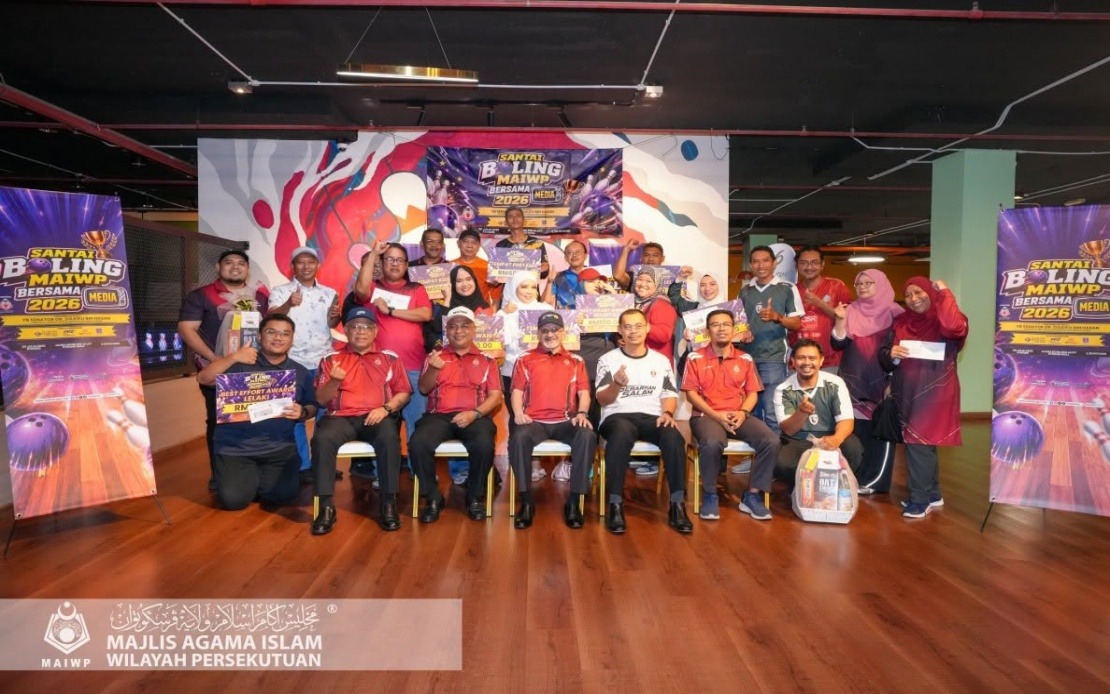
The Federal Territory Islamic Religious Council, known locally as MAIWP, has taken a novel approach to relationship-building by organising a recreational bowling programme aimed at deepening its ties with Malaysia's media landscape. Held at Juara Bowling Alley in Strand Mall, the event brought together representatives from a diverse cross-section of news organisations, reflecting MAIWP's recognition that sustained media engagement is critical to institutional effectiveness and public communication.
The gathering drew participants from some of Malaysia's most influential news outlets, including state news agency Bernama, commercial television and radio operators, print publications, and digital media platforms. This comprehensive representation underscores the breadth of MAIWP's media outreach strategy and suggests the council views communication across multiple channels—from traditional print and broadcast to newer digital formats—as essential to reaching diverse audience segments within the Federal Territory's Muslim population.
Official commentary from MAIWP emphasised that the bowling programme was designed to acknowledge the critical role journalists and media organisations play in communicating accurate, timely information to the public. In a media landscape often marked by competing narratives and information fragmentation, MAIWP's explicit appreciation of media partners' contribution to disseminating factual accounts speaks to an understanding that institutional credibility depends partly on how external communicators frame and report on organisational activities.
Beyond the surface-level networking function, MAIWP articulated a deeper strategic purpose for the engagement. The council framed the event as an opportunity to showcase the breadth of its operations—encompassing welfare support, educational programmes, and socio-economic development initiatives—and to encourage media partners to cover these areas more comprehensively. For readers in Malaysia's Federal Territory, this signals MAIWP's commitment to ensuring that community members have access to information about available resources and support systems.
The deliberate choice of a relaxed, informal setting rather than a formal conference or seminar suggests MAIWP's awareness that substantive relationships often develop more readily in contexts that encourage personal interaction and conversation away from hierarchical institutional structures. This approach reflects broader trends in public sector communications, where senior officials increasingly recognise that authentic engagement with media partners yields better long-term outcomes than occasional formal interactions.
Participation extended beyond media representatives to include officials from MAIWP's subsidiary organisations and the agency's Corporate Communications Unit, which operates under the Minister in the Prime Minister's Department (Religious Affairs). This inclusive approach ensured that journalists could interact not only with communications specialists but also with substantive experts who could provide detailed insights into ongoing programmes and policy directions.
The strategic dimension of MAIWP's media engagement becomes apparent when considering the council's operational context. As the religious authority responsible for Islam-related administrative matters in the Federal Territory—which includes Kuala Lumpur, Labuan, and Putrajaya—MAIWP must communicate with a diverse urban population encompassing recent migrants, established communities, and various socio-economic groups. Effective media partnership is accordingly crucial to ensuring that information about halal certification, Islamic education, zakat distribution, and other core functions reaches intended beneficiaries.
For Malaysian media practitioners, the programme represented an opportunity to deepen their understanding of MAIWP's work and establish relationships that could facilitate future reporting. Journalists covering religious affairs, social policy, and urban development in the Federal Territory would benefit from such direct access to institutional leadership and working-level staff, potentially resulting in more nuanced and comprehensive coverage of MAIWP initiatives.
The timing of the programme—held in July with a nomenclature suggesting a 2026 timeframe—may also reflect MAIWP's longer-term communications planning. Religious councils across Malaysia have increasingly recognised that building and maintaining media relationships is an ongoing process rather than an episodic activity. By investing in collaborative events and partnerships now, MAIWP appears to be positioning itself to communicate effectively during important upcoming periods.
From a broader governance perspective, MAIWP's initiative exemplifies how Malaysian public institutions are evolving their communication strategies. Rather than adopting a top-down, announcement-focused model, the council is treating media partners as stakeholders worthy of appreciation and collaborative engagement. This shift reflects recognition that institutional missions are better served when media organisations understand and support those missions.
The range of organisations represented—from Bernama and mainstream commercial outlets to more specialised religious media like TV AlHijrah—indicates MAIWP's sophisticated understanding of audience segmentation. Different media outlets reach different demographic and psychographic groups within Malaysia's Muslim population, and by cultivating relationships across the entire spectrum, MAIWP enhances its capacity to deliver tailored messages to specific communities.
Looking forward, the bowling programme may establish a template for how religious and other specialist government agencies engage with media partners. The informal yet purposeful format appears designed to balance relationship-building with substantive discussion of institutional priorities, creating an environment where journalists feel valued while gaining deeper understanding of the council's work.

