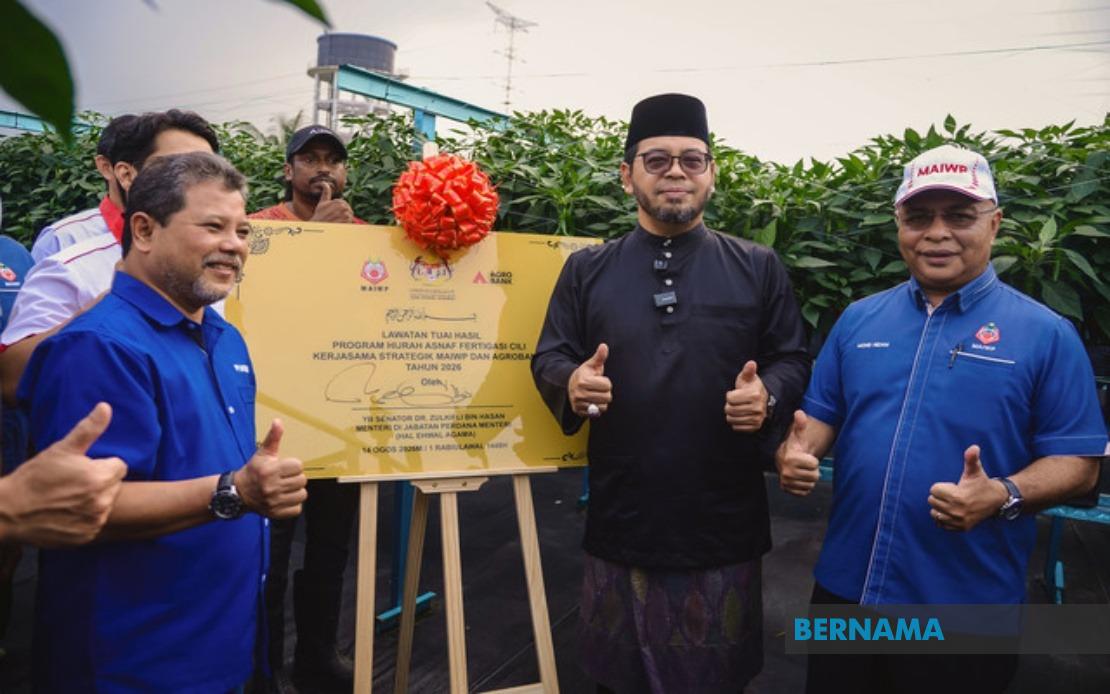
The Ministry in the Prime Minister's Department (Religious Affairs) is ramping up its high-yield chilli cultivation scheme for asnaf populations, with plans to expand the innovative fertigation project across five acres following impressive results from initial plantings. Minister Dr Zulkifli Hasan highlighted the programme's strong performance and its role in addressing poverty within the Muslim community, underscoring how modern agricultural technology combined with targeted welfare support can create sustainable income streams for vulnerable groups.
The fertigation system—which delivers nutrients directly through irrigation lines—has emerged as a game-changer for small-scale growers previously locked out of commercial farming. The first harvest cycle alone produced more than 16.7 tonnes of chillies, translating to revenues exceeding RM207,000 for participating asnaf households. These figures are significant when measured against typical agricultural returns in Malaysia, particularly for beneficiaries who traditionally operate with limited capital and technical expertise. The early success demonstrates that technology-driven farming models, when paired with comprehensive training and financial support, can substantially lift earning potential within just one production cycle.
Dr Zulkifli emphasised that the initiative extends beyond simple crop production. Recognising the volatility of raw chilli markets and the pressure on farmers' margins, the programme actively encourages participants to develop downstream value-added products. Processed items such as chilli pastes, sauces, and spice blends command higher margins and offer more stable pricing than fresh produce, while also creating opportunities for small entrepreneurs to build brand recognition and penetrate retail channels. This downstream development component reflects sophisticated policymaking that acknowledges the broader agricultural value chain, positioning asnaf producers not merely as primary commodity suppliers but as potential food entrepreneurs.
For individual participants like Alinda Rosely, 49, the programme has delivered transformational outcomes. As a single mother navigating economic hardship, she found the combination of practical fertigation training and market access particularly valuable. During a period when chilli prices peaked, Rosely generated RM40,000 within six months—a figure that would typically require multiple income sources or permanent employment in many sectors. Her experience illustrates how targeted skill transfer, when linked to controlled growing environments and established buyer networks, can enable rapid poverty alleviation for household heads typically marginalised in conventional labour markets.
The expansion to five acres reflects MAIWP's confidence in scaling a model that has validated results. Larger acreage commitments allow for more consistent supply volumes, which in turn attracts commercial buyers and processors seeking reliable chilli sources. This scaling effect creates virtuous cycles: bigger plots justify investment in better infrastructure, which improves yields, which attracts more buyers, which increases prices and profitability. For asnaf farmers, participating in a larger coordinated scheme offers economies of scale and collective bargaining power they could never achieve individually.
Within the broader context of Malaysia's zakat system, this agricultural initiative represents a strategic shift in how religious welfare funds are deployed. Rather than distributing assistance as consumption-oriented support, MAIWP is investing in production capacity and skill development. This aligns with contemporary Islamic social finance thinking, which emphasises productive investments that help beneficiaries move from aid-dependent status toward economic self-sufficiency. The approach resonates with Malaysia's own development philosophy, which has historically stressed bumiputera empowerment and agricultural modernisation.
The programme's success also holds relevance for policymakers across Southeast Asia grappling with rural poverty and agricultural productivity. Many nations in the region possess suitable climates for intensive chilli cultivation but lack coordinated systems linking technology, training, and market access for smallholder farmers. Malaysia's MAIWP model, by demonstrating that structured support can achieve 16.7-tonne yields and over RM207,000 in revenue from a pilot phase, offers a replicable blueprint. Countries such as Indonesia, Thailand, and Vietnam, which produce significant volumes of chillies, might adapt similar welfare-agriculture integration approaches to support marginalised farming communities.
The five-acre expansion also signals MAIWP's institutional maturity and administrative capacity. Successfully managing pilot programmes, monitoring outcomes, and committing to larger-scale operations requires robust supply chain management, quality control systems, and buyer coordination. The fact that the fund can orchestrate these elements across multiple plots demonstrates institutional sophistication that supports confidence in the programme's sustainability and growth potential.
Looking ahead, the initiative's trajectory will depend on several factors including consistent market demand for chillies, participant retention and training success, and climate stability. Chilli prices in Malaysian and regional markets experience seasonal fluctuations and face competition from imports, so maintaining profitability across multiple harvest cycles will require active market engagement and possible crop diversification. Nevertheless, the evidence from early phases suggests MAIWP has developed a replicable, scalable approach to converting welfare expenditure into productive assets and sustained livelihoods for asnaf communities.

