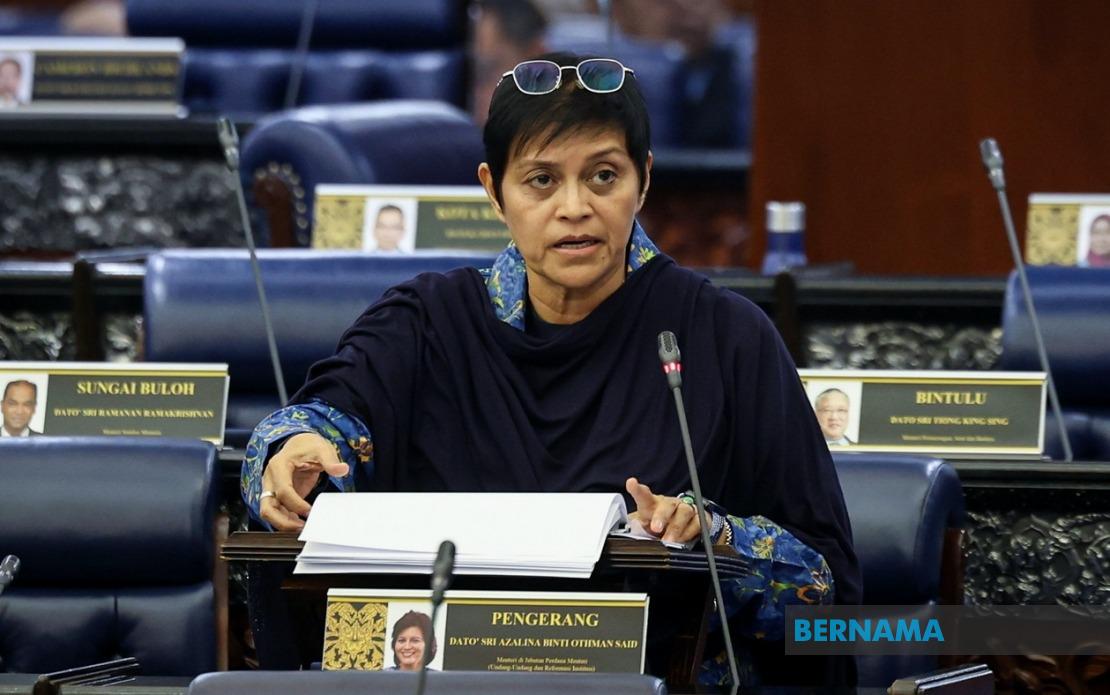
A landmark report on restructuring Malaysia's prosecution system will be presented to Parliament tomorrow, marking a watershed moment in the government's push to strengthen judicial independence and public trust in law enforcement. The Special Select Committee's findings, according to Minister Datuk Seri Azalina Othman Said, represent the MADANI administration's determination to overhaul key institutions that have long been viewed as vulnerable to political influence. The separation of the Attorney General and Public Prosecutor roles has been debated by legal scholars and civil society groups for years, with many arguing that concentrating both positions in one person creates opportunities for executive interference in prosecutorial decisions.
The committee's proposal rests on seven core recommendations designed to insulate the Public Prosecutor's office from direct political control. The centrepiece involves removing the Prime Minister and Cabinet from the appointment process entirely, replacing their influence with a system where the Judicial and Legal Service Commission nominates candidates for parliamentary review. This architectural shift addresses longstanding concerns that prosecution decisions could be shaped by party political considerations rather than legal merit. For Malaysian citizens, the practical implication is potentially greater confidence that criminal cases are pursued or abandoned based on evidence and law rather than government whim. The MADANI Government frames this not as a symbolic gesture but as foundational institutional reconstruction meant to endure beyond any single administration.
Under the proposed constitutional amendment to Article 145A Clause 18, the Judicial and Legal Service Commission would present its nominee to the Dewan Rakyat Speaker, who would forward it to a House Select Committee for scrutiny and deliberation. Only after Parliament examines the candidate's record, judicial philosophy and suitability would the recommendation return to the commission, which could then advise the Yang di-Pertuan Agong accordingly. This process mirrors practices in established democracies where legislative bodies act as a checking mechanism against executive overreach. For Malaysia, it represents a notable expansion of Parliament's constitutional role in judicial governance, shifting power away from the executive branch and distributing it across government institutions. The mechanism is designed to prevent any single individual or office from wielding unchecked authority over prosecution decisions that profoundly affect citizens' rights and freedoms.
The committee also recommends establishing a fixed, non-renewable seven-year term for the Public Prosecutor, a change that would prevent indefinite re-appointment and potential leverage by those in power. Additionally, a formal Code of Ethics for Public Prosecutors would institutionalize professional standards and conduct expectations, creating a written reference point against which the public and Parliament could measure performance. These twin safeguards address two vulnerabilities in the current system: the indefinite nature of tenure can create situations where political actors hold renewal as incentive for favourable prosecutorial decisions, while the absence of a formal ethics code leaves conduct largely to individual interpretation. By codifying these expectations, the government aims to establish transparent benchmarks against all Public Prosecutors can be held accountable.
Azalina emphasized that this reform extends beyond mere administrative restructuring; it reflects a comprehensive vision of prosecutorial integrity and public accountability. She framed the initiative as part of a broader MADANI institutional reform programme intended to strengthen the entire judicial architecture for future generations. This language suggests the government views these changes not as a quick political fix but as foundational improvements to how Malaysia's justice system operates at its most basic level. For regional observers, Malaysia's willingness to voluntarily relinquish executive control over prosecutions stands out, particularly in a Southeast Asian context where many countries have moved toward greater executive dominance over judicial institutions.
The timing of this report, arriving after the committee's seven deliberative sessions, indicates a thorough process that gathered input from various stakeholders within government and likely the legal profession. The parliamentary tabling ensures that the proposal faces public scrutiny and opposition voices can articulate concerns before implementation. This transparency is significant because separation of prosecutorial and Attorney General powers touches sensitive questions about state authority and individual liberty. Malaysians will witness how Parliament engages with the proposal—whether members treat it as urgent institutional reform or political theatre obscuring persistent power imbalances.
Critical observers might note that while the proposed system removes the Prime Minister and Cabinet from formal appointment authority, Parliament itself remains an institution where the ruling coalition holds the majority. True independence of the Public Prosecutor ultimately depends not just on constitutional architecture but on whether Parliament operates as a genuine check or functions as a rubber stamp for executive preferences. The House Select Committee review process is therefore pivotal; if it conducts meaningful scrutiny rather than perfunctory approval, the system will function as intended. If Parliament merely validates executive nominations, the reform becomes cosmetic rather than substantive. The coming months will test whether Malaysia's legislative branch is willing to exercise genuine oversight.
The separation of these roles also carries practical implications for how criminal cases are prosecuted and appealed in Malaysia. An independent Public Prosecutor might be more willing to pursue cases against politically connected individuals or government entities without fear of dismissal or retaliation, strengthening the principle that no one is above the law. Conversely, a truly independent prosecutor might also decline to pursue cases where evidence is weak, regardless of political pressure, which would strengthen prosecutorial professionalism but might disappoint those expecting partisan enforcement. This tension—between independence and accountability—defines all major prosecutorial reform efforts globally.
For Malaysia's regional standing, this institutional reform sends a signal about commitment to rule of law and judicial independence, dimensions increasingly scrutinized by international observers assessing governance quality. Countries like Singapore and the Philippines have faced criticism for prosecutorial systems that appear responsive to executive direction; Malaysia's willingness to implement structural constraints on that power distinguishes it, at least formally, from neighbours. Whether Malaysia can sustain and deepen these reforms across multiple administrations and electoral cycles will ultimately determine whether this represents genuine institutional transformation or temporary political manoeuvre.
The report's presentation tomorrow initiates what will likely be an extended parliamentary process of debate, amendment and eventually constitutional modification if the proposal advances. Stakeholders including the Bar Council, civil society organisations and academic legal experts will undoubtedly scrutinize the proposals and advocate for modifications. The outcome will shape how Malaysia's justice system operates for decades, affecting not only high-profile political cases but routine criminal prosecutions affecting ordinary citizens. This institutional redesign therefore carries significance far beyond tomorrow's parliamentary tabling, representing a potential turning point in how Malaysia balances executive authority with judicial independence.

