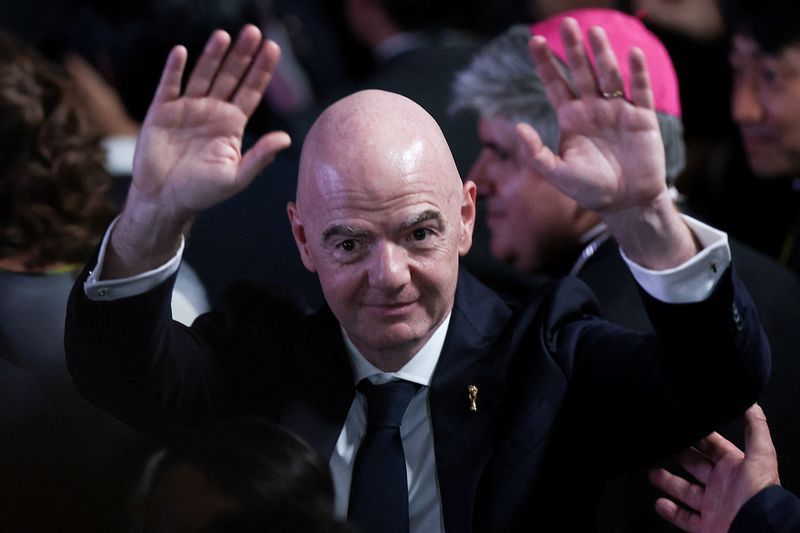
Malawi's football association has become an unlikely champion of FIFA President Gianni Infantino, with the organisation's leader attributing the nation's breakthrough qualification to the 2027 Women's World Cup to Infantino's commitment to developing football across Africa. Speaking from Morocco during the ongoing Women's Africa Cup of Nations, Fleetwood Haiya, president of the Malawi Football Association, told Reuters that his country's rise from relative obscurity to World Cup qualification represents tangible evidence of Infantino's investment philosophy. The statement carries particular weight given that Infantino faces mounting scrutiny over governance concerns and remains a polarising figure within global football politics.
Malawi's qualification represents one of the tournament's most remarkable storylines. The southeastern African nation, operating with severely limited resources compared to continental powerhouses, navigated the demanding qualification process and earned their berth by advancing to the semi-finals of the Women's Africa Cup of Nations in Morocco. This achievement, which marks the first time Malawi has qualified for a Women's World Cup, underscores the potential that emerges when development investment reaches nations traditionally overlooked by football's financial architecture. For a country ranked among the world's poorest by GDP per capita, the qualification signals possibilities that extend far beyond sport.
Haiya's endorsement of Infantino hinges on what he perceives as a deliberate strategy to redistribute football's wealth and opportunities more equitably across Africa and other underrepresented regions. During his tenure as FIFA president, Infantino has championed increased funding flows to smaller and developing football associations, particularly those in Africa, arguing that football development requires investment in infrastructure, coaching, and grassroots programmes rather than concentration of resources in established markets. Haiya believes this philosophy has directly enabled Malawi's emergence as a competitive force and suggests that other African associations recognising this pattern will similarly support Infantino in upcoming elections scheduled for March.
The Malawi FA president's backing comes despite his acknowledgement that Infantino's controversial proposal to raise approximately USD 4.2 billion by selling commercial rights stakes in World Cup tournaments and other FIFA events warranted withdrawal on governance grounds. This proposal, which would have generated significant revenue for member associations alongside the original scheme, drew criticism from various stakeholders concerned about FIFA's financial independence and decision-making structure. Haiya, however, distinguishes between disagreeing with a specific proposal and rejecting the underlying vision, suggesting that withdrawal was appropriate procedurally while the principle of redirecting tournament revenue toward development deserves replacement with alternative mechanisms.
At the heart of Haiya's support lies Malawi's acute resource constraints. The nation faces severe infrastructure deficiencies that limit opportunities for young athletes to develop their talents. Training facilities and playing surfaces across the country remain below standards found in wealthier nations, a reality starkly illustrated by the fact that the same girls now heading to the World Cup honed their skills in less-than-optimal conditions. Haiya articulates a vision wherein increased FIFA funding—potentially USD 40 million across a funding cycle rather than the base USD 20 million currently offered—could transform Malawi's football ecosystem by enabling facility upgrades, coaching development, and systematic youth programmes.
The contrast between Malawi's achievement and its circumstances illuminates broader inequalities within global football. A nation with genuine talent and determination, as demonstrated by the women's team's tournament success, remains constrained by economic factors beyond the sport's control. Yet Infantino's investment approach has created pathways for such nations to compete and progress. This reality shapes how leaders of smaller associations evaluate FIFA leadership, particularly when confronting proposals for distributing the sport's enormous commercial revenues more widely rather than concentrating them among established markets and wealthier nations.
Haiya's qualification that he would welcome challengers to Infantino at the ballot box, provided they articulate compelling alternative visions for development funding, reflects a pragmatic assessment of FIFA's political landscape. He has not detected credible candidates positioning themselves as alternatives, nor has he encountered proposals that would match Infantino's demonstrated commitment to assisting associations like Malawi. This absence of viable alternatives, in Haiya's view, effectively resolves the leadership question by default. The Malawi president frames his decision through a transactional lens: he evaluates leaders by tangible outcomes for his association rather than ideological purity or governance aesthetics.
For Southeast Asian football associations observing this dynamic, the implications merit consideration. Smaller nations throughout the region—Cambodia, Myanmar, Timor-Leste, and others—face development challenges analogous to Malawi's, including infrastructure limitations, funding scarcity, and competitive disadvantages relative to wealthier neighbours. Infantino's continental investment strategy potentially creates opportunities for these associations to access development resources previously unavailable, though tangible benefits remain dependent on how FIFA structures and distributes allocated funds. The Malawi case study demonstrates that investment in women's football and grassroots development can generate competitive improvements within relatively brief timeframes.
Haiya's comments also illuminate political realities within FIFA beyond Europe and the Americas. African associations collectively represent significant voting power in FIFA elections, and leaders from developing regions who perceive personal and institutional benefits from an incumbent's policies will marshal that support effectively. Infantino has cultivated substantial goodwill across Africa through increased funding allocations and development initiatives, creating political capital that renders him formidable at the ballot box despite controversies and governance concerns that preoccupy institutions in wealthier nations. This geographic divergence in evaluations of leadership reflects genuinely different experiences of FIFA's impact.
The Malawi FA president's logic, though straightforward, challenges assumptions often embedded in international sports governance discourse. He argues that abstract governance principles, while valid, cannot override concrete development benefits for associations representing impoverished nations. From Haiya's perspective, choosing between an incumbent president who provides tangible support and an unknown alternative represents an rational decision favouring the proven benefit. This framework prioritises outcomes over process in ways that may frustrate governance advocates but resonates powerfully among leaders managing football in resource-constrained environments.
As FIFA navigates post-election consolidation following Infantino's anticipated re-election, how the organisation translates statements about African development into sustained policy deserves scrutiny. Malawi's World Cup qualification demonstrates the power of strategic investment, yet success must extend beyond dramatic tournament achievements to encompass systematic infrastructure development, coaching education, and competition pathways that enable sustained progress. The foundation Infantino has built through funding and rhetoric requires follow-through across the continent to validate the confidence expressed by leaders like Haiya and to justify claims that FIFA truly functions as a development partner for smaller associations rather than merely a revenue extraction entity.

