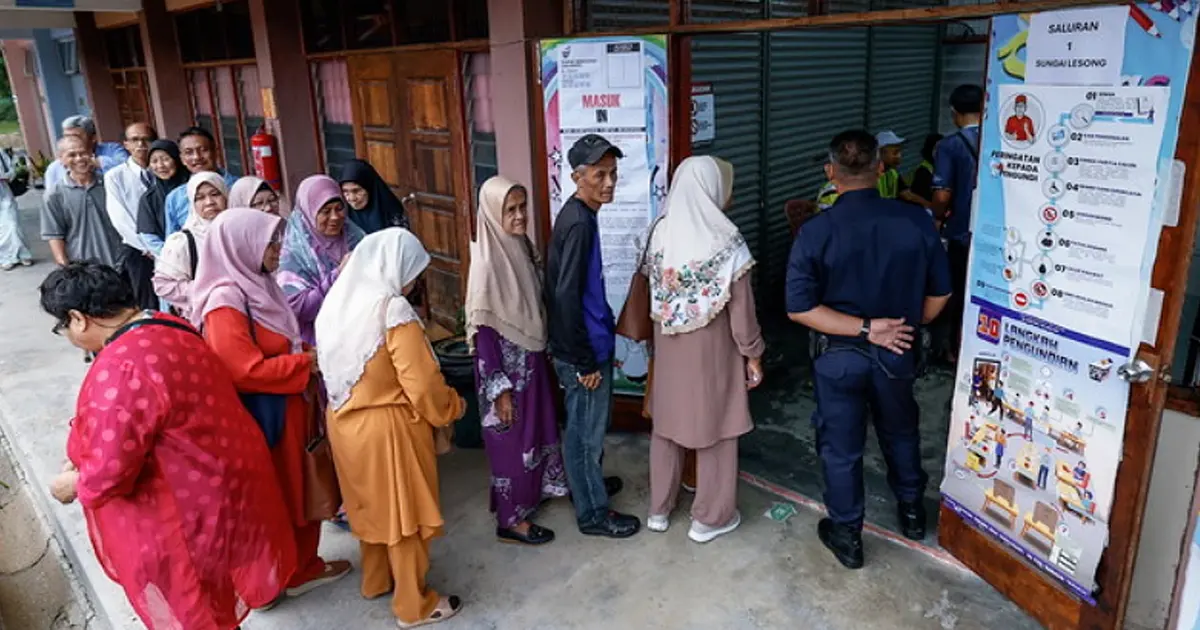
Persistent debates surrounding the so-called 3R issues—religion, royalty, and race—risk inducing psychological exhaustion among Malay voters, according to Awang Azman Pawi, a political analyst at Universiti Malaya. The academic's warning signals growing concern within scholarly circles that Malaysia's familiar pattern of identity-focused campaigning may be losing its political potency, particularly if political parties fail to address bread-and-butter concerns that increasingly dominate household concerns across the country.
Awang Azman argues that sustained emphasis on these culturally charged topics, while historically significant in Malaysian electoral dynamics, could paradoxically undermine voter engagement and trust. The phenomenon of emotional fatigue—where constant exposure to emotionally charged messaging leads to apathy and disengagement—mirrors patterns observed in other democracies grappling with polarisation. For Malaysia's Malay-majority voter base, which constitutes the backbone of most governing coalitions, this shift in sentiment could reshape the political landscape more fundamentally than recent structural changes.
The analyst's observation arrives at a particularly telling moment in Malaysia's political calendar. As parties position themselves for future electoral contests, the traditional emphasis on identity-based appeals faces mounting pressure from voters preoccupied with immediate economic hardship. The rising cost of living—encompassing food prices, fuel, housing, and utilities—has eclipsed previous electoral narratives in importance for many households, cutting across demographic and geographic divisions.
Awang Azman emphasises that political parties will ultimately be evaluated not on their rhetorical prowess regarding the 3R framework, but rather on demonstrable results in managing economic pressures. This shift in voter priorities reflects a maturing electorate increasingly focused on performance metrics: inflation rates, unemployment figures, availability of affordable housing, and access to quality public services. Parties that continue investing heavily in identity politics without delivering concrete improvements to living standards risk losing relevance among constituents fatigued by circular debates.
The cost-of-living challenge presents both a threat and opportunity for Malaysia's political class. Those unable to articulate coherent strategies for addressing economic pressures may find their traditional voter bases fragmenting, regardless of their positioning on cultural issues. Conversely, parties demonstrating effective policy responses to inflation and economic vulnerability could command loyalty that transcends demographic categories and ideological boundaries.
This analytical perspective suggests that Malaysian politics is experiencing a gradual but significant recalibration. The Malay electorate, long assumed to prioritise 3R narratives above material concerns, increasingly exhibits behaviour more consistent with voters in other democracies: they weigh multiple factors, with economic security frequently outweighing cultural messaging. This evolution carries profound implications for coalition-building and electoral strategy, as parties cannot rely solely on identity-based mobilisation to secure support.
The concept of emotional fatigue also reflects real psychological phenomena documented in political science literature. When voters encounter repetitive messaging on the same divisive topics without perceived progress, engagement levels decline. Turnout may suffer, or voters may become susceptible to messaging from alternative parties offering different framings of political reality. For Malaysia, where previous elections have seen varying turnout rates across demographic groups, this dynamic could prove decisive.
Furthermore, the analyst's framework illuminates growing generational divides within Malay communities. Younger voters, shaped by different information ecosystems and economic pressures, may respond differently to 3R messaging than their parents' generation. These voters often prioritise career prospects, housing affordability, and economic opportunity over cultural debates, though this does not indicate indifference to religious or cultural identity—rather, a different hierarchy of political concerns.
Awang Azman's warning also carries implications for governance quality and policy substantiation. When political discourse revolves heavily around identity themes, space for detailed policy discussions frequently contracts. This can result in governments that, despite electoral victories, lack clear mandates regarding specific economic or social policies. The absence of such clarity often translates into governance challenges and public disappointment when material improvements fail to materialise.
The practical application of this analysis extends beyond electoral strategy. It suggests that Malaysian political parties should recalibrate their communication and policy portfolios to reflect voter priorities while maintaining their cultural and ideological identities. This balance—neither abandoning historical positioning nor ignoring contemporary voter concerns—will likely determine political fortunes in coming contests.
Ultimately, Awang Azman's perspective articulates a fundamental truth about electoral democracy: sustained political success depends on parties' capacity to deliver outcomes that meaningfully improve voters' daily lives. The 3R framework remains part of Malaysia's political vocabulary and identity, but its diminishing electoral salience relative to economic performance suggests that future victory belongs to those who can credibly address the material anxieties shaping contemporary Malaysian households.