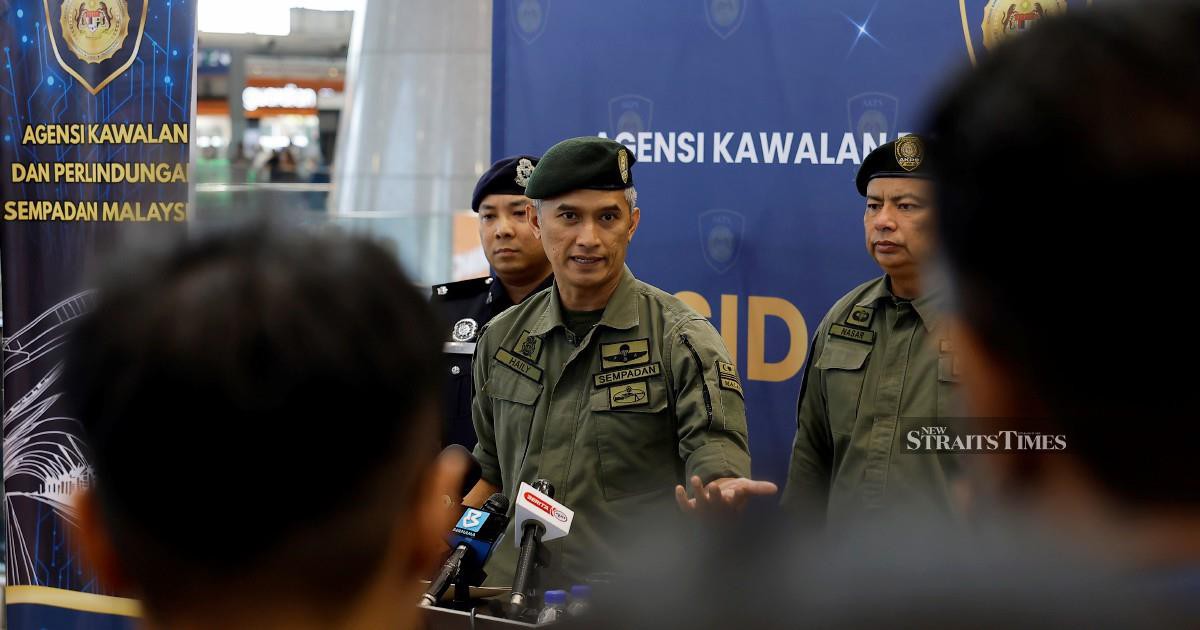
The baggage that passed through screening before a Malaysia Airlines pilot was arrested in Indonesia with 70,000 ecstasy pills was processed by the aviation security arm, not by the newly-formed border control agency, Transport Minister Datuk Seri Shuhaily Zainudin has confirmed. This clarification addresses concerns about potential lapses in the security infrastructure at Malaysia's airports, following the high-profile drug smuggling case that unfolded across the region last week.
Shuhaily's statement underscores a critical distinction in Malaysia's airport security operations. The Aviation Security Service (AVSEC) operates under the purview of the Civil Aviation Authority of Malaysia (CAAM) and manages security screening at departure gates and designated checkpoints. The Malaysia Border Control and Protection Agency (MCBA), established to consolidate border management functions, does not oversee these particular screening operations despite its expanded mandate. This separation of responsibilities has implications for accountability and operational efficiency at the nation's gateways.
The pilot's arrest in Indonesia last week sent shockwaves through Malaysia's aviation sector and raised immediate questions about how prohibited drugs could have been transported in checked luggage. The discovery of such a substantial quantity of controlled substances represents a significant security breach that has prompted heightened scrutiny of screening protocols at Kuala Lumpur International Airport and other major terminals. Authorities are now examining whether procedural gaps or technical limitations in the screening process may have allowed the contraband to evade detection.
The involvement of AVSEC rather than MCBA in this case reflects Malaysia's complex institutional architecture for border and aviation security. AVSEC's primary responsibility encompasses threat detection at airport security checkpoints, including X-ray baggage screening, passenger profiling, and coordination with law enforcement. The MCBA, by contrast, focuses on immigration control, customs examination, and integrated border management across maritime and land crossings. The distinction matters operationally because different agencies answer to different oversight structures and may apply varying procedural standards.
For Malaysian readers and stakeholders in the aviation industry, this clarification raises important questions about how effectively these agencies coordinate and whether their operational mandates create blind spots. The MCBA was established to improve integration among previously fragmented border agencies, yet in this instance, the passenger originated from within Malaysia, meaning he would have passed through AVSEC screening before departure. The question of how AVSEC's systems failed to detect the narcotics remains central to ongoing investigations and potential reforms.
Indonesian authorities, who apprehended the pilot upon arrival in Jakarta, have taken the lead in investigating the trafficking operation. Their cooperation with Malaysian law enforcement has been essential in understanding the circumstances that allowed the contraband to travel from Kuala Lumpur to Indonesia undetected. The case underscores the importance of robust regional cooperation in combating drug trafficking through air transport, a vulnerability that criminal networks increasingly exploit.
The timing of this incident coincides with Malaysia's broader efforts to modernise its aviation security infrastructure. AVSEC has been implementing upgraded screening technologies, including advanced imaging equipment and automated threat detection systems, at major airports. However, the effectiveness of these systems depends on consistent deployment across all facilities and proper maintenance and calibration. The pilot's case suggests that either the technology failed, procedural adherence lapsed, or intelligence-gathering mechanisms did not flag the individual as a risk.
For Malaysia Airlines, the incident presents a reputational challenge and operational concern. The airline has established protocols for crew screening and background checks, yet a serving pilot managed to attempt to smuggle drugs through the system. The company is likely to face pressure from regulators and stakeholders to enhance its internal vetting procedures and to work more closely with security agencies to identify at-risk personnel. This case may prompt Malaysian carriers to implement additional safeguards for crew members, potentially including more rigorous personal conduct reviews.
The broader security implications extend to Southeast Asia's aviation network, where coordinated drug trafficking operations often exploit weaknesses in screening or intelligence-sharing between countries. Malaysia's position as a regional aviation hub means that lapses in its security can have consequences for neighbouring nations that receive flights from Malaysian airports. Regional aviation authorities may use this incident as a catalyst for strengthening information-sharing agreements and harmonising screening standards across ASEAN states.
Shuhaily's clarification, while addressing the immediate jurisdictional question, does not fully resolve concerns about how such a substantial quantity of drugs escaped detection. Authorities have announced that a comprehensive review of AVSEC's operations is underway, examining screening procedures, staff training, and the performance of detection equipment. These findings are expected to inform policy recommendations aimed at tightening aviation security across Malaysia's airport system and preventing similar incidents in the future.

