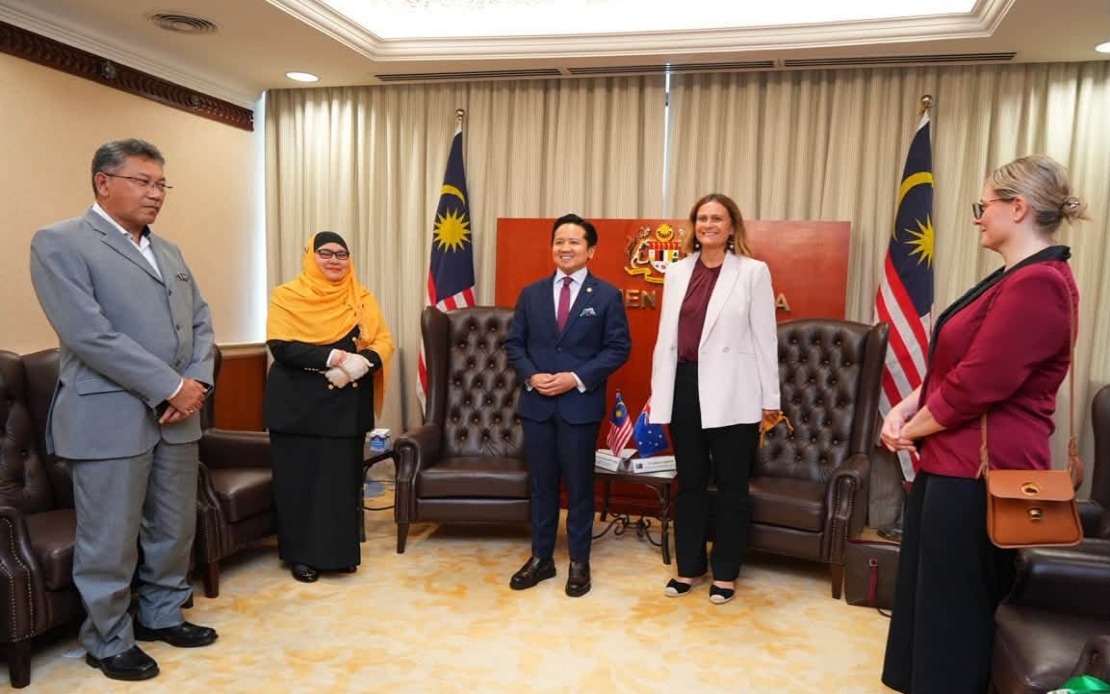
Malaysia and Australia are building momentum toward significant collaboration in rare earth elements and critical minerals, with particular focus on establishing domestic neodymium magnet manufacturing capacity. The exploration of this partnership was confirmed following discussions between Malaysia's Natural Resources and Environmental Sustainability Minister Datuk Seri Arthur Joseph Kurup and Australian High Commissioner to Malaysia Danielle Heinecke at the Parliament building.
The strategic significance of this cooperation cannot be overstated for the Malaysian economy. Rare earth elements remain fundamental to modern manufacturing, powering everything from renewable energy technologies to defence systems and consumer electronics. Australia's established technical capabilities in critical minerals extraction and processing represent valuable expertise that could accelerate Malaysia's journey toward becoming a comprehensive hub for rare earth value chains. The emphasis on developing downstream neodymium magnet manufacturing is particularly noteworthy, as this sector traditionally commands higher profit margins than raw material extraction alone.
Malaysia's National Mineral Policy 3 provides the regulatory and strategic framework guiding this partnership. The policy explicitly prioritises moving beyond basic ore production toward midstream and downstream activities, effectively capturing greater economic value from the nation's mineral resources. Developing domestic neodymium magnet capabilities directly supports this objective, potentially creating high-skilled manufacturing jobs and establishing Malaysia as a competitive player in the global supply chain for magnetic materials used in electric vehicles, wind turbines, and advanced electronics.
The exchange of best practices regarding neutralisation underflow residue management demonstrates both nations' commitment to environmentally responsible processing. This residue, a byproduct of rare earth extraction, has historically posed significant disposal challenges. By learning from Australia's approaches, Malaysia can potentially reduce environmental impact while improving operational efficiency. This environmental angle strengthens the partnership's credibility among international partners and investors increasingly focused on sustainable sourcing.
Beyond critical minerals, the discussions encompassed broader environmental and climate agendas. Both countries acknowledged their mutual interests in hazardous waste management and marine ecosystem conservation, reflecting global trends toward circular economy principles and ocean health protection. Malaysia's commitment to the United Nations Climate Change Conference and climate financing mechanisms positions the nation as increasingly aligned with international sustainability standards, which itself can attract investment from environmentally conscious multinational corporations.
The partnership operates within the Malaysia-Australia Comprehensive Strategic Partnership framework, established in 2021. This broader strategic architecture suggests that rare earth cooperation represents just one pillar of a more expansive bilateral relationship. The CSP provides institutional mechanisms for ongoing dialogue and coordination across multiple sectors, reducing transaction costs and facilitating knowledge transfer beyond what ad hoc agreements might achieve.
For Malaysia's industrial ecosystem, this cooperation carries significant supply chain implications. Southeast Asia currently remains somewhat dependent on external sources for processed rare earth materials and finished magnet products. Developing domestic manufacturing could reduce regional vulnerability to supply disruptions, particularly given growing geopolitical tensions affecting rare earth trade. Companies throughout Southeast Asia relying on neodymium magnets for manufacturing operations might eventually benefit from more stable, regionally-based sourcing.
The timing of this partnership also reflects evolving global competition for critical minerals. Major economies including the United States and European Union are actively seeking to diversify their rare earth supply chains away from traditional sources. Australia, as a reliable democratic ally with significant rare earth reserves, and Malaysia, with established processing infrastructure and geographic advantages, represent logical collaborators in this restructuring of global mineral commerce.
Investment implications deserve consideration for Malaysian stakeholders. Successfully establishing neodymium magnet manufacturing could attract substantial foreign direct investment from multinational corporations seeking to localise production. This would support Malaysia's broader Economic Transformation Programme and help maintain the nation's competitiveness as an advanced manufacturing destination.
The technical expertise transfer component suggests potential capacity building for Malaysian scientists, engineers, and technicians. Australian specialists could mentor local counterparts in best practices, helping build a sustainable knowledge base that persists beyond individual projects or personnel rotations. This human capital development represents long-term value creation often underestimated in initial partnership announcements.
Regional economic integration could accelerate through this cooperation. Other Southeast Asian nations might recognise opportunities to participate in expanded rare earth value chains, potentially creating a more integrated regional minerals and advanced manufacturing ecosystem. This could strengthen overall regional economic resilience and reduce dependence on distant suppliers.
The convergence of environmental responsibility and economic development in this partnership reflects modern approaches to resource management. By integrating sustainability considerations into manufacturing development plans from the outset, both nations position themselves advantageously in global markets increasingly demanding evidence of responsible sourcing and production practices.

