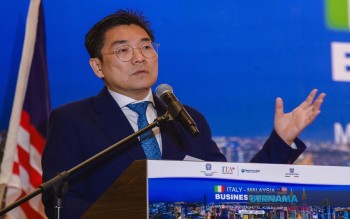
Malaysia and the European Union are advancing their long-term commercial partnership through the Malaysia-European Union Free Trade Agreement (MEUFTA), having successfully concluded negotiations on five substantive chapters as both sides work toward a final accord by 2027. Investment, Trade and Industry Deputy Minister Sim Tze Tzin disclosed that the fourth round of talks, conducted in Kuala Lumpur from June 8 to 12, resulted in the completion of three additional chapters covering Customs and Trade Facilitation, Trade Remedies, and Good Regulatory Practices, building on earlier progress in transparency and small and medium enterprise provisions.
The next phase of negotiations will take place in Brussels from September 21 to 25, maintaining a steady pace of engagement between the two trading blocs as they navigate the complex terrain of harmonising regulatory standards, tariff schedules, and intellectual property protections. This timetable reflects the significance Malaysia and the EU assign to the arrangement, positioning it as a cornerstone agreement that could reshape bilateral commerce and investment flows well into the coming decade.
Deputy Minister Sim characterised the emerging agreement as transformative for Malaysia's economic positioning, describing it as an instrument that would deepen integration with the world's largest unified trading bloc while simultaneously opening new commercial pathways in sectors ranging from advanced technology services to renewable energy infrastructure and digital commerce. The framework is expected to generate fresh opportunities for Malaysian enterprises seeking to establish footholds in European markets, whilst simultaneously attracting European investment into Malaysia's manufacturing and services sectors.
The relationship between Malaysia and Italy, the EU's third-largest economy, illustrates the practical dimensions of this emerging partnership. Bilateral trade between the two nations reached approximately RM17 billion (US$3.2 billion) in 2025, representing a robust 14.2 per cent year-on-year increase that underscores the vitality of existing commercial ties. Italy now ranks as Malaysia's fifth-largest European trading partner, a position reflecting longstanding supply chain relationships and complementary industrial capabilities.
Malaysian exports to the Italian market grew 12.7 per cent over the same period to RM7.6 billion, with shipments heavily concentrated in palm oil derivatives and value-added agricultural commodities, ferrous metals, electrical and electronics equipment, and industrial machinery. These exports reflect Malaysia's established reputation as a reliable source of both raw materials and manufactured components for European industrial production. Conversely, imports from Italy—dominated by machinery, precision instruments, chemicals, and luxury goods—demonstrate the sophistication of bilateral trade flows and the complementary nature of the two economies' industrial structures.
Italian manufacturers have significantly committed to Malaysian manufacturing operations, with more than eighty industrial projects valued at US$442 million deployed across food processing, chemical production, machinery assembly, and aerospace components. This sustained investment portfolio reflects Italian industrialists' confidence in Malaysia's operational infrastructure, skilled workforce availability, and strategic geographic positioning for serving broader Southeast Asian demand. The country's comprehensive industrial ecosystem and mature supply chain networks provide European investors with established pathways to regional market penetration, a competitive advantage Malaysia actively promotes.
Deputy Minister Sim emphasised complementarities in the electrical and electronics sector, where both nations maintain substantial manufacturing capabilities and design expertise. Malaysia's established ecosystem for semiconductor production and component assembly represents a significant opportunity for Italian technology companies seeking to localise operations or develop regional supply partnerships. Similarly, Italy's world-renowned machine tool and precision manufacturing sectors can leverage Malaysia's lower operational costs and skilled technical workforce to enhance their competitive positioning in Asian markets.
Malaysia's strategic priorities in semiconductor and advanced manufacturing have gained fresh momentum through the New Investment Incentive Framework, which commenced operations in March 2025. This updated regulatory regime offers enhanced tax benefits to enterprises engaged in cutting-edge manufacturing, front-end semiconductor fabrication, and integrated circuit design, directly addressing the nation's ambition to move beyond basic assembly operations toward higher-value technical activities. The framework explicitly targets acceleration of Malaysian company participation in global value chains, challenging perceptions that investment incentives primarily benefit foreign corporations.
Deputy Minister Sim underscored the government's commitment to equitable treatment of all investors, whether foreign or domestic, whilst prioritising capacity-building within the Malaysian industrial sector. By concentrating incentive structures on advanced manufacturing and sophisticated technical services, policymakers intend to encourage local enterprises to undertake the strategic investments necessary for upstream movement within their respective industries. This philosophical reorientation distinguishes Malaysia's approach from competitor nations that heavily favour foreign direct investment flows.
The Italy-Malaysia Business Mission that provided the platform for Deputy Minister Sim's remarks originated from Prime Minister Datuk Seri Anwar Ibrahim's official visit to Italy in July 2024, where he met with Italian counterpart Giorgia Meloni. This diplomatic engagement reflected Malaysia's broader efforts to cultivate deepened relationships with major EU economies beyond routine trade and investment channels, positioning the nation as a strategic partner for European enterprises seeking reliable access to dynamic Asian markets.
For Malaysian stakeholders, the MEUFTA represents a potentially game-altering development in the nation's external commercial strategy, providing preferential access to a market of over 450 million consumers whilst simultaneously subjecting Malaysian producers to enhanced competitive pressures from European manufacturers. The agreement's provisions on regulatory harmonisation may require Malaysian standards-setting bodies to align technical specifications with European norms, a process that could initially impose compliance costs but ultimately facilitate smoother market entry for Malaysian goods.
The Southeast Asian dimension of this bilateral negotiation extends beyond Malaysia itself, as successful completion of the MEUFTA could establish precedential frameworks for similar EU agreements with other regional economies. Malaysia's willingness to undertake substantive negotiations on contentious issues like intellectual property, labour standards, and environmental provisions may influence EU engagement strategies across the broader ASEAN membership, potentially reshaping regional trade governance patterns over the medium term.
As negotiations progress through the autumn round in Brussels, both parties must navigate increasingly complex technical terrain involving agricultural trade-offs, services sector market access, and dispute resolution mechanisms. The 2027 completion target remains achievable but will require sustained political commitment and genuine willingness to accommodate each party's core commercial and regulatory interests, underscoring the significance Malaysian and EU leadership attach to this transformative partnership.

